


 English
  русский
  Español
  Deutsch
  عربى
عربى -
A Rocker Switch is a compact and easy-to-operate manual control component. Its unique rocker-style actuation, combined with a toggle or momentary reset function, allows users to quickly switch circuit...View More >>
-
A micro switch is a small mechanical switch with a fast action mechanism, which is widely used in household appliances, industrial automation, automotive electronics, medical equipment, and other fiel...View More >>
-
The baby stroller gear switch is an innovative product independently developed by our company. We have applied for invention patents both domestically and internationally, which fully demonstrates the...View More >>
-
Push button switches are widely used in various control systems with their diverse structural designs, high-strength material selection, and excellent performance. The products are available in a vari...View More >>
-
The internal structure of the piano key switch mostly adopts a mechanical or light-touch design. Some high-end models use capacitive sensing technology to achieve contactless operation, thereby improv...View More >>
-
The knob switch adopts a high-sensitivity rotary contact structure, which has smooth operation and clear positioning, ensuring that every adjustment is accurate. The product has excellent durability a...View More >>
-
The KM trigger switch is a universal high-current switch designed for high-power power tools, with excellent current carrying capacity and stable performance. The internal fast-action structure ensure...View More >>
-
A door control switch, also known as a door magnetic switch or door status sensor, is a key electrical component widely used in industrial control, security systems, intelligent building automation, a...View More >>
-
The wiring harness is an overall wiring assembly that integrates multiple wires, cables, terminals, and connectors according to specific electrical design and mechanical structure requirements. It is ...View More >>
-
PCB control board is one of the indispensable core components in modern electronic devices. As the brain of the control system, it is widely used in many fields such as industrial automation, consumer...View More >>
NEWS

The Unsung Heroes of Modern Convenience: Door Control Switches
 2025.12.09
 Industry News
Content
The Ubiquity of Automatic Doors
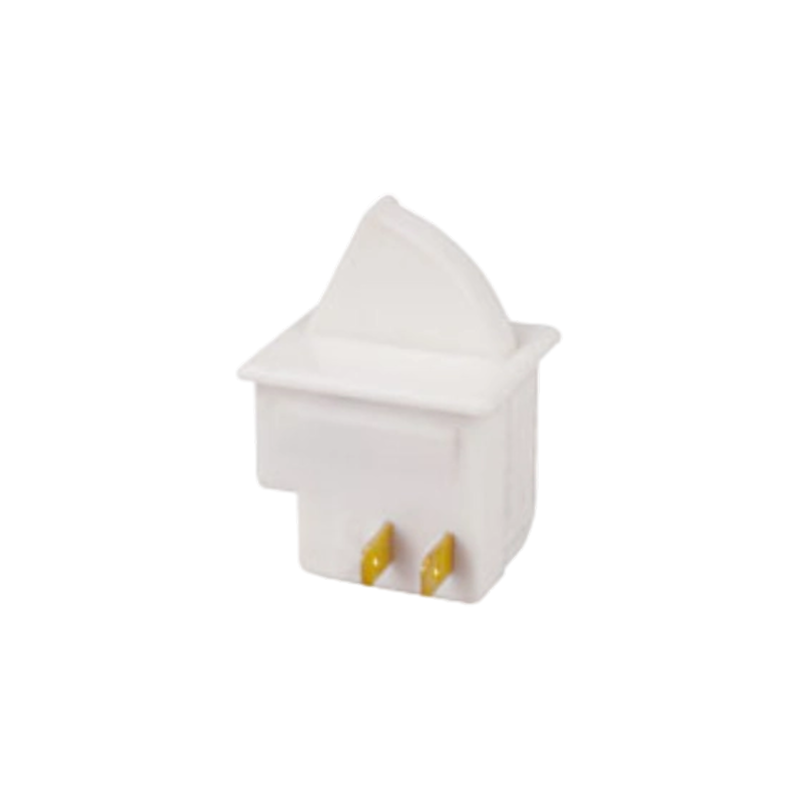
Have you ever considered how often you interact with a Door Control Switch? These seemingly simple components are the silent workhorses behind the automated doors that define modern life. From the sliding glass entrances of supermarkets and airports to the sleek push-button access of office buildings, automatic doors rely on these switches to function seamlessly, balancing convenience, security, and accessibility.
What are Door Control Switches?
At its core, a Door Control Switch is an electrical device used to activate, deactivate, or modify the operation of a powered door system. While the term might sound technical, the actual function is quite intuitive: it provides the “on” or “off” signal—or sometimes a mode change—that tells the door’s motor and control panel what to do.
Variety is the Spice of Door Access
The world of door control is surprisingly diverse, offering solutions for nearly every scenario:
- Push Plates and Buttons: These are the most common form you see, often labeled “Push to Open” or featuring the international accessibility symbol. Pressing the button completes an electrical circuit, signaling the door to open. They are crucial for ensuring accessibility for people with disabilities.
- Key Switches: These switches require a physical key to activate a door. They are typically used by maintenance staff or security personnel to lock the door in a specific mode (like “exit only,” “fully locked,” or “automatic”).
- Touchless or Wave-to-Open Switches: A more recent innovation, these switches use infrared or radar sensors to detect a hand movement nearby, activating the door without physical contact. This has become particularly important for hygiene and reducing the spread of germs, especially in medical facilities.
- Rotary Mode Switches: Often located on the door’s control panel, these are multi-position switches that allow a user to select the operational mode, such as “Automatic,” “Hold Open,” “Exit Only,” or “Locked.”
The Science of Operation
While the physical switch is the user interface, the real action happens in the door’s controller. When you activate a Door Control Switch, you are simply sending a low-voltage signal to this central logic board.
From Signal to Motion
- Input: The switch closes a circuit, sending a voltage signal (usually 12V or 24V DC) to the door controller.
- Logic: The controller interprets this signal. It checks its current operational mode (e.g., is the door already locked? is it supposed to be locked after hours?) and determines if the request is valid.
- Output: If the request is valid, the controller sends a higher-voltage signal to the motor.
- Motion: The motor drives a belt or pulley system to open the door panels. Often, the controller also activates a timing circuit that keeps the door open for a set duration (typically a few seconds) before automatically closing it again.
The Role in Security and Safety
Door Control Switches are not just about convenience; they are integral safety and security components. In emergency scenarios, specialized switches are essential.
Safety Features
- Emergency Release Switches: In secure areas, a single-action emergency release button or “break glass” station can override the security system to allow immediate egress in case of fire or other emergencies. This is a critical life-safety function.
- Accessibility Standards: Push-plate switches must be mounted at a specific height and distance from the door to comply with accessibility acts like the ADA in the United States, ensuring they are usable by people in wheelchairs or with limited reach.
By providing a reliable and instantaneous interface, the humble Door Control Switch plays a vital, yet often overlooked, role in the daily flow of commerce, safety, and accessibility, making our buildings smarter and easier to navigate.


A Appliance Switches Manufacturer that has been focusing on the development, production and sales of Switches for 21 years;
Products Links
Contact Information
Tel: +86-021-33752188
Phone: +86-13524812989
E-Mail: [email protected]
[email protected]
[email protected]Address: No. 580 Shenzhou Road, Fengxian District, Shanghai, China

