


 English
 русский
 Español
 Deutsch
 عربى
-
A Rocker Switch is a compact and easy-to-operate manual control component. Its unique rocker-style actuation, combined with a toggle or momentary reset function, allows users to quickly switch circuit...View More >>
-
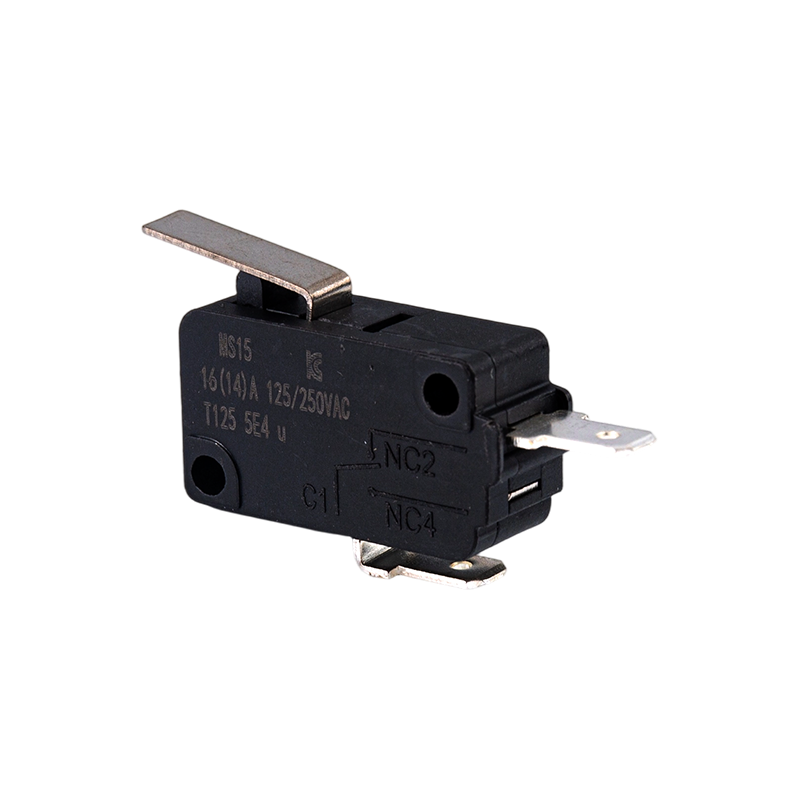
A micro switch is a small mechanical switch with a fast action mechanism, which is widely used in household appliances, industrial automation, automotive electronics, medical equipment, and other fiel...View More >>
-
The baby stroller gear switch is an innovative product independently developed by our company. We have applied for invention patents both domestically and internationally, which fully demonstrates the...View More >>
-
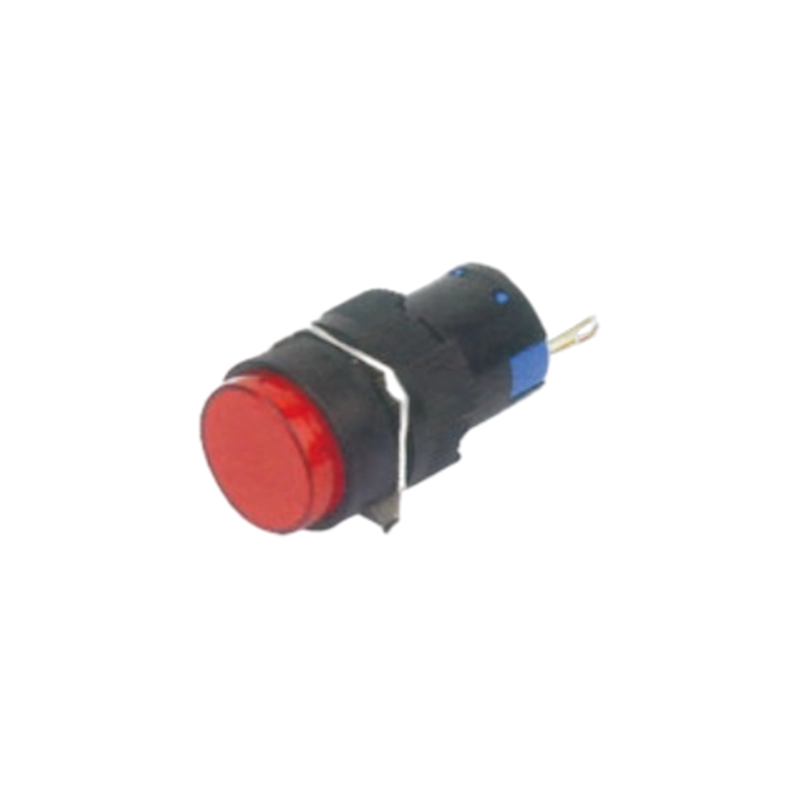
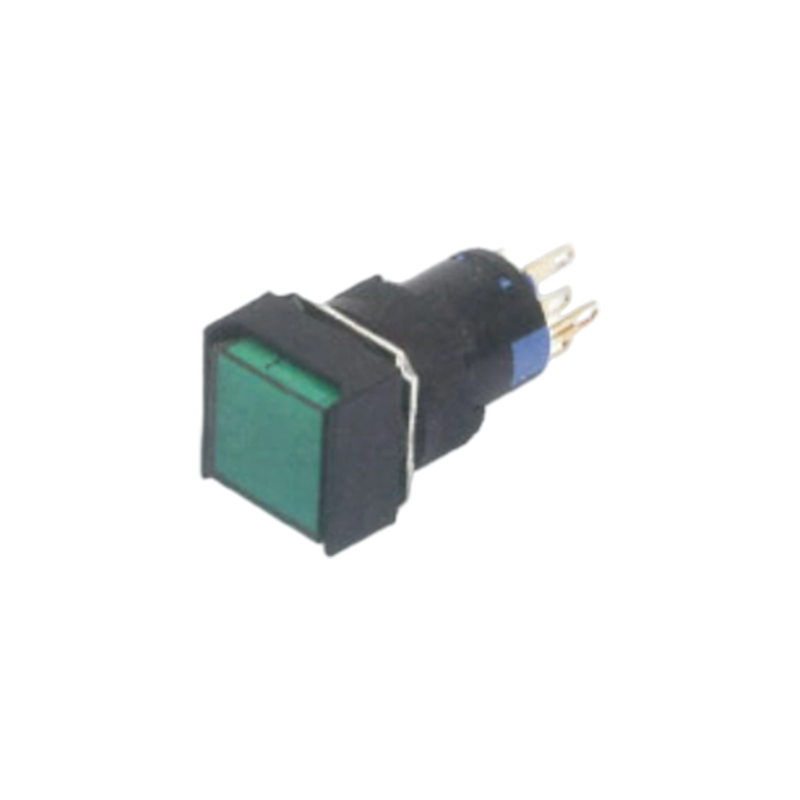
Push button switches are widely used in various control systems with their diverse structural designs, high-strength material selection, and excellent performance. The products are available in a vari...View More >>
-
The internal structure of the piano key switch mostly adopts a mechanical or light-touch design. Some high-end models use capacitive sensing technology to achieve contactless operation, thereby improv...View More >>
-
The knob switch adopts a high-sensitivity rotary contact structure, which has smooth operation and clear positioning, ensuring that every adjustment is accurate. The product has excellent durability a...View More >>
-
The KM trigger switch is a universal high-current switch designed for high-power power tools, with excellent current carrying capacity and stable performance. The internal fast-action structure ensure...View More >>
-
A door control switch, also known as a door magnetic switch or door status sensor, is a key electrical component widely used in industrial control, security systems, intelligent building automation, a...View More >>
-
The wiring harness is an overall wiring assembly that integrates multiple wires, cables, terminals, and connectors according to specific electrical design and mechanical structure requirements. It is ...View More >>
-
PCB control board is one of the indispensable core components in modern electronic devices. As the brain of the control system, it is widely used in many fields such as industrial automation, consumer...View More >>
NEWS
 Home / News / Industry News / Rocker Switch Selection Guide: Types, Ratings, and How to Choose the Right One
Rocker Switch Selection Guide: Types, Ratings, and How to Choose the Right One
 2026.10.20
 Industry News
A rocker switch is one of those small components that quietly shapes how a product feels. It is the switch many people press without thinking on a power strip, a coffee machine, a workshop tool, or a piece of office equipment. The action is familiar: the actuator rocks on a pivot, one side goes down, the other comes up, and the circuit changes state.
In simple terms, a rocker switch is an electrical switch operated by a rocking actuator rather than a lever, plunger, or rotary knob. That simple movement can turn a device on or off, select between modes, or provide a maintained connection until the user changes it again. Behind the plastic cap are contacts, terminals, a housing, and often a spring mechanism that gives the switch its feel and repeatability.
This guide covers the practical side of rocker switch selection: how they work, where they fit, which specifications matter, and how to avoid the small mistakes that create big headaches later. If you are already comparing parts, our rocker switch catalog is a useful place to start.
Content
What Is a Rocker Switch?
A rocker switch uses a pivoting actuator to open or close electrical contacts. When you press one side, the rocker tilts and moves the internal contact mechanism. Many designs provide a crisp detent, so the user feels and hears when the switch has changed position. That feedback is one reason rocker switches feel dependable in appliances and equipment.
The switch can be maintained or momentary. A maintained rocker switch stays in the position you set, which suits power on/off control. A momentary rocker switch returns when released, which is useful for reset, test, or temporary functions. The actuator may be illuminated, marked with on/off symbols, or left plain depending on the panel design.
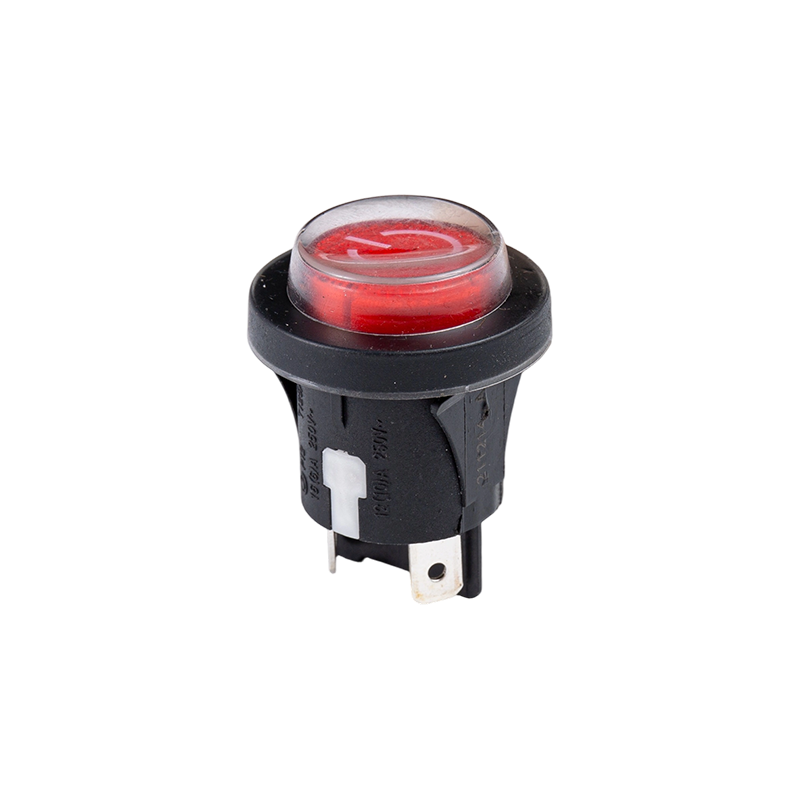
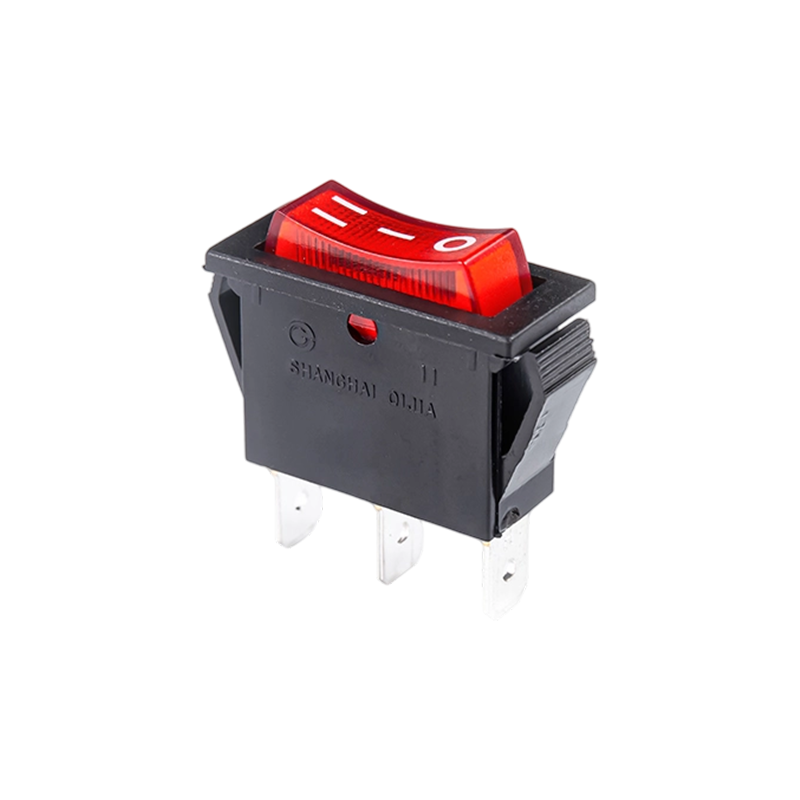 R11-11 Appliance Rocker Switch with Protective CoverCompact R11-1 series switch for appliance panels, with O/I markings, color options, and a protective cover for dust and water resistance.View Product →
The internal design also affects service life. Contact material, spring tension, housing material, and terminal construction all influence how consistently the switch performs. A part that feels good in the hand but has thin contacts or poor sealing may create warranty problems in a humid kitchen, a dusty workshop, or a device that cycles many times a day.
Why Designers Choose Rocker Switches
Rocker switches are popular because they combine clear operation with a clean panel appearance. The user can see the switch position from the angle of the actuator, and the large surface is easy to press with a thumb or finger. For products sold in different markets, the shape also leaves room for symbols, indicator lights, and color coding without making the control area feel crowded.
There are trade-offs, of course. A rocker switch needs a suitable panel cutout and enough behind-panel depth. It may not suit applications where accidental activation is a serious risk, and very small devices may have limited space for the actuator. The table below gives a practical comparison with two other common switch types.
| Consideration | Rocker switch | Toggle switch | Push button |
|---|---|---|---|
| Operation feel | Rocking action with visible position | Lever action with a firm throw | Press and release, often momentary |
| Panel appearance | Flush or low-profile look | Mechanical, traditional look | Compact and simple |
| Typical use | Appliances, tools, office equipment | Industrial control, test equipment | Commands, reset, mode selection |
| Selection focus | Cutout, actuator style, sealing | Lever length, torque, contact rating | Momentary action, cap style, rating |
Common Rocker Switch Configurations
Rocker switches are available in more configurations than the simple on/off model many people picture. The right configuration depends on what the circuit must do and how the user is expected to interact with it.
Poles and throws
Terms such as SPST, SPDT, DPST, and DPDT describe how many circuits the switch can control and how many positions each circuit can connect to. A single-pole, single-throw switch is common for basic on/off control. A double-pole version can switch live and neutral together or control two separate circuits. A double-throw switch can change between two outputs, which is useful for mode selection.
Actuation and illumination
Maintained and momentary actions cover most requirements. Illuminated rocker switches add a helpful status cue, especially on dark panels or equipment that stays powered in standby mode. The lamp voltage and terminal arrangement need to match the circuit, and the illuminated style should not be chosen only for appearance if service access is tight.
Termination and sealing
Quick-connect terminals, solder terminals, screw terminals, and PCB terminals each suit different assembly methods. Sealing is equally important. A dustproof rocker switch may be enough for a workshop tool, while a tower-style waterproof design or a protected cap may be needed for equipment exposed to splashes. Our R11 and R13 families include several panel-friendly options, including compact, large-cover, and application-focused versions.
Where Rocker Switches Fit Best
Rocker switches appear in a wide range of equipment because they are easy to label, easy to operate, and straightforward to integrate into a panel. In the home, they are common on small appliances, power supplies, and audio equipment. In commercial settings, they show up on office machines, computer peripherals, and cleaning equipment. In industrial and outdoor products, sealed versions help protect the contact mechanism from dust and moisture.
Power tools are another natural fit. A rocker switch can provide a clear on/off action with enough surface area for gloved hands, and the housing can be shaped to reduce accidental bumps. Our R1182 power-tools rocker switch is one example of how the actuator, mounting style, and internal structure can be adapted to a specific device category rather than treated as a generic part.
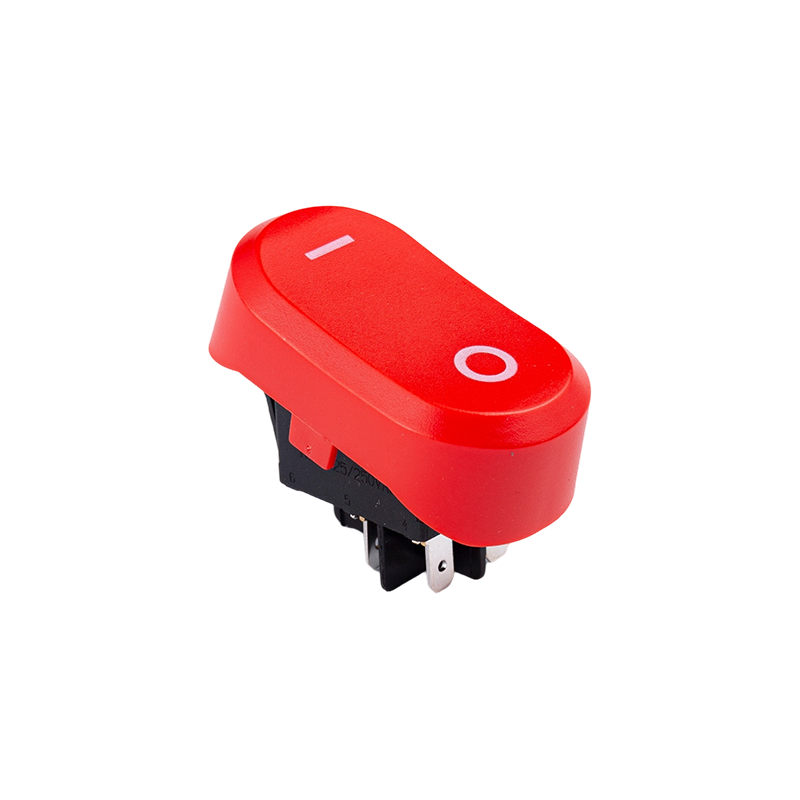 R11-82 Power Tools Rocker Switch for Outdoor and Cleaning EquipmentHigh-current rocker switch with curved actuator, copper silver-plated terminals, color options, and optional rubber covers for dust and water resistance.View Product →
Appliance designers often look for a different balance: low-profile appearance, reliable daily cycling, and simple assembly. Office equipment may prioritize quiet operation and a neat panel look. Generators and cleaning equipment may place more emphasis on sealing and terminal security. The application should guide the choice, not the other way around.
Key Specifications to Check Before You Commit
A rocker switch can look correct in a photo and still be wrong for the job. Before approving a part, review the electrical and mechanical details together. The most common oversight is choosing by panel appearance while ignoring the behind-panel space, terminal orientation, or expected switching current.
- Electrical rating: confirm voltage, current, and whether the load is resistive, inductive, or has a high inrush current.
- Contact configuration: check poles, throws, and the number of positions required by the circuit.
- Actuator style: consider size, color, markings, illumination, and whether the switch should be maintained or momentary.
- Panel fit: verify cutout dimensions, panel thickness, bezel size, and clearance behind the panel.
- Termination: match the terminal type to the assembly method and available wire or PCB space.
- Environment: review dust, moisture, oil, cleaning agents, and temperature exposure.
- Cycle life: estimate how often the switch will be operated and choose a design with suitable durability.
- Approvals and documentation: confirm that the required standards and paperwork are available for the target market.
It also helps to test a sample in the actual enclosure. A switch that feels fine on a bench may feel different when mounted vertically, covered by a bezel, or operated with a glove. Small details such as terminal spacing and wire routing can affect assembly time more than the switch price itself.
A Catalog Built Around Real Applications
At Shanghai Qijia Electronics, we organize rocker switches around the way they are used, not just around a single generic model. The R11 family covers many panel and actuator styles, including compact electronic devices, dual-pole toggle versions, three-position types, round-button designs, seesaw styles, large-cover versions, and built-in dustproof structures. The R13 family is arranged by target equipment, with versions for small power tools, office equipment, small appliances, computer peripherals, cleaning equipment, printers, and generators.
That structure is helpful during selection because it lets an engineer start with the device category and then narrow down the electrical and mechanical options. It also reflects the practical reality of switch design: a part for a printer may need a different feel and mounting approach from a part for a generator, even if both are rocker switches. Our role is to help match those details before tooling and production schedules are fixed.
A Simple Selection Checklist
When a new project comes to us, we usually work through a short checklist before recommending a model. It keeps the conversation focused and reduces the chance of sampling the wrong part.
- Define the function: on/off, mode selection, reset, or a maintained setting.
- Confirm the circuit: poles, throws, positions, and whether illumination is needed.
- Check the load: voltage, current, inrush, and any inductive behavior.
- Measure the panel: cutout, thickness, bezel clearance, and behind-panel depth.
- Review the environment: dust, water, oil, cleaning, temperature, and UV exposure.
- Match the terminals to the assembly process and wire routing.
- Test a sample in the real enclosure and with representative users.
- Confirm documentation, approvals, packaging, and delivery requirements.
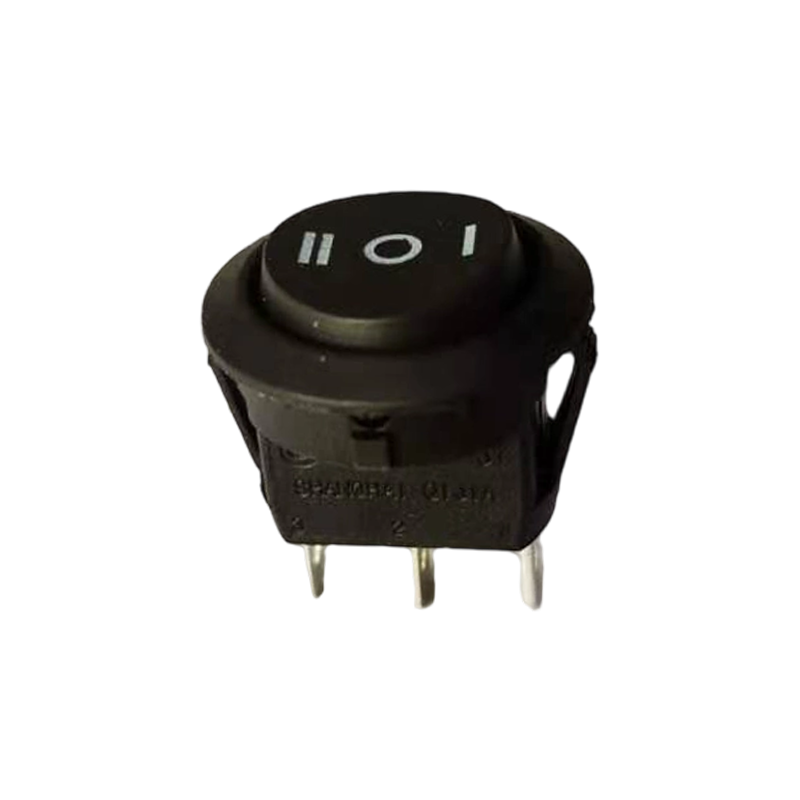 R13-31 Compact Rocker Switch for Small AppliancesCompact rounded momentary switch with tactile feedback, color options, and dust-protection choices; some versions include an LED indicator.View Product →
For a closer look at configuration and rating decisions, our detailed rocker switch selection guide goes deeper into the technical points. The main message is simple: treat the rocker switch as part of the user interface and part of the electrical system at the same time.
Final Thoughts
A well-chosen rocker switch does its job without drawing attention to itself. It gives the user a clear response, fits the panel properly, and survives the conditions the product actually meets. A poorly chosen one can cause loose terminals, cracked bezels, inconsistent contact, or a control that feels wrong every time it is used.
Start with the application, confirm the electrical and mechanical requirements, and test the part in the real product. That approach keeps a small component from becoming a large problem, and it usually leads to a switch that feels as reliable as it looks.

A Appliance Switches Manufacturer that has been focusing on the development, production and sales of Switches for 21 years;
Products Links
Contact Information
Tel: +86-021-33752188
Phone: +86-13524812989
E-Mail: [email protected]
[email protected]
[email protected]Address: No. 580 Shenzhou Road, Fengxian District, Shanghai, China

