


 English
  русский
  Español
  Deutsch
  عربى
عربى -
A Rocker Switch is a compact and easy-to-operate manual control component. Its unique rocker-style actuation, combined with a toggle or momentary reset function, allows users to quickly switch circuit...View More >>
-
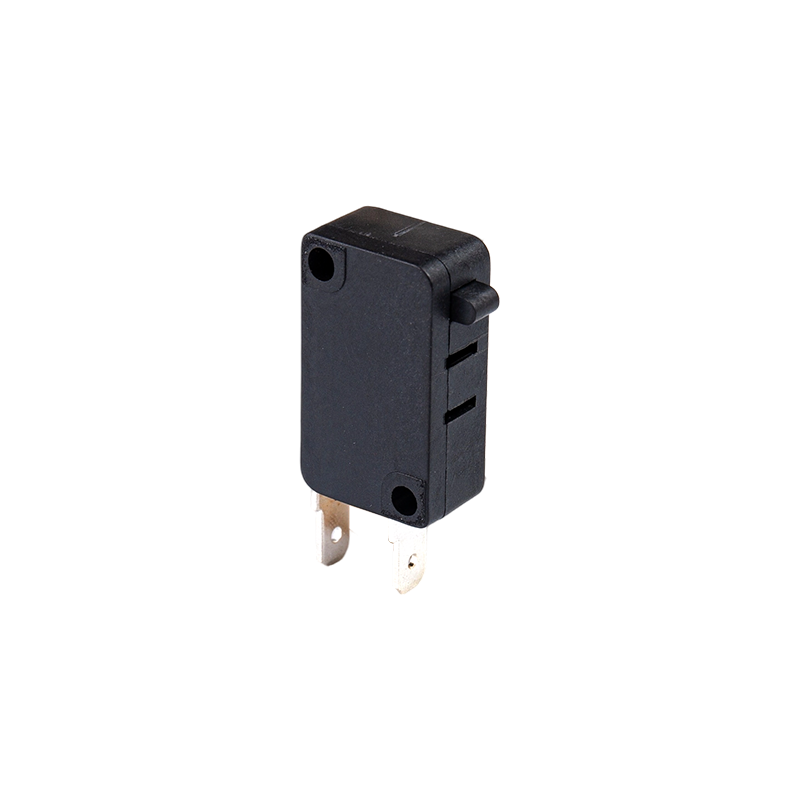
A micro switch is a small mechanical switch with a fast action mechanism, which is widely used in household appliances, industrial automation, automotive electronics, medical equipment, and other fiel...View More >>
-
The baby stroller gear switch is an innovative product independently developed by our company. We have applied for invention patents both domestically and internationally, which fully demonstrates the...View More >>
-
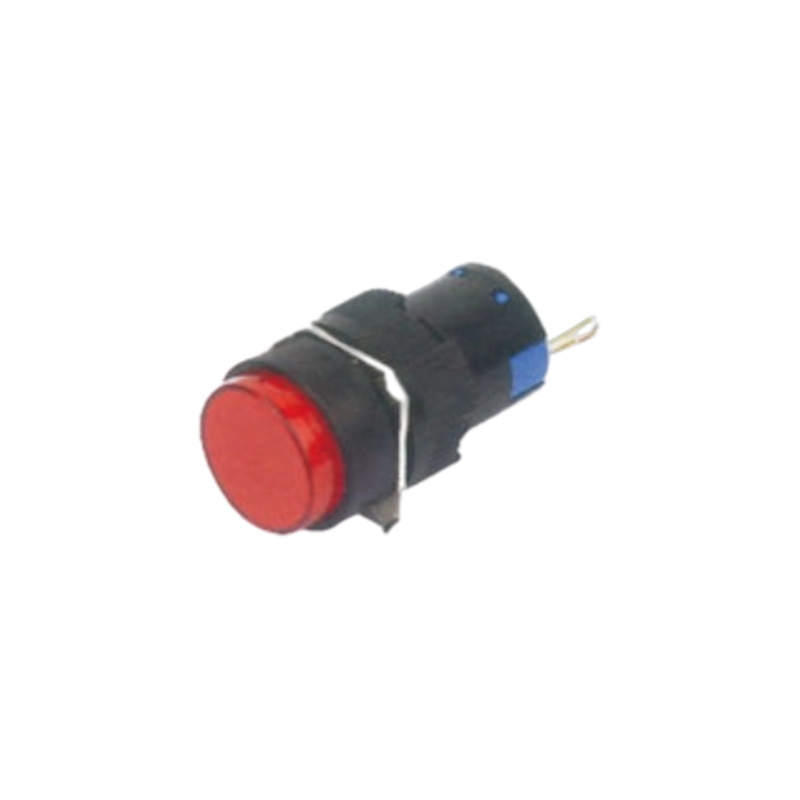
Push button switches are widely used in various control systems with their diverse structural designs, high-strength material selection, and excellent performance. The products are available in a vari...View More >>
-
The internal structure of the piano key switch mostly adopts a mechanical or light-touch design. Some high-end models use capacitive sensing technology to achieve contactless operation, thereby improv...View More >>
-
The knob switch adopts a high-sensitivity rotary contact structure, which has smooth operation and clear positioning, ensuring that every adjustment is accurate. The product has excellent durability a...View More >>
-
The KM trigger switch is a universal high-current switch designed for high-power power tools, with excellent current carrying capacity and stable performance. The internal fast-action structure ensure...View More >>
-
A door control switch, also known as a door magnetic switch or door status sensor, is a key electrical component widely used in industrial control, security systems, intelligent building automation, a...View More >>
-
The wiring harness is an overall wiring assembly that integrates multiple wires, cables, terminals, and connectors according to specific electrical design and mechanical structure requirements. It is ...View More >>
-
PCB control board is one of the indispensable core components in modern electronic devices. As the brain of the control system, it is widely used in many fields such as industrial automation, consumer...View More >>
NEWS
 Home / News / Industry News / PCB Control Board Guide: How It Works, Main Types, and Key Selection Tips
PCB Control Board Guide: How It Works, Main Types, and Key Selection Tips
 2026.10.13
 Industry News
If you have ever opened up a washing machine, a cordless drill, or a vending machine, you have probably seen the small board that quietly runs everything inside. That board is a PCB control board, and although it looks like just another piece of green fibreglass, it is the part that decides when a motor starts, how long a heater stays on, and what the device does when a sensor reports a fault. Knowing what sits on that board, and how it gets chosen, makes it far easier to specify one that will still be working five years from now.
Content
- 1 What Is a PCB Control Board?
- 2 What a PCB Control Board Actually Does
- 3 The Main Types of PCB Control Boards
- 4 Where PCB Control Boards Are Used
- 5 How to Choose the Right PCB Control Board
- 6 Control Boards We Build Ourselves
- 7 Design Details That Decide Long-Term Reliability
- 8 Working With the Switches Around the Board
- 9 Bringing It Together
What Is a PCB Control Board?
The words "PCB" and "control board" are often used interchangeably, but they describe two different things. A printed circuit board is the platform: an insulating base, usually fibreglass, with copper traces etched onto it to connect components. On its own, it does nothing at all.
A control board is a PCB that has been populated with the parts that make decisions. That normally means a microcontroller or another logic device, a power stage built from relays, triacs, or MOSFETs, input protection, connectors, and often a small indicator or display driver. The board reads signals from switches and sensors, applies the rules written into its firmware, and switches the loads the product depends on.
In most equipment the control board is the meeting point between the user, the sensors, and the load. A button press or a switch closure arrives at an input pin, the logic decides what that means, and the output stage responds.
What a PCB Control Board Actually Does
Whatever the product, the job of the board usually comes down to a handful of tasks:
- Input conditioning: filtering and protecting signals that arrive from switches, buttons, keypads, thermistors, or limit sensors.
- Logic and timing: running the control sequence, delays, interlocks, and safety rules that define how the device behaves.
- Power switching: driving motors, heaters, lamps, solenoids, and valves through relays, triacs, or transistor output stages.
- Feedback and monitoring: reading current, temperature, or position so the firmware can correct itself or stop safely.
- Communication: exchanging data with displays, remote controls, or higher-level controllers over serial links or fieldbus interfaces.
- Protection: surviving overcurrent, overvoltage, reverse polarity, and the occasional wiring mistake.
The Main Types of PCB Control Boards
By Controller Type
What sits at the centre of the board shapes almost everything else, from the cost per unit to how much code you will have to maintain.
| Board type | Strengths | Typical equipment |
|---|---|---|
| MCU-based board | Flexible logic, low cost at volume, simple firmware updates | Home appliances, power tools, cleaning equipment |
| PLC-style board | Rugged I/O, familiar ladder logic, easy field wiring | Industrial panels, building automation |
| DSC or FPGA board | Fast, repeatable control of motors and waveforms | Motor drives, precision motion, power conversion |
| Single-board microcontroller | Quick to prototype, generous on-board peripherals | Prototypes, small batches, test rigs |
| ASIC or custom logic board | Very low unit cost once volumes are high | High-volume consumer products |
By Construction
Assembly choices matter just as much. A simple single-sided board with through-hole parts is still a sensible answer in appliances where cost and repairability come first. Double-sided surface-mount boards pack more function into a smaller outline, and multilayer or high-density designs are used when signal integrity, grounding, or sheer component count leave no room for compromise. The right answer is the one your volumes, your enclosure, and your field-service expectations can live with.
Where PCB Control Boards Are Used
Control boards appear wherever a product has to make a decision rather than simply pass current along:
- Household appliances such as soymilk makers, juicers, and small kitchen machines, where the board sequences motors, heaters, and timers.
- Power tools and garden equipment, where it manages start-up current, speed, and battery protection.
- Cleaning equipment, where pumps and brushes must run in a defined order and shut down safely.
- Office machines, printers, and computer peripherals, where the board handles transport motors, sensors, and status signals.
- Generators and power equipment, where monitoring and protection matter as much as switching.
- Industrial control, access control, and building automation, where boards work alongside door status sensors and panel switches.
In every case the board is judged by the same three things: does it switch reliably, does it stay cool, and does it behave predictably when something outside the specification happens.
How to Choose the Right PCB Control Board
Start by listing what the board has to do, then work through the points below before you compare prices:
- Supply voltage and input range: what the board must accept, and how much variation it should tolerate.
- Load current and switching method: relay, triac, or transistor output, always with sensible margin.
- Isolation and clearance: the separation between mains and logic that your safety requirements demand.
- Thermal budget: how warm the enclosure gets, and how much copper area is available to spread that heat.
- Environment: dust, moisture, cleaning fluids, vibration, and ambient temperature over the life of the product.
- Mechanical fit: board outline, mounting holes, connector positions, and cable routing inside the housing.
- Firmware, documentation, and lifecycle: who writes the code, and how long the board will stay available.
A specification that answers these questions rarely ends in a surprise at the first production run.
Control Boards We Build Ourselves
We come to this subject from the switching side, and our own PCB control boards are aimed at the situations that come up most often in appliance and equipment work, where a board sits close to heat, runs for years, and has to keep its output steady.
The HX001 is built for heat resistance and a stable output voltage, which suits equipment that runs warm for long periods or lives in an enclosure with limited airflow.
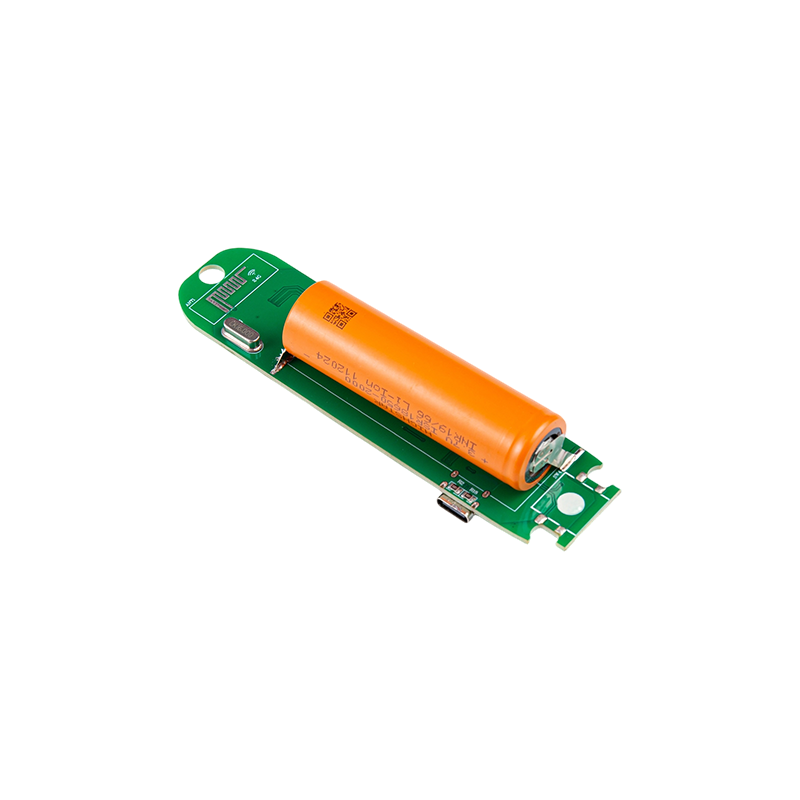 HX-001 Heat-Resistant Voltage-Stabilized PCB Control BoardHeat-resistant PCB control board for power tools and industrial cleaning equipment, offering stable voltage output and thermal management for demanding, enclosed, or long-running motor-driven systems.View Product →
The JD001 takes the other route, focusing on energy saving and tight control accuracy for products where every watt and every degree of regulation counts.
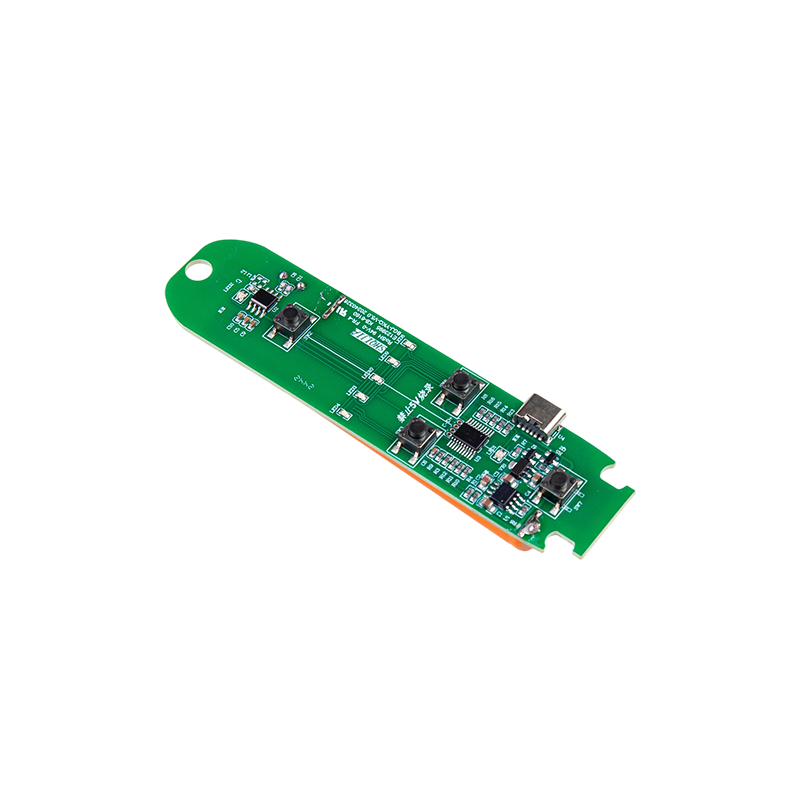 JD-001 Energy-Saving High-Precision PCB Control BoardEnergy-saving, high-precision control board for power tools and cleaning systems, using dynamic voltage modulation and adaptive speed regulation to reduce consumption and maintain stable output.View Product →
Both are supplied with the same expectation we apply to our switch range: consistent behaviour from batch to batch, and documentation you can actually design against.
Design Details That Decide Long-Term Reliability
Most early field failures come from layout and material choices rather than from the logic itself, so it is worth reviewing these four points on every board:
- Thermal path: copper area, spacing, and airflow around the hottest components.
- Clearance and creepage: enough distance between high-voltage and low-voltage areas, especially on mains-powered designs.
- Noise and immunity: keep switching currents away from sensitive analog inputs, and filter signals where they enter the board.
- Protection of the assembly: conformal coating or potting when moisture, dust, or cleaning fluids are part of daily life.
Test the board the way it will be used. Cycling it in a warm enclosure with real loads tells you more than an hour on a bench supply ever will.
Working With the Switches Around the Board
A control board rarely works alone. Panel buttons, rocker switches, micro switches, and limit sensors feed it, while a wiring harness carries signals and load currents between the board and the rest of the machine. Choosing them as a set, rather than one part at a time, is usually the quickest way to avoid surprises during the first build. If detection is part of your design, our micro switch selection guide walks through actuation, travel, and electrical ratings in more detail.
For the wiring itself, the harness we build for general equipment use follows the same priorities as the boards: reliable contact, sensible strain relief, and connectors that hold up under vibration.
 High-Current High-Voltage DC Wiring Harness Connector SystemHigh-current, high-voltage DC connector system with integrated micro switch and spot-welded harness, suited to power tools, outdoor equipment, and industrial cleaning applications.View Product →
Bringing It Together
A PCB control board is not a mysterious part. It is a defined set of jobs, an input stage, a logic stage, an output stage, and a power supply, packaged so that it survives the environment it is installed in. Get the specification right at the start, keep the thermal and isolation details honest, and the board becomes the least troublesome part of the product.
If you would like to see how our switch, harness, and control board range fits together on a single project, we are happy to compare notes on your application and help you narrow down the options.

A Appliance Switches Manufacturer that has been focusing on the development, production and sales of Switches for 21 years;
Products Links
Contact Information
Tel: +86-021-33752188
Phone: +86-13524812989
E-Mail: [email protected]
[email protected]
[email protected]Address: No. 580 Shenzhou Road, Fengxian District, Shanghai, China

