


 English
  русский
  Español
  Deutsch
  عربى
عربى -
A Rocker Switch is a compact and easy-to-operate manual control component. Its unique rocker-style actuation, combined with a toggle or momentary reset function, allows users to quickly switch circuit...View More >>
-
A micro switch is a small mechanical switch with a fast action mechanism, which is widely used in household appliances, industrial automation, automotive electronics, medical equipment, and other fiel...View More >>
-
The baby stroller gear switch is an innovative product independently developed by our company. We have applied for invention patents both domestically and internationally, which fully demonstrates the...View More >>
-
Push button switches are widely used in various control systems with their diverse structural designs, high-strength material selection, and excellent performance. The products are available in a vari...View More >>
-
The internal structure of the piano key switch mostly adopts a mechanical or light-touch design. Some high-end models use capacitive sensing technology to achieve contactless operation, thereby improv...View More >>
-
The knob switch adopts a high-sensitivity rotary contact structure, which has smooth operation and clear positioning, ensuring that every adjustment is accurate. The product has excellent durability a...View More >>
-
The KM trigger switch is a universal high-current switch designed for high-power power tools, with excellent current carrying capacity and stable performance. The internal fast-action structure ensure...View More >>
-
A door control switch, also known as a door magnetic switch or door status sensor, is a key electrical component widely used in industrial control, security systems, intelligent building automation, a...View More >>
-
The wiring harness is an overall wiring assembly that integrates multiple wires, cables, terminals, and connectors according to specific electrical design and mechanical structure requirements. It is ...View More >>
-
PCB control board is one of the indispensable core components in modern electronic devices. As the brain of the control system, it is widely used in many fields such as industrial automation, consumer...View More >>
NEWS

Dustproof Tower-Type Button Switch: How to Choose One That Lasts
 2026.10.09
 Industry News
A dustproof tower-type button switch is a push button switch with a raised, tower-shaped cap and a sealed body that keeps dust out of the contacts. If you have ever had a control panel button start sticking or give you unreliable signals in a workshop, a woodworking line, or a cement plant, dust was most likely the cause. This guide explains how these switches are built, what to check before you buy, and how to install and look after them.
Content
- 1 What Is a Dustproof Tower-Type Push Button Switch?
- 2 Why Dust Damages Ordinary Switches
- 3 How the Dustproof Design Works
- 4 Key Specs to Check Before You Buy
- 5 Where a Dustproof Tower-Type Button Switch Works Best
- 6 Installation Tips to Keep the Seal Intact
- 7 Simple Maintenance for Longer Switch Life
- 8 Common Mistakes When Choosing a Dustproof Tower Button Switch
- 9 Final Thoughts on Buying a Dustproof Tower-Type Button Switch
What Is a Dustproof Tower-Type Push Button Switch?
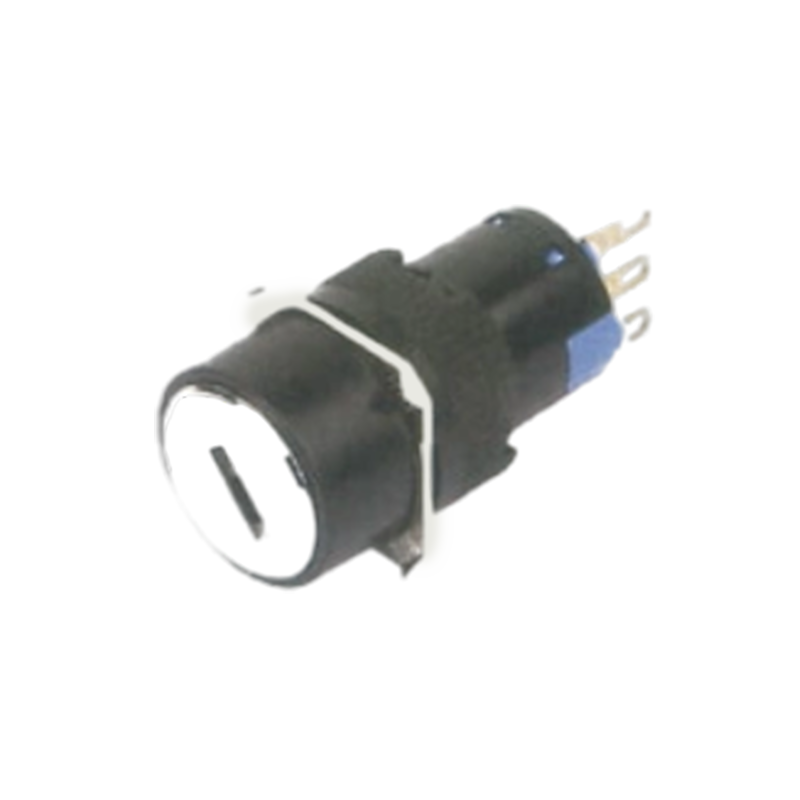
The "tower" part describes the shape of the actuator. Instead of a flat or flush button, the cap rises above the panel in a cylindrical or slightly tapered column. This makes it easy to find by touch, easy to press with a gloved finger, and less likely to be triggered by accident than a flat, oversized cap. The "dustproof" part means the switch has a sealed structure, usually a silicone boot, a rubber gasket, or an O-ring, that blocks fine particles from reaching the internal contacts.
You will see this product listed under several names, including dust-proof tower button switch, tower-shaped dustproof pushbutton, sealed tower push button, and dust-resistant tower-type push switch. They all refer to the same idea: a tall-profile push button with a sealed body. Most are momentary (the switch only conducts while pressed), but latching versions also exist.
Why Dust Damages Ordinary Switches
Dust is more destructive than most people expect. Fine particles slip through the gap between the cap and the housing, settle on the contact surfaces, and cause problems over time.
- Conductive dust (metal shavings, carbon dust) can short the contacts or leak current across terminals.
- Insulating dust (wood dust, flour, cement) builds up on the contacts and causes intermittent or no connection.
- Sticky dust mixed with oil or moisture gums up the plunger and spring, so the button feels stiff or fails to return.
- Abrasive dust wears down the contact plating and shortens the electrical life of the switch.
A sealed switch costs a bit more up front, but replacing failed buttons and stopping production to troubleshoot ghost faults costs much more.
How the Dustproof Design Works
Sealing at the Actuator
The moving part is the most vulnerable point. Quality switches use a silicone or rubber boot over the plunger, or an O-ring around the stem, so the button can travel without opening a path for dust. The boot also gives the switch a consistent, soft tactile feel.
Sealing at the Panel and Terminals
Dust can also enter where the switch meets the panel or where the wires attach. A front gasket or flange seal closes the panel gap. At the rear, potted terminals, sealed lead wires, or a closed back cover keep dust from creeping in from behind.
Understanding the IP Rating
The most reliable way to judge dust protection is the IP (Ingress Protection) rating. The first digit covers solid particles. A first digit of 5 means dust-protected (a small amount of dust may enter, but not enough to interfere with operation), while 6 means fully dust-tight. For dusty sites, look for IP65 or higher. If the switch may also be washed down, check the second digit for water protection.
Key Specs to Check Before You Buy
Do not choose a dustproof tower-type button switch on looks alone. The table below lists the specs that most often decide whether a switch works well in the field.
| Spec | What to Look For | Why It Matters |
| IP rating | IP65 or higher for heavy dust | Confirms real protection against fine particles |
| Contact rating | Voltage and current above your actual load | Prevents overheating and contact welding |
| Contact material | Silver alloy or gold-plated | Silver suits power loads; gold suits low-level signals |
| Mechanical life | Rated in hundreds of thousands to millions of operations | Indicates durability on high-frequency panels |
| Operating temperature | Covers your site's hot and cold extremes | Seals can harden or soften outside their range |
| Mounting hole size | Matches your panel cutout (common sizes are 12 mm, 16 mm, 19 mm, 22 mm) | Avoids re-drilling and ensures a tight gasket seal |
| Cap color and marking | Clear color coding, optional LED ring | Helps operators identify start, stop, and reset quickly |
Always choose a contact rating with some safety margin over your real load. A switch running at its absolute limit will age faster, and dust protection does nothing for contacts that are overloaded.
Where a Dustproof Tower-Type Button Switch Works Best
These switches suit any panel where the environment is harsh and operators need a clear, easy-to-find button.
- Woodworking and CNC machines, where sawdust gets into everything.
- Cement, mining, and quarry equipment with heavy mineral dust.
- Food and grain processing lines, where flour and powder drift through the air.
- Textile machinery, where lint and fiber build up around moving parts.
- Outdoor kiosks, vending equipment, and agricultural machines exposed to dirt and weather.
- Handheld controllers and pendant stations used with work gloves.
Installation Tips to Keep the Seal Intact
Even the best sealed switch can let dust in if it is installed carelessly. The following habits protect the rating the manufacturer gave you.
- Drill or punch the panel hole to the exact size in the datasheet, and deburr the edges so the gasket sits flat.
- Make sure the panel surface around the hole is clean and flat before fitting the switch.
- Tighten the mounting nut to the recommended torque. Too loose leaves a gap, and too tight can deform the gasket or crack the housing.
- Use the supplied gasket or O-ring, and do not leave it out to save time.
- Route wires so they do not pull on the terminals, and seal any cable entry points behind the panel.
Simple Maintenance for Longer Switch Life
Dustproof does not mean maintenance-free. Wipe the cap and surrounding panel regularly with a soft, slightly damp cloth so dust does not pile up around the boot. Avoid high-pressure air or harsh solvents, because compressed air can push particles past the seal and strong chemicals can degrade silicone and rubber. Check the boot for cracks, hardening, or tears during routine inspections. If the button feels sticky, slow to return, or inconsistent, replace the switch before it causes a false stop or a missed signal.
Common Mistakes When Choosing a Dustproof Tower Button Switch
Trusting the Word "Dustproof" Without an IP Rating
Some listings use "dustproof" loosely. Ask for the actual IP rating and, if possible, the test report or datasheet. A real IP65 switch should state it clearly.
Ignoring the Actual Load
A switch used to drive a relay coil or PLC input has very different needs from one switching a motor or lamp directly. Match the contact rating and material to the load type, not just to the supply voltage.
Forgetting Operator Comfort
Tower height, cap diameter, and press force affect how the button feels during an eight-hour shift. If operators wear gloves, a taller cap with a firmer, clearly defined click reduces errors and fatigue. Order a sample first when the panel will be used all day.
Final Thoughts on Buying a Dustproof Tower-Type Button Switch
A good dustproof tower-type button switch comes down to four things: a verified IP rating, a contact rating that suits your load, a seal that stays intact after installation, and a cap that feels right to the people who use it. Check these before you place an order, install the switch carefully, and inspect it from time to time, and it will give you reliable service in conditions where ordinary switches fail within months.


A Appliance Switches Manufacturer that has been focusing on the development, production and sales of Switches for 21 years;
Products Links
Contact Information
Tel: +86-021-33752188
Phone: +86-13524812989
E-Mail: [email protected]
[email protected]
[email protected]Address: No. 580 Shenzhou Road, Fengxian District, Shanghai, China

