


 English
  русский
  Español
  Deutsch
  عربى
عربى -
A Rocker Switch is a compact and easy-to-operate manual control component. Its unique rocker-style actuation, combined with a toggle or momentary reset function, allows users to quickly switch circuit...View More >>
-
A micro switch is a small mechanical switch with a fast action mechanism, which is widely used in household appliances, industrial automation, automotive electronics, medical equipment, and other fiel...View More >>
-
The baby stroller gear switch is an innovative product independently developed by our company. We have applied for invention patents both domestically and internationally, which fully demonstrates the...View More >>
-
Push button switches are widely used in various control systems with their diverse structural designs, high-strength material selection, and excellent performance. The products are available in a vari...View More >>
-
The internal structure of the piano key switch mostly adopts a mechanical or light-touch design. Some high-end models use capacitive sensing technology to achieve contactless operation, thereby improv...View More >>
-
The knob switch adopts a high-sensitivity rotary contact structure, which has smooth operation and clear positioning, ensuring that every adjustment is accurate. The product has excellent durability a...View More >>
-
The KM trigger switch is a universal high-current switch designed for high-power power tools, with excellent current carrying capacity and stable performance. The internal fast-action structure ensure...View More >>
-
A door control switch, also known as a door magnetic switch or door status sensor, is a key electrical component widely used in industrial control, security systems, intelligent building automation, a...View More >>
-
The wiring harness is an overall wiring assembly that integrates multiple wires, cables, terminals, and connectors according to specific electrical design and mechanical structure requirements. It is ...View More >>
-
PCB control board is one of the indispensable core components in modern electronic devices. As the brain of the control system, it is widely used in many fields such as industrial automation, consumer...View More >>
NEWS
 Home / News / Industry News / Piano Key Switches Explained: What They Are and Why They Matter for Your Playing
Piano Key Switches Explained: What They Are and Why They Matter for Your Playing
 2026.08.25
 Industry News
Content
- 1 What Are Piano Key Switches, Really?
- 2 How Piano Key Switches Actually Work
- 3 Common Types of Piano Key Switches
- 4 Comparing Piano Key Switch Types
- 5 Why Switch Quality Matters More Than You Think
- 6 Tips for Choosing an Instrument Based on Switch Type
- 7 Maintaining Piano Key Switches for Long-Term Performance
What Are Piano Key Switches, Really?
If you've ever pressed a key on a digital piano or a high-end keyboard and felt that smooth, weighted resistance before the note sounds, you've experienced piano key switches at work. These are the mechanical or electro-mechanical components hidden beneath each key that detect your press and translate it into an electrical signal. Unlike the simple membrane switches found in cheap keyboards, piano key switches are engineered to mimic the touch and response of an acoustic piano's hammer action, giving players a more natural, expressive playing experience.
The term "piano key switches" can refer to a few different things depending on context — the sensor mechanism under each key of a digital piano, the mechanical switches used in piano-style keyboard controllers for music production, or even novelty mechanical keyboard switches designed to replicate a piano-like tactile feel for typing. In this article, we'll break down how these switches work, the main types you'll encounter, and what to look for when choosing gear that uses them.
How Piano Key Switches Actually Work
At the core of every piano key switch is a simple goal: detect when a key is pressed, how hard it's pressed, and sometimes how fast it's released. Most digital pianos use a system of two or three contact points beneath each key. As you press down, the key passes through these contact points in sequence, and the time gap between triggering each one is measured electronically. This gap tells the instrument how quickly you struck the key, which is then translated into velocity — the loudness and tonal character of the note.
The Role of Velocity Sensing
Velocity sensing is what separates a true piano key switch system from a basic on/off keyboard switch. A gentle press produces a soft, mellow tone, while a fast, forceful press produces a louder, brighter tone — just like on an acoustic piano. This is why piano key switches typically use multiple sensor points rather than a single contact, since one point can only tell you that a key was pressed, not how expressively it was played.
Weighted Action and Mechanical Feel
Beyond electrical detection, many piano key switches are paired with a weighted hammer mechanism. This adds physical resistance to each keypress, replicating the feel of an acoustic piano's internal hammers striking strings. The combination of weighted resistance and multi-point sensing is what makes a digital piano feel "real" under the fingers rather than springy or hollow like a synthesizer keyboard.
Common Types of Piano Key Switches
Not all piano key switches are built the same way. Manufacturers use different sensor technologies depending on the price point and intended use of the instrument. Here's a breakdown of the most common types you'll come across.
- Rubber dome switches – affordable and common in entry-level keyboards, offering basic velocity sensing with a soft tactile bump.
- Optical key switches – use infrared light beams instead of physical contacts, resulting in smoother action and less wear over time.
- Triple-sensor switches – found in higher-end digital pianos, these use three contact points per key for extremely accurate velocity and repetition detection.
- Graded hammer switches – combine mechanical weighting with electronic sensing, giving heavier resistance on lower keys and lighter resistance on higher keys, just like an acoustic piano.
- Mechanical keyboard-style piano switches – used in some MIDI controllers and novelty typing keyboards, these borrow tactile or linear switch designs from the mechanical keyboard world but shape the keycap to resemble piano keys.
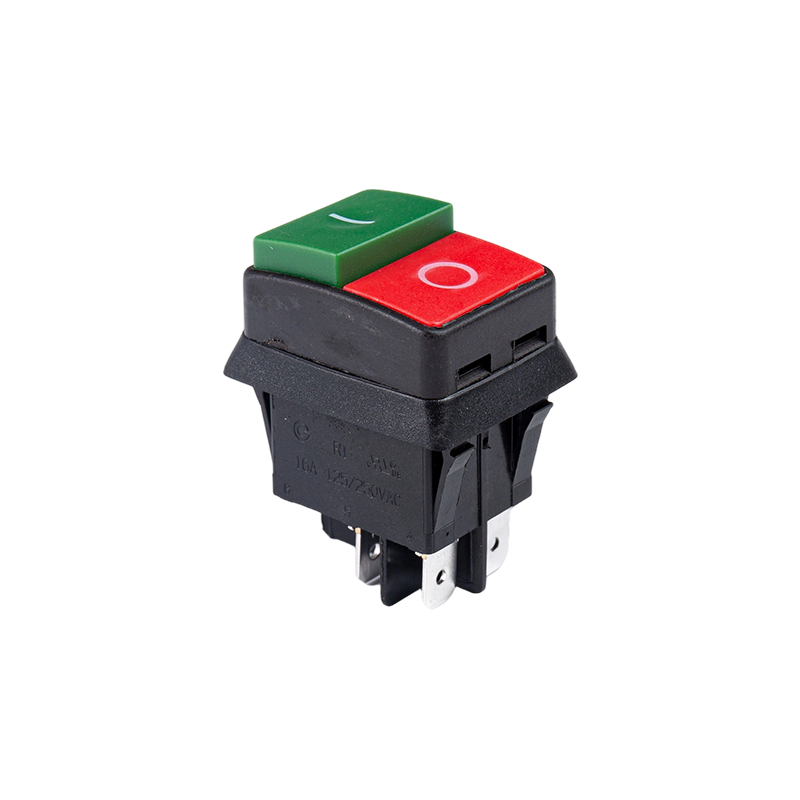
Comparing Piano Key Switch Types
To help you understand the practical differences between switch types, here's a side-by-side comparison covering feel, durability, and typical use cases.
| Switch Type | Feel | Durability | Best For |
| Rubber Dome | Soft, springy | Moderate | Beginners, budget keyboards |
| Optical | Smooth, consistent | High | Mid-range digital pianos |
| Triple-Sensor | Precise, expressive | High | Advanced players, stage pianos |
| Graded Hammer | Realistic, weighted | High | Classical training, home pianos |
| Mechanical-Style | Tactile or linear click | Very High | MIDI controllers, novelty typing |
Why Switch Quality Matters More Than You Think
It's easy to overlook the switch mechanism when shopping for a digital piano, especially since most buyers focus on sound quality, speaker wattage, or app connectivity. But the switches under the keys directly affect how expressive and enjoyable an instrument is to play. A poor switch system can make even a beautifully sampled piano sound flat and lifeless, because the instrument fails to capture the nuance of your touch.
Impact on Playing Technique
Piano students in particular benefit from high-quality graded hammer switches, since these help build proper finger strength and technique that transfers to acoustic pianos. Practicing on a keyboard with poor switch response can actually create bad habits, since the player never learns to modulate their touch for dynamic control.
Impact on Longevity and Reliability
Switch quality also affects how long an instrument lasts. Optical and mechanical-style switches tend to resist wear far better than rubber dome designs, since there's no physical contact degrading over time. If you're buying an instrument for heavy daily use, such as in a teaching studio or for gigging musicians, investing in a keyboard with more durable switch technology pays off in the long run.
Tips for Choosing an Instrument Based on Switch Type
When you're evaluating digital pianos or MIDI controllers, it helps to physically test the keys whenever possible rather than relying solely on spec sheets. Here are a few practical tips to guide your decision.
- Play both soft and hard passages to test whether the velocity response feels natural across the full dynamic range.
- Check for graded weighting by comparing the resistance of bass keys versus treble keys.
- Listen for excessive clacking or noise, which can indicate lower-quality switch mechanisms.
- Ask about the sensor type used, since manufacturers often list this in product specifications under terms like "tri-sensor" or "hybrid hammer action."
- Consider your use case — a stage performer may prioritize durability and repetition speed, while a beginner may prioritize comfort and affordability.
Maintaining Piano Key Switches for Long-Term Performance
Even the best piano key switches require some care to stay responsive over the years. Dust, moisture, and general wear can affect sensor accuracy, leading to sticky keys, uneven dynamics, or missed notes. Keeping your instrument in a stable environment, away from direct sunlight and humidity swings, goes a long way toward preserving switch performance.
Regular cleaning is also important. Gently wiping down keys with a slightly damp cloth and avoiding liquid spills near the key bed can prevent debris from interfering with the internal contacts or optical sensors. If you notice a key becoming unresponsive or inconsistent, it's worth having a technician inspect the switch assembly rather than ignoring the issue, since early intervention is usually far cheaper than a full key mechanism replacement.



A Appliance Switches Manufacturer that has been focusing on the development, production and sales of Switches for 21 years;
Products Links
Contact Information
Tel: +86-021-33752188
Phone: +86-13524812989
E-Mail: [email protected]
[email protected]
[email protected]Address: No. 580 Shenzhou Road, Fengxian District, Shanghai, China

