


 English
  русский
  Español
  Deutsch
  عربى
عربى -
A Rocker Switch is a compact and easy-to-operate manual control component. Its unique rocker-style actuation, combined with a toggle or momentary reset function, allows users to quickly switch circuit...View More >>
-
A micro switch is a small mechanical switch with a fast action mechanism, which is widely used in household appliances, industrial automation, automotive electronics, medical equipment, and other fiel...View More >>
-
The baby stroller gear switch is an innovative product independently developed by our company. We have applied for invention patents both domestically and internationally, which fully demonstrates the...View More >>
-
Push button switches are widely used in various control systems with their diverse structural designs, high-strength material selection, and excellent performance. The products are available in a vari...View More >>
-
The internal structure of the piano key switch mostly adopts a mechanical or light-touch design. Some high-end models use capacitive sensing technology to achieve contactless operation, thereby improv...View More >>
-
The knob switch adopts a high-sensitivity rotary contact structure, which has smooth operation and clear positioning, ensuring that every adjustment is accurate. The product has excellent durability a...View More >>
-
The KM trigger switch is a universal high-current switch designed for high-power power tools, with excellent current carrying capacity and stable performance. The internal fast-action structure ensure...View More >>
-
A door control switch, also known as a door magnetic switch or door status sensor, is a key electrical component widely used in industrial control, security systems, intelligent building automation, a...View More >>
-
The wiring harness is an overall wiring assembly that integrates multiple wires, cables, terminals, and connectors according to specific electrical design and mechanical structure requirements. It is ...View More >>
-
PCB control board is one of the indispensable core components in modern electronic devices. As the brain of the control system, it is widely used in many fields such as industrial automation, consumer...View More >>
NEWS
 Home / News / Industry News / Baby Stroller Gear Switch Guide: Selection, Specifications, and Reliability
Baby Stroller Gear Switch Guide: Selection, Specifications, and Reliability
 2026.09.02
 Industry News
When a parent pulls the recline lever and the seat snaps down at an angle that was never selected, the stroller goes from a premium product to a returned product in one use. Most stroller manufacturers trace this complaint to the same component group: the baby stroller gear switch. This part controls the angle locking, the fold release, and the smoothness of motion in both infant carriers and full-size strollers. Because we supply control components and mechanical gear assemblies to equipment manufacturers, we have seen how a properly specified gear switch can make the difference between a five-year product and one that fails before the baby outgrows it. The gear switch is often the single most disassembled part in a stroller returned for recline problems, which is why it deserves the same engineering attention as the frame or the wheels.
Content
What a baby stroller gear switch actually does
A baby stroller gear switch is not an electrical toggle in the usual sense. It is a compact gear mechanism that converts user input into precise angle adjustment, with integrated locking positions and controlled damping. It sits inside the joint between the seat and chassis, or within the folding linkage. The gear teeth define the seat recline steps; the damping structure defines how fast the frame moves; and the locking pawl defines whether the seat holds its position when a child moves.
This design is different from a standard switch because it must handle mechanical load continuously. Every time a parent tilts the backrest or folds the stroller, the gear switch absorbs torque. After thousands of cycles, the material, tooth geometry, and internal clearance determine how well the mechanism performs.
There is also a secondary function that is easy to overlook: the gear switch binds the recline and fold actions into one predictable motion. A well-made gear switch gives the user a satisfying click at each position, which parents read as quality. A loose gear switch produces a vague feel that makes the entire stroller seem inexpensive.
Key specifications to specify before ordering
The following values should appear on your product specification sheet and be verified on the production line, not in a lab prototype.
| Specification | Typical range | Performance effect |
|---|---|---|
| Gear module | 0.5-1.0 mm | Defines tooth strength and rotation smoothness |
| Operating torque | 0.5-3.0 N·m | Sets how easily a parent can adjust the seat |
| Rated cycle life | 10,000-50,000 cycles | Defines service life before play or failure appears |
| Locking holding force | 20-100 N | Ensures the seat stays locked during child movement |
| Operating temperature | -20°C to +60°C | Preserves function in cold or hot climates |
| Housing material | PA66 or POM with glass fill | Controls wear, chemical resistance, and UV stability |
Many manufacturers only specify the general dimensions and leave the mechanical behavior of the gear switch unregulated. That approach leads to inconsistent feel and inconsistent durability. When a supplier offers a custom gear switch, ask for the torque curve at each recline position, the cycle test report under the actual load of your seat mechanism, and the dimensional tolerance of the gear teeth. These three pieces of data tell you more than a hundred sample units.
The operating torque is the value that users feel first. If the torque is too low, the seat moves too easily and a child can shift it accidentally. If the torque is too high, parents complain that the stroller is difficult to adjust, and the complaint often reaches your after-sales team. A realistic target is a gradual, controlled resistance with a clear locking point. For a full-size stroller, that usually means the torque stays inside a band that has been matched to the leverage provided by the recline handle.
If you want a clearer picture of how the locking pawl interacts with the gear steps, our detailed explanation of baby stroller gear switches covers the typical construction and operating principles.
Failure modes that make strollers feel cheap
Even with identical external dimensions, two switches can behave completely differently inside. Here are the most common failure patterns stroller manufacturers see:
- Gear tooth wear: after several thousand cycles, the teeth lose their profile and the seat begins jumping or slipping between recline positions.
- Locking pawl fatigue: the pawl that holds the seat angle can bend or lose spring tension, causing the seat to drift backward under a child's weight.
- Dust and debris ingress: dust accumulates on the gear surfaces, increasing torque and making the mechanism stiff or noisy.
- Dimensional inconsistency between batches: if the supplier cannot hold tight tolerances on molded parts, your assembly line will produce inconsistent recline force and a visible difference in feel across units.
- Plastic material degeneration: low-grade nylon or POM can become brittle in cold weather, leading to cracks and sudden failure.
Each of these failure modes is traceable to specification, material choice, and quality control. When the switch is integrated at the final assembly stage, a failure means full disassembly, high scrap cost, and an impact on customer trust that no warranty policy can repair.
In the field, these failures are reported differently. A gear wear issue shows up as a seat that will not stay in the uppermost position. A pawl fatigue issue shows up as a seat that gradually slips when the user leans on it. A batch tolerance issue shows up across an entire production run and can trigger a recall decision. This is why the gear switch should be tested as a part of the stroller, not as an isolated unit.
How to evaluate a stroller gear switch supplier
A supplier that understands the actual mechanism will ask you about your torque range, cycle target, and recline angles before quoting a price. Here is what we believe deserves attention:
- Ask for cycle test data under load: the greatest risk is that the supplier tests the gear switch without the seat frame, so the dynamic load of the child and the seat cushion is missing.
- Verify torque consistency: a good supplier can hold a tight tolerance band on the operating torque. If the same model varies by more than about 15%, your production line will need manual adjustment, and users will notice.
- Review the material data sheet: glass-filled PA66 or POM with a documented glass content is the minimum for long gear life. Ask for the certificate that confirms the raw material specification.
- Confirm that the part supports your assembly method: the gear switch must fit into your injection-molded housing without extra clips or shims. A component supplier should recommend a tolerance stack-up for the joint.
- Check the intellectual property status: a builder that owns patents on its gear switch is more likely to have invested in design and testing, and it is less likely to deliver a copied generic mechanism.
If a supplier answers "we can do that" without asking about your design targets, treat it as a warning signal. A serious component manufacturer will want to understand your stroller mechanism from the first conversation.
Choosing the right model for your stroller design
Map the product series to the performance requirements of your stroller. For a full-size stroller meant to carry a child up to 25 kg, the switch should have heavier gear teeth and stronger locking. The BM1 series is built for that scenario, with a gear set and housing sized for repeated load.
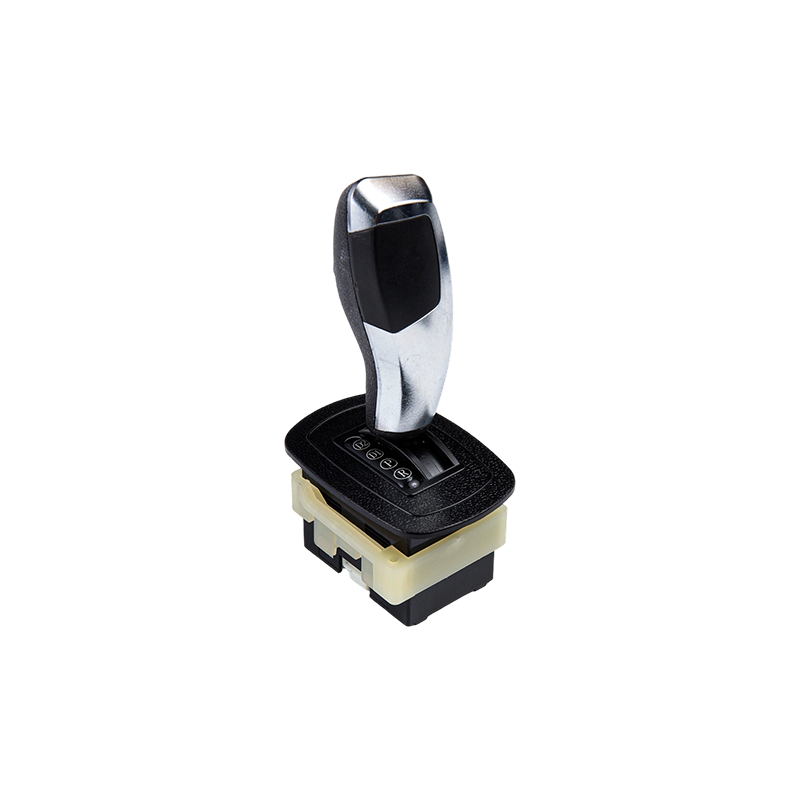 BM1 Sturdy Gear Switch for Full-Size StrollersThe BM1 gear switch is engineered with robust construction and premium materials for dependable locking, making it a strong choice for full-size strollers that need secure recline control under load.View Product →
For a premium model where the seat must stay locked during active child movement, safety and durability dominate. The BM2 series focuses on locking holding force and cycle life, which makes it a good fit when recline behavior is a core selling point.
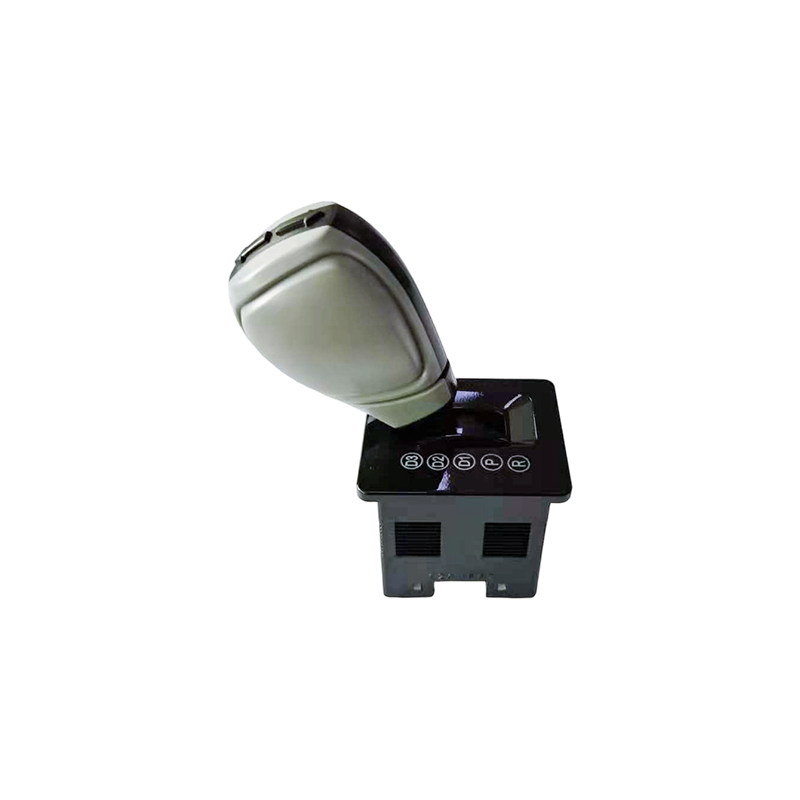 BM2 Safe and Durable Switch for Premium StrollersThe BM2 switch prioritizes locking retention and cycle life, offering a secure solution for premium strollers where recline stability is a key feature. Its robust design prevents accidental shifts.View Product →
For a travel or lightweight stroller, weight and compactness matter more than maximum torque. The BM3 series keeps the profile thin while maintaining reliable gear engagement, so it works well when every gram counts.
For a stroller with many recline positions, precise adjustability and consistent incremental indexing are the main design goals. The BM5 series delivers that precision, letting the seat stop cleanly at each selected angle.
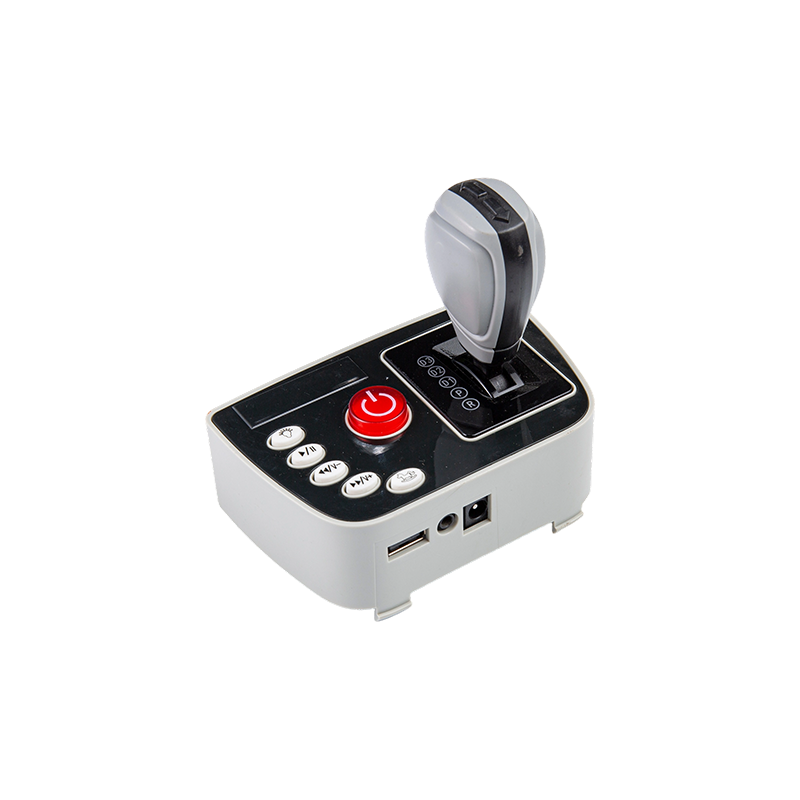 BM5 Precision-Adjustable Switch for Multi-Recline StrollersThe BM5 switch delivers precise incremental adjustment, allowing the stroller seat to stop cleanly at each recline angle. Ideal for models with multiple positions, it combines tactile control with refined engineering.View Product →
All four series share the same approach: a compact gear train with a molded housing and a metal spring element for locking. The differences are in the tooth profile, the housing thickness, and the locking geometry. This means the same integration concept can often be reused across a product line, saving engineering time when you extend from a full-size stroller to a travel model.
Integration and validation tips
Before placing a volume order, run a simple validation routine on your own assembly line.
Take ten gear switches from the same production batch and mount them into your stroller frame. Measure the torque needed to move the seat from the first to the last recline position and record the value for every unit. Then cycle each frame through its full range 5,000 times and measure again. A well-built gear switch should not show more than a 20 percent drift in torque over that test, and it should not develop any visible slop.
It is also worth testing cold performance. Put a complete stroller in a chamber at -10°C and check whether the recline mechanism moves with the same resistance. Cheap POM can stiffen noticeably at low temperatures, and that difference becomes obvious to a parent walking outside on a winter morning.
Finally, ask the supplier to share the torque versus angle graph for your custom part. This graph shows the locking positions as clear dips and the transition zones as smooth rises. If the graph looks irregular or the dips are weak, you are looking at a part that will feel uncertain in the hand.
For a practical selection checklist, our guide on how to choose the right baby stroller gear switches walks through the main factors in sequence.

A Appliance Switches Manufacturer that has been focusing on the development, production and sales of Switches for 21 years;
Products Links
Contact Information
Tel: +86-021-33752188
Phone: +86-13524812989
E-Mail: [email protected]
[email protected]
[email protected]Address: No. 580 Shenzhou Road, Fengxian District, Shanghai, China

