


 English
  русский
  Español
  Deutsch
  عربى
عربى -
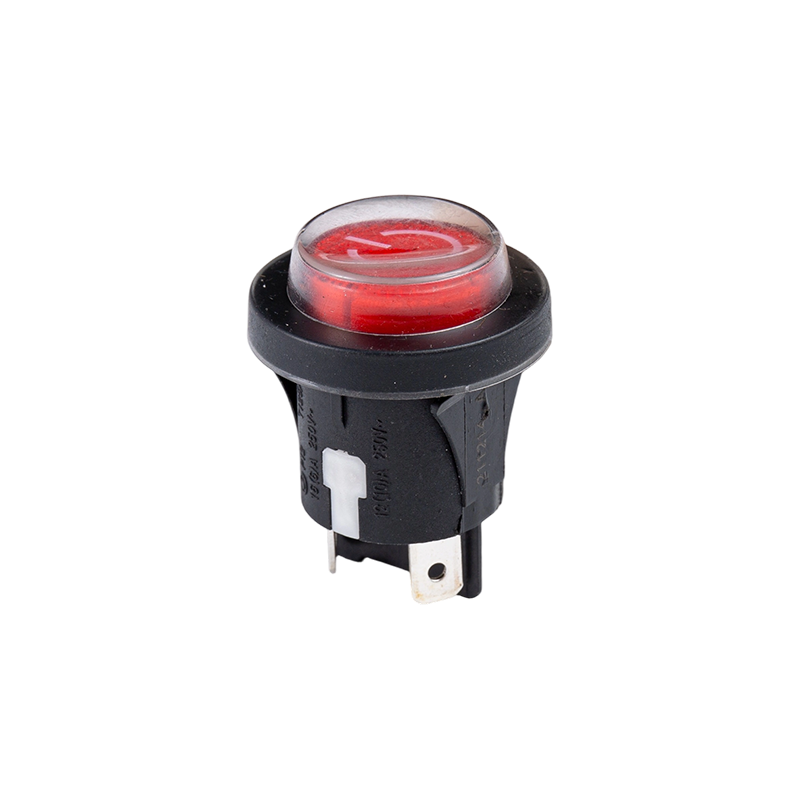
A Rocker Switch is a compact and easy-to-operate manual control component. Its unique rocker-style actuation, combined with a toggle or momentary reset function, allows users to quickly switch circuit...View More >>
-
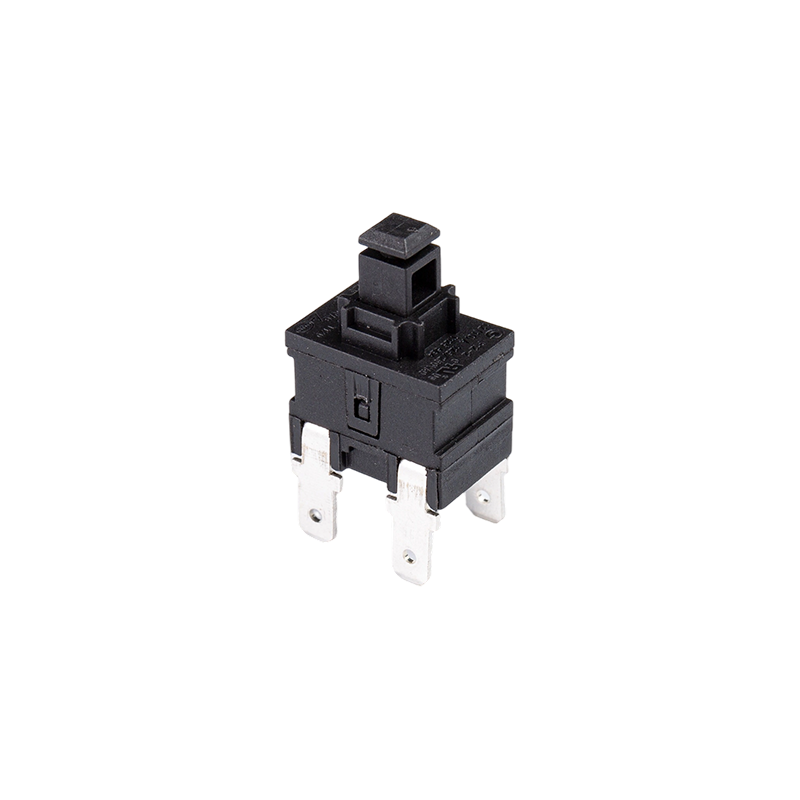
A micro switch is a small mechanical switch with a fast action mechanism, which is widely used in household appliances, industrial automation, automotive electronics, medical equipment, and other fiel...View More >>
-
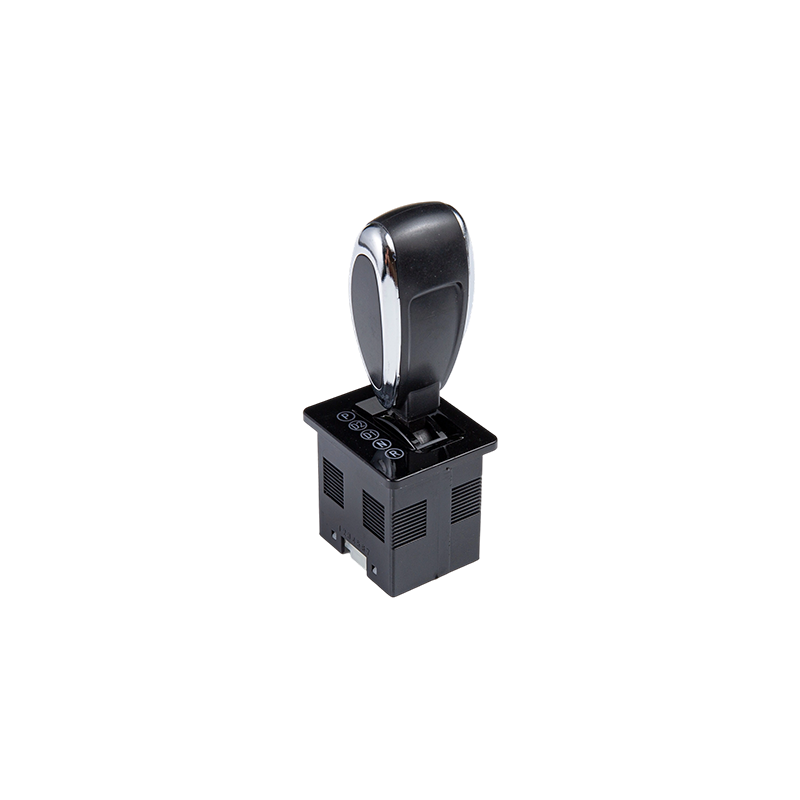
The baby stroller gear switch is an innovative product independently developed by our company. We have applied for invention patents both domestically and internationally, which fully demonstrates the...View More >>
-
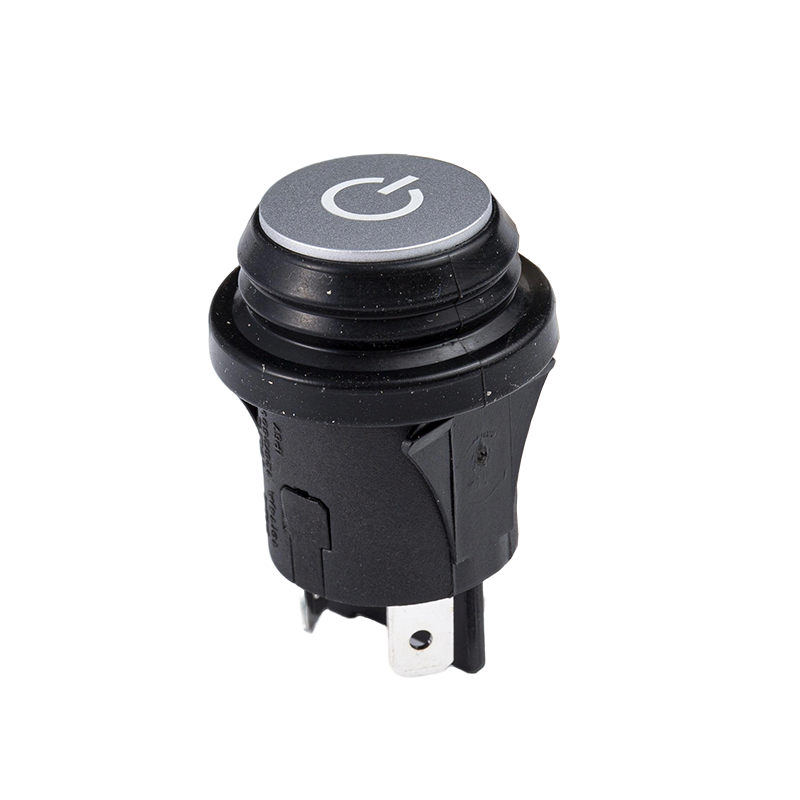
Push button switches are widely used in various control systems with their diverse structural designs, high-strength material selection, and excellent performance. The products are available in a vari...View More >>
-
The internal structure of the piano key switch mostly adopts a mechanical or light-touch design. Some high-end models use capacitive sensing technology to achieve contactless operation, thereby improv...View More >>
-
The knob switch adopts a high-sensitivity rotary contact structure, which has smooth operation and clear positioning, ensuring that every adjustment is accurate. The product has excellent durability a...View More >>
-
The KM trigger switch is a universal high-current switch designed for high-power power tools, with excellent current carrying capacity and stable performance. The internal fast-action structure ensure...View More >>
-
A door control switch, also known as a door magnetic switch or door status sensor, is a key electrical component widely used in industrial control, security systems, intelligent building automation, a...View More >>
-
The wiring harness is an overall wiring assembly that integrates multiple wires, cables, terminals, and connectors according to specific electrical design and mechanical structure requirements. It is ...View More >>
-
PCB control board is one of the indispensable core components in modern electronic devices. As the brain of the control system, it is widely used in many fields such as industrial automation, consumer...View More >>
NEWS
 Home / News / Industry News / Baby Stroller Gear Switches Explained: What They Are, How They Work, and What to Look For
Baby Stroller Gear Switches Explained: What They Are, How They Work, and What to Look For
 2026.04.29
 Industry News
Content
- 1 What Are Baby Stroller Gear Switches and Why Do They Matter?
- 2 The Main Types of Gear Switches Found on Modern Baby Strollers
- 3 Key Performance Criteria for Evaluating Stroller Gear Switches
- 4 Materials Used in Stroller Gear Switches and Their Trade-offs
- 5 Safety Standards That Govern Stroller Gear Switch Design
- 6 Common Failure Modes of Stroller Gear Switches and How to Spot Them Early
- 7 How Stroller Gear Switch Design Has Evolved on Premium Models
- 8 What Parents Should Check When Buying a Stroller Based on Gear Switches
What Are Baby Stroller Gear Switches and Why Do They Matter?
Baby stroller gear switches are the mechanical or electromechanical control components built into a stroller's frame that allow parents or caregivers to change the stroller's operational state — switching between recline positions, adjusting the handlebar height, locking or releasing the folding mechanism, toggling brake engagement, or in powered strollers, changing the drive assist mode. The term "gear switch" in the stroller context is used broadly by manufacturers and consumers alike to describe any lever, button, toggle, or rocker switch that controls a positional or functional change in the stroller's structure or drive system.
While stroller gear switches may seem like minor components compared to the frame, wheels, or harness system, they are among the most frequently operated parts on the entire stroller. A parent pushing a stroller through a typical day will engage the fold switch, recline adjuster, handlebar lever, and brake mechanism dozens of times. Over the stroller's service life — often three to five years for a quality product used across multiple children — these switches may be actuated tens of thousands of times. A poorly designed or cheaply manufactured stroller gear switch can fail, jam, break, or become dangerously unpredictable, creating real safety risks for the child in the seat and frustration for the adult handling the stroller.
For stroller manufacturers, the gear switch assembly is a key quality differentiation point. Premium stroller brands invest heavily in the tactile feel, durability, and safety locking mechanisms of their switches because parents immediately perceive switch quality as a proxy for overall stroller build quality. For parents shopping for a stroller, understanding what makes a stroller gearshift mechanism or fold switch good or bad helps make a more informed purchasing decision and avoid common frustrations in daily use.
The Main Types of Gear Switches Found on Modern Baby Strollers
Modern strollers use several distinct categories of switching and adjustment mechanisms, each engineered to control a specific function. Understanding the differences helps parents identify what to look for and helps engineers evaluate design alternatives.
Fold and Unfold Release Switches
The fold mechanism switch is arguably the most important gear switch on a stroller, as it controls the structural integrity of the entire frame. Most modern fold switches use a two-action safety release — requiring simultaneous engagement of two separate controls (for example, squeezing a lever while lifting a button) to prevent accidental folding while the child is seated. High-quality fold switches use stainless steel or zinc alloy latch components with a positive audible click when locked in the open position, confirming the stroller is safely deployed. Budget strollers sometimes use single-action plastic fold releases that can be inadvertently triggered by contact with a door frame or other object — a genuine safety hazard. One-hand fold switches, increasingly popular on premium models, integrate both release actions into a single ergonomic lever that can be operated while the other hand steadies the stroller, but these require particularly robust internal latch geometry to maintain safety performance.
Recline Adjustment Switches and Levers
Seat recline adjustment mechanisms allow the stroller seat back to be positioned at different angles — typically ranging from an upright 90° position for alert older babies to a near-flat 170° position suitable for newborns and sleeping infants. Recline switches come in several forms: a single strap-and-buckle tension system (simple but requires two hands and precise positioning), a multi-position ratchet lever on the seat frame (one-handed operation, stepped positions with positive locking), and infinitely variable recline handles with a squeeze-release mechanism (smooth adjustment but more complex internal components). The ratchet lever type is the most durable and failure-resistant design because it relies on a simple steel pawl-and-tooth mechanism with very few failure modes. Infinitely variable recline systems using friction locks or cable-actuated releases offer a premium feel but require more careful maintenance to prevent gradual stiffness or slipping over time.
Handlebar Height Adjustment Switches
Adjustable handlebars — essential for comfort when users of different heights share the same stroller — are controlled by gear switches that release the telescoping or pivoting handlebar mechanism. The most common design uses a squeeze-grip lever integrated into the handlebar grip itself: squeezing the lever releases a spring-loaded pin or ball detent that engages holes or slots in the inner tube of the handlebar column, allowing height adjustment. Premium designs use a continuous ratchet system that allows micro-adjustment rather than stepped positions. The critical performance requirement for handlebar switches is that the locking mechanism must be completely secure once released — any handlebar movement or rattle after adjustment creates an impression of poor quality and can affect steering feel. The switch should also be operable with one hand while the other maintains light contact with the stroller to prevent rolling during adjustment.
Brake Switches and Parking Lock Mechanisms
Stroller brake switches control the parking brake — the mechanism that locks one or more rear wheels to prevent the stroller from rolling when stationary. The traditional foot-pedal brake bar spanning both rear wheels is a type of gear switch: pressing it down engages a locking pin into the wheel hub; pressing the release pedal (often in a different color) disengages it. Modern strollers increasingly use hand-operated parking brake levers integrated into the handlebar — particularly popular for parents with back problems who find foot pedal operation difficult. Wrist-strap emergency brakes on jogging strollers are another form of brake switch that uses a simple break-away release mechanism. Safety standards including EN 1888 (Europe) and ASTM F833 (USA) specify minimum brake holding force requirements — typically the brake must hold the stroller stationary on a 12° slope with the maximum rated load — and gear switch designs must be validated against these requirements as a basic certification prerequisite.
Drive Mode Switches on Electric-Assist Strollers
A growing category of premium strollers incorporates electric motor assist — hub motors in the rear wheels that provide push assistance on inclines, resistance braking on descents, or hands-free slow-speed following mode. These strollers use electromechanical gear switches: typically a handlebar-mounted rocker switch or touchpad that selects drive modes (off / eco assist / standard assist / sport assist), activates hill-hold, or adjusts the sensitivity of the following mode. The gear switches on electric-assist strollers must be sealed to at least IPX4 (splash-proof) standards, operable with gloved hands, and designed with child-reach prevention in mind so that a child in the seat cannot accidentally change drive modes. Battery level indicators are often integrated into the same switch panel. Brands including 4moms, Cybex e-Priam, and Mockingbird have pioneered this category with varying switch interface designs.
Key Performance Criteria for Evaluating Stroller Gear Switches
Whether you are a parent evaluating strollers in a shop or an engineer designing a new stroller model, the same core performance criteria determine whether a gear switch mechanism is genuinely well-designed or merely adequate. Here is what to assess systematically.
| Criterion | What It Means | How to Evaluate | Why It Matters |
| Actuation Force | Force required to operate the switch | Operate with one hand; no excessive strain | Too stiff = hard to use; too light = accidental activation |
| Positive Confirmation | Audible click or tactile feedback when locked | Listen and feel for distinct engagement | Confirms safe lock; prevents use in partially engaged state |
| Accidental Release Protection | Resistance to unintended actuation | Try to trigger by bumping, squeezing nearby areas | Critical for fold and brake switches — safety-critical |
| One-Hand Operability | Operable while other hand holds stroller | Test with dominant and non-dominant hand | Essential in crowded or dynamic environments |
| Durability | Cycle life without degradation | Check material grade; ask for cycle test data | Must survive 10,000–50,000+ actuations reliably |
| Weather Resistance | Performance in wet, cold, or hot conditions | Operate after rain; check for stiffness in cold | Strollers are outdoor products; switches must not freeze or corrode |
| Child Reach Prevention | Not easily reached or operated by the child | Check location relative to seat position | Prevents child from releasing brakes, folding, or adjusting recline |
Materials Used in Stroller Gear Switches and Their Trade-offs
The choice of materials for stroller gear switch components directly determines durability, weight, tactile quality, and long-term reliability. Stroller manufacturers make different trade-offs depending on the target price point and the specific function of each switch.
Engineering Plastics (PA, ABS, PC)
The majority of visible switch housings, button caps, and lever shells on consumer strollers are made from injection-molded engineering plastics — most commonly acrylonitrile butadiene styrene (ABS), polycarbonate (PC), or polyamide (PA/nylon). These materials offer good impact resistance, design flexibility, low weight, and cost-effective high-volume manufacturing. However, the quality of the plastic grade matters significantly: a switch shell made from virgin-grade PA66 with UV stabilizers and impact modifiers will outlast an equivalent component made from unfilled or recycled ABS by a significant margin. Parents can often spot lower-grade plastics by their matte, slightly chalky surface appearance and a hollow-sounding knock when tapped. Glass-fiber-reinforced PA is used in structural lever components in premium strollers, offering significantly higher rigidity and fatigue resistance than unfilled grades.
Zinc Alloy (Zamak) Die Castings
Zinc alloy die castings (commonly referred to by trade names such as Zamak or Mazak) are widely used for the structural core components of stroller fold latches, recline ratchet mechanisms, and handlebar locking pins. Zinc alloy offers excellent dimensional precision in die casting (tolerances of ±0.1 mm achievable), good hardness, and a solid, premium feel. Zinc components in stroller gear switches are typically electroplated with nickel or chrome for corrosion resistance and cosmetic appearance. The primary weakness of zinc die castings is brittleness at low temperatures and susceptibility to corrosion in salt environments — a consideration for strollers used in coastal areas or frequently subjected to de-icing salts in winter. High-end stroller brands increasingly use aluminum alloy die castings for structural switch components instead of zinc, accepting higher tooling cost in exchange for lower weight and better cold-weather toughness.
Stainless Steel and Spring Steel Components
Internal components that undergo repeated flexing or sliding — detent springs, latch pawls, ratchet teeth, and retention clips — are most reliably made from stainless steel or hardened spring steel. These components are typically stamped or machined to precise tolerances, then heat-treated to achieve the required hardness (typically HRC 40–55 for pawl and ratchet components). The distinction between stainless steel and plain carbon spring steel is meaningful in a stroller application: a plain steel spring will develop surface rust after repeated exposure to rain and condensation, which increases friction and changes the switch actuation force over time. Stainless steel (grade 301 or 304 for springs; 420 hardened for wear surfaces) adds cost but maintains consistent performance across the product's service life. When evaluating a stroller's gear switch quality, ask whether the internal latch springs are stainless or plain steel — a question that often differentiates $400 strollers from $800+ ones.
Soft-Touch Overmolding (TPE/TPR)
The gripping surfaces of levers, brake pedals, and button faces are often overmolded with thermoplastic elastomer (TPE) or thermoplastic rubber (TPR) to provide a soft, non-slip tactile feel. Good overmolding compounds maintain their grip and resilience across a wide temperature range (-20°C to +80°C), resist UV degradation, and bond durably to the substrate plastic without peeling or cracking after years of use. Poor-quality TPE overmolding — often seen on budget strollers — becomes sticky and degraded after 2–3 years of UV and thermal cycling, eventually peeling away from the lever body. When examining a stroller in a showroom, flex any overmolded grip areas between your fingers: a high-quality compound will feel firm yet yielding with no tendency to stretch or separate from the hard substrate.
Safety Standards That Govern Stroller Gear Switch Design
Baby stroller gear switches — particularly fold latches and brake mechanisms — are subject to mandatory safety testing requirements in all major markets. Compliance with these standards is a legal prerequisite for sale, not an optional quality mark, and the switch design must be validated and certified by an accredited third-party laboratory before the stroller can be legally sold.
EN 1888 (European Standard for Wheeled Child Conveyances)
EN 1888 is the primary European safety standard for baby strollers and specifies requirements for fold mechanisms and braking systems that directly govern gear switch design. The fold mechanism must have a positive locking device that requires at least two separate and simultaneous or consecutive deliberate actions to release — meaning a single-action fold switch is not compliant. The locking device must also be visible or clearly detectable when engaged. Brake mechanisms must hold the stroller stationary on a 12° incline with maximum rated load (minimum 15 kg for most strollers) and must not be operable from within the stroller by a child in the seat. The standard also specifies durability tests: fold latches must complete 5,000 fold-unfold cycles without functional failure, and brake switches must complete 10,000 actuation cycles maintaining holding force within specified limits.
ASTM F833 (US Standard for Carriages and Strollers)
ASTM F833 is the US voluntary (but widely mandated by retailers) safety standard for strollers and carriages. Its requirements for locking mechanisms mirror EN 1888 in requiring a two-action positive lock on fold mechanisms but include specific force requirements: the locking mechanism must resist a minimum 90 N (approximately 20 lbf) opening force applied in any single direction without unlocking. Brake mechanisms must hold the stroller on a 12° slope with a 25 kg occupant load. ASTM F833 also includes requirements for sharp edges and entrapment points on gear switch components — all accessible switch surfaces must have edge radii of at least 0.5 mm and gaps between adjacent components must be either less than 6 mm or greater than 12 mm to prevent finger entrapment.
Chemical Safety Requirements for Switch Materials
Stroller components that may contact the child — including any gear switch within reach of the seat — must comply with chemical migration limits for heavy metals (lead, cadmium, chromium) and phthalate plasticizers under EN 71-3, REACH SVHC regulations (in Europe), and CPSIA requirements (in the US). Soft TPE/TPR overmolding on switches must pass specific phthalate content limits (less than 0.1% by weight for DEHP, DBP, BBP, and DINP), as these components are most likely to be mouthed by young children. Electroplated zinc alloy components must meet nickel release limits if accessible to skin contact, since nickel is a common contact allergen. Manufacturers sourcing gear switch components from third-party suppliers must obtain material declaration certificates (RoHS DoC, REACH SVHC declarations) and include chemical testing in their quality acceptance criteria.
Common Failure Modes of Stroller Gear Switches and How to Spot Them Early
Even well-designed stroller gear switches can fail over time if maintenance is neglected or if the product is used outside its design parameters. Recognizing early signs of switch degradation allows parents to seek repair before a minor issue becomes a safety problem.
- Loss of click or positive confirmation on fold latch: If the fold latch no longer produces a clear audible and tactile click when the stroller is fully open and locked, the internal spring or latch tooth may be worn or contaminated with grit. This is a safety-critical sign — do not use the stroller until the latch is inspected and repaired. Clean the latch mechanism with a soft brush and re-lubricate with a silicone-based lubricant (avoid petroleum-based products that can degrade plastics and attract more dirt).
- Stiff or seized fold switch: Stiffness in a fold switch that was previously smooth usually indicates corrosion of internal metal components, ingress of sand or grit, or swelling of a plastic component due to moisture absorption. Do not force the switch — forced operation of a seized latch can crack the plastic housing or deform the latch geometry, turning a cleanable issue into a replacement. Flush the mechanism gently with clean water to dislodge grit, allow to dry, and apply silicone lubricant before attempting operation.
- Recline lever that slips from its set position: A recline lever that gradually creeps from its selected position under the weight of the child usually indicates worn ratchet teeth, a fatigued detent spring, or contamination of the ratchet mechanism. This is both a comfort issue (the child's seat angle changes) and a safety concern for very young babies who require a near-flat position for safe airway alignment. A slipping recline mechanism should be assessed by the manufacturer's service network promptly.
- Brake pedal that does not hold on slopes: If the parking brake engages with the correct click but the stroller rolls on a moderate slope, the brake locking pin may be worn, the wheel hub engagement surface may be damaged, or the brake spring may have fatigued and lost clamping force. Test the brake on a gentle slope (5–8°) after every 6 months of use. A brake that fails this informal test should be repaired before the stroller is used near roads, ramps, or any sloped surface.
- Handlebar switch that rattles or allows unwanted movement: Rattle or free play in a handlebar after the height switch is engaged means the detent ball or pin is no longer fully seating in its engagement hole — usually due to wear on the pin tip or the hole edge. A small amount of rattle is cosmetically annoying but structurally safe; large amounts of handlebar movement under load indicate a more significant engagement failure that affects steering security and should be addressed.
- Cracked or broken switch housing: Visible cracks in the plastic housing of any gear switch — even hairline cracks — should be taken seriously. A cracked switch housing typically means the switch has experienced an impact or overload that may also have damaged internal metal components that are not visible. Replace cracked switch assemblies before continuing use, as a fractured housing can allow sharp edges to develop and the switch's protective containment of internal moving parts is compromised.
How Stroller Gear Switch Design Has Evolved on Premium Models
The design of baby stroller gear switches has advanced considerably over the past decade, driven by parent feedback, competitive pressure among premium brands, and the influence of industrial design thinking that treats every touchpoint of a stroller as an opportunity for user experience differentiation.
From Two-Hand to One-Hand Operation
Early stroller fold mechanisms required both hands to operate — one to squeeze the release and one to lift the frame. Modern premium strollers from brands like Bugaboo, UPPAbaby, and Stokke have engineered one-hand fold switches that integrate the dual-action safety requirement into a single ergonomic gesture, such as pulling a loop while pivoting a lever with the same hand. This was achieved by redesigning the internal latch geometry so that the two required actions are sequential within the same hand motion, rather than requiring simultaneous use of both hands. The engineering challenge was maintaining full compliance with EN 1888's two-action requirement while genuinely enabling one-hand operation — a constraint that drove significant innovation in latch mechanism geometry.
Integration of Multiple Functions Into Single Switches
Several premium stroller designs have reduced switch count by integrating multiple adjustment functions into a single multi-mode switch. For example, some handlebar designs use the same lever mechanism to both release handlebar height adjustment and activate the parking brake — pressing the lever down engages the brake, while pulling it up releases the height adjustment, with a middle position being neutral. This integration reduces visual clutter on the handlebar, simplifies manufacturing, and reduces the number of potential failure points, but requires careful ergonomic design to ensure parents can reliably select the intended function without confusion, especially when wearing gloves or in low-light conditions.
Soft-Close and Damped Switch Mechanisms
A feature borrowed from premium furniture hardware is the soft-close or damped fold mechanism, where the stroller frame collapses slowly and smoothly during folding rather than snapping shut under spring force. This is achieved through hydraulic or elastomer damper elements integrated into the fold hinge — the same principle as soft-close cabinet hinges. Damped fold mechanisms eliminate the sharp folding impact that can pinch fingers and reduce the noise of fold operation (important for folding a stroller quickly without disturbing a sleeping baby). The switch itself in a damped fold stroller is typically a single-action release button, since the fold motion is slow enough to be safely arrested by hand — the damper provides the safety function that the two-action latch provides in conventional designs.
Electronic and App-Connected Stroller Switches
The frontier of stroller gear switch design is the fully electronic control interface, as seen on the Cybex e-Priam, Graco SmartFold, and emerging AI-assisted strollers. These platforms replace mechanical gear switches for secondary functions (recline angle, tray adjustment, canopy position) with capacitive touch buttons or smartphone app control via Bluetooth — while retaining mechanical switches for safety-critical functions (brake, fold latch) that must be operable without a phone or power source. The electronic interface allows personalized preset configurations (saving preferred recline angle and handlebar height for different users), usage monitoring (tracking actuation cycles to predict maintenance needs), and over-the-air updates to adjust control sensitivity. The switch hardware in these systems must meet the same IP sealing, EMC compatibility, and child-reach prevention standards as their mechanical equivalents while adding considerations for battery life, wireless range, and software security.
What Parents Should Check When Buying a Stroller Based on Gear Switches
Most parents test the fold mechanism and maybe the recline when evaluating a stroller in a shop, but a thorough gear switch assessment takes only a few extra minutes and can reveal significant quality differences between otherwise similar-looking models. Here is a practical checklist for in-store or pre-purchase evaluation.
- Test the fold switch 5–10 times in a row. The action should feel identical each time — same force, same click, same confirmation. Variability between cycles indicates poorly toleranced internal components that will become more inconsistent over time. A high-quality fold latch feels the same on the 10th fold as the first.
- Try to accidentally trigger the fold release. While the stroller is open and latched, try pressing, squeezing, and bumping the fold switch area from different directions with reasonable force. A safe fold switch should resist any accidental actuation short of the specific intended release motion. If the latch releases with a casual bump or single-button press, the safety design is inadequate.
- Cycle through all recline positions and leave the seat at each position. Apply a gentle pushing force on the seat back at each position to verify it does not slip or creep. Each ratchet position should feel solidly locked without play or vibration under load.
- Adjust the handlebar height and push the stroller. After engaging the handlebar switch and setting the height, push the stroller with normal force and check for any rattle, lateral play, or height movement. The handlebar should feel as rigid as a fixed handlebar once the switch is engaged.
- Engage the brake and attempt to roll the stroller. With the parking brake engaged, push the stroller forward and backward with significant force. No wheel movement should occur. Then release the brake and confirm it disengages cleanly — a brake that requires repeated attempts to release is as problematic as one that doesn't hold.
- Inspect switch surfaces for sharp edges, gaps, and material quality. Run your fingertips around all switch edges and inspect for gaps between switch components larger than approximately 12 mm (potential finger entrapment zones). Check overmolded grip surfaces for any signs of delamination or poor bonding, and note the surface quality of plastic components — matte, uniform surfaces with tight parting lines indicate good tooling and material quality.
- Check the position of all switches relative to the seat. With the seat in its most upright position, verify that no gear switch — particularly the fold release, brake, or recline lever — is within easy reach of a child seated in the stroller. Any accessible switch that a child could inadvertently operate represents a design compromise that the manufacturer should have addressed through repositioning or a child-proof cover.


A Appliance Switches Manufacturer that has been focusing on the development, production and sales of Switches for 21 years;
Products Links
Contact Information
Tel: +86-021-33752188
Phone: +86-13524812989
E-Mail: [email protected]
[email protected]
[email protected]Address: No. 580 Shenzhou Road, Fengxian District, Shanghai, China

