


 English
  русский
  Español
  Deutsch
  عربى
عربى -
A Rocker Switch is a compact and easy-to-operate manual control component. Its unique rocker-style actuation, combined with a toggle or momentary reset function, allows users to quickly switch circuit...View More >>
-
A micro switch is a small mechanical switch with a fast action mechanism, which is widely used in household appliances, industrial automation, automotive electronics, medical equipment, and other fiel...View More >>
-
The baby stroller gear switch is an innovative product independently developed by our company. We have applied for invention patents both domestically and internationally, which fully demonstrates the...View More >>
-
Push button switches are widely used in various control systems with their diverse structural designs, high-strength material selection, and excellent performance. The products are available in a vari...View More >>
-
The internal structure of the piano key switch mostly adopts a mechanical or light-touch design. Some high-end models use capacitive sensing technology to achieve contactless operation, thereby improv...View More >>
-
The knob switch adopts a high-sensitivity rotary contact structure, which has smooth operation and clear positioning, ensuring that every adjustment is accurate. The product has excellent durability a...View More >>
-
The KM trigger switch is a universal high-current switch designed for high-power power tools, with excellent current carrying capacity and stable performance. The internal fast-action structure ensure...View More >>
-
A door control switch, also known as a door magnetic switch or door status sensor, is a key electrical component widely used in industrial control, security systems, intelligent building automation, a...View More >>
-
The wiring harness is an overall wiring assembly that integrates multiple wires, cables, terminals, and connectors according to specific electrical design and mechanical structure requirements. It is ...View More >>
-
PCB control board is one of the indispensable core components in modern electronic devices. As the brain of the control system, it is widely used in many fields such as industrial automation, consumer...View More >>
NEWS
 Home / News / Industry News / Knob Switches Explained: A Simple Guide to Types, Uses, and How to Choose One
Knob Switches Explained: A Simple Guide to Types, Uses, and How to Choose One
 2026.07.02
 Industry News
Content
- 1 What Are Knob Switches and Why People Still Love Them
- 2 Common Types of Knob Switches You'll Run Into
- 3 Where You'll Find Knob Switches in Everyday Life
- 4 Knob Switches vs Toggle Switches vs Rotary Selector Switches
- 5 How to Choose the Right Knob Switch for Your Project
- 6 Installing and Wiring a Knob Switch Safely
- 7 Common Problems and Simple Fixes
- 8 Frequently Asked Questions About Knob Switches
What Are Knob Switches and Why People Still Love Them
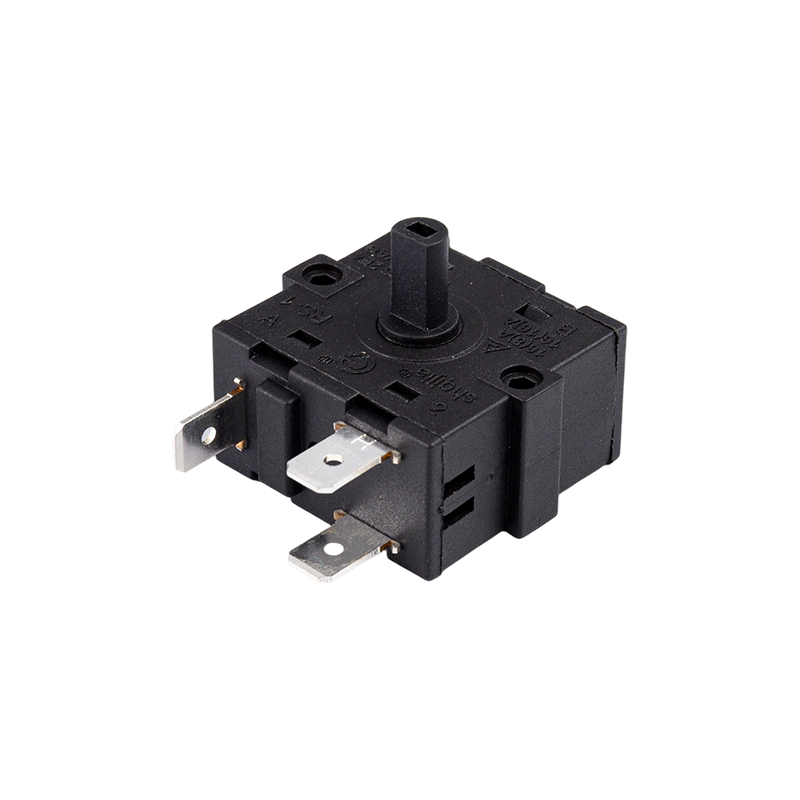
A knob switch is exactly what it sounds like — a switch you operate by turning a round knob instead of flipping a lever or pressing a button. Inside that simple-looking knob is usually a rotary mechanism that connects or breaks an electrical circuit as you twist it, sometimes with multiple stopping positions (like low, medium, high) and sometimes as a simple on/off rotation. You'll find knob switches on everything from kitchen appliances and space heaters to guitar amplifiers, industrial control panels, and vintage radios.
What makes knob switches so appealing is the tactile feedback. There's a satisfying "click" or resistance as you rotate through positions, and most people find it more intuitive to dial in a setting than to guess how many times to press a button. This is part of why knob switches have stuck around for decades even as touchscreens and digital controls have taken over many devices — they just feel good to use, and they work reliably even when your hands are wet, greasy, or gloved.
Common Types of Knob Switches You'll Run Into
Not all knob switches are built the same way, and knowing the differences helps you pick the right one for your project or repair job. Here are the main categories you'll come across:
- Rotary knob switches – turn smoothly through multiple fixed positions, commonly used for speed or mode selection
- Push-turn knob switches – combine a press function with a twist function, often seen on car stereos and multimeters
- Detent knob switches – click into place at each setting, giving clear tactile confirmation
- Continuous rotation knob switches – spin freely without stopping, typically paired with a potentiometer for volume or dimming
- Illuminated knob switches – include a built-in LED ring or indicator light to show status at a glance
Each type serves a slightly different purpose, so matching the switch style to how the device will actually be used matters more than picking whichever one looks nicest.
Where You'll Find Knob Switches in Everyday Life
Knob switches show up in far more places than most people realize. In the kitchen, gas and electric stoves almost always rely on knob switches to control burner intensity because they allow for fine, gradual adjustment rather than jumping between fixed heat levels. Space heaters, box fans, and old-school washing machines use knob switches for the same reason — dialing in a precise setting just works better with a rotating control.
In audio equipment, knob switches control volume, tone, and channel selection on amplifiers, mixers, and guitar pedals. Musicians in particular prefer knobs because they allow quick, muscle-memory adjustments during a performance without having to look down. Industrial and automotive settings also lean heavily on knob switches for things like headlight controls, fan speed selectors, and machine mode selectors, where durability and simple operation under rough conditions are more important than a sleek digital interface.
Knob Switches vs Toggle Switches vs Rotary Selector Switches
People often confuse knob switches with toggle switches or rotary selector switches, but they're built and used differently. The table below breaks down the practical differences.
| Switch Type | Motion | Best For |
| Knob Switch | Rotational twist | Variable settings like heat, speed, or volume |
| Toggle Switch | Up/down flip | Simple on/off control |
| Rotary Selector Switch | Stepped rotation | Choosing between distinct modes or channels |
If your project needs smooth, gradual adjustment, a knob switch is usually the right call. If you just need a simple yes/no control, a toggle switch is cheaper and easier to install.
How to Choose the Right Knob Switch for Your Project
Picking a knob switch isn't just about grabbing whatever's cheapest online. A few practical factors will save you headaches later.
Electrical Rating
Always check the voltage and amperage rating of the switch against what your device actually draws. Undersized knob switches can overheat, melt, or fail entirely, especially in high-power appliances like heaters or stoves.
Shaft Type and Size
Knob switches connect to a shaft that can be smooth, splined, or D-shaped. Measure your existing shaft or check your device's specifications before ordering, since a mismatched shaft won't seat properly no matter how good the switch is.
Number of Positions
Decide how many distinct settings you actually need. A 3-position knob switch works fine for a simple fan, but a more complex device might need 5 or more positions with clear detents between each one.
Build Material
Metal-bodied knob switches tend to last longer under heavy daily use, while plastic ones are lighter and cheaper but can wear out faster if turned frequently.
Installing and Wiring a Knob Switch Safely
Before touching any wiring, always cut power at the breaker or unplug the device completely. Knob switches typically have terminals on the back where wires connect via screw terminals, solder tabs, or spade connectors, depending on the model. Take a photo of the original wiring before removing the old switch so you have a clear reference when connecting the new one.
Once the new knob switch is wired in, test it with the knob removed first to confirm the internal contacts are working correctly. Only attach the knob itself once you've verified proper function, since some knobs use a friction fit that can be tricky to remove again if attached prematurely.
Common Problems and Simple Fixes
Knob switches are generally reliable, but a few issues tend to show up over time. Knowing what causes them makes troubleshooting much faster.
- Loose or wobbly knob – usually caused by a stripped set screw or worn shaft grip, easily fixed by replacing the knob or tightening the screw
- Switch doesn't click into position – often a sign of worn-out detent springs inside the switch body
- Intermittent power at certain settings – typically caused by dirty or corroded internal contacts
- Knob turns but nothing happens – may indicate the shaft is spinning independently of the internal switch mechanism, meaning a full replacement is needed
For contact issues, a shot of electrical contact cleaner sprayed into the switch body while rotating it a few times can often restore smooth operation without needing a full replacement.
Frequently Asked Questions About Knob Switches
Can I replace a broken knob switch myself?
In most cases, yes. As long as you match the voltage rating, shaft type, and number of positions, swapping a knob switch is a manageable DIY task for anyone comfortable with basic wiring.
Why does my knob switch feel loose but still work?
This is usually a mechanical issue with the knob itself rather than the switch. Check the set screw or D-shaped shaft connection before assuming the entire switch needs replacing.
Are knob switches better than digital touch controls?
It depends on the use case. Knob switches offer more precise, tactile control and tend to be more durable in harsh environments, while digital controls can offer more programmable features and a cleaner look.

A Appliance Switches Manufacturer that has been focusing on the development, production and sales of Switches for 21 years;
Products Links
Contact Information
Tel: +86-021-33752188
Phone: +86-13524812989
E-Mail: [email protected]
[email protected]
[email protected]Address: No. 580 Shenzhou Road, Fengxian District, Shanghai, China

