


 English
  русский
  Español
  Deutsch
  عربى
عربى -
A Rocker Switch is a compact and easy-to-operate manual control component. Its unique rocker-style actuation, combined with a toggle or momentary reset function, allows users to quickly switch circuit...View More >>
-
A micro switch is a small mechanical switch with a fast action mechanism, which is widely used in household appliances, industrial automation, automotive electronics, medical equipment, and other fiel...View More >>
-
The baby stroller gear switch is an innovative product independently developed by our company. We have applied for invention patents both domestically and internationally, which fully demonstrates the...View More >>
-
Push button switches are widely used in various control systems with their diverse structural designs, high-strength material selection, and excellent performance. The products are available in a vari...View More >>
-
The internal structure of the piano key switch mostly adopts a mechanical or light-touch design. Some high-end models use capacitive sensing technology to achieve contactless operation, thereby improv...View More >>
-
The knob switch adopts a high-sensitivity rotary contact structure, which has smooth operation and clear positioning, ensuring that every adjustment is accurate. The product has excellent durability a...View More >>
-
The KM trigger switch is a universal high-current switch designed for high-power power tools, with excellent current carrying capacity and stable performance. The internal fast-action structure ensure...View More >>
-
A door control switch, also known as a door magnetic switch or door status sensor, is a key electrical component widely used in industrial control, security systems, intelligent building automation, a...View More >>
-
The wiring harness is an overall wiring assembly that integrates multiple wires, cables, terminals, and connectors according to specific electrical design and mechanical structure requirements. It is ...View More >>
-
PCB control board is one of the indispensable core components in modern electronic devices. As the brain of the control system, it is widely used in many fields such as industrial automation, consumer...View More >>
NEWS

Trigger Switches Explained: How They Work and When to Replace One
 2026.07.09
 Industry News
Content
- 1 What Trigger Switches Actually Do Inside a Power Tool
- 2 The Main Types of Trigger Switches and Where They're Used
- 3 Key Specifications to Check Before Buying a Replacement
- 4 Signs Your Trigger Switch Needs Replacing
- 5 How to Replace a Trigger Switch Safely
- 6 Choosing the Right Trigger Switch for Your Application
What Trigger Switches Actually Do Inside a Power Tool
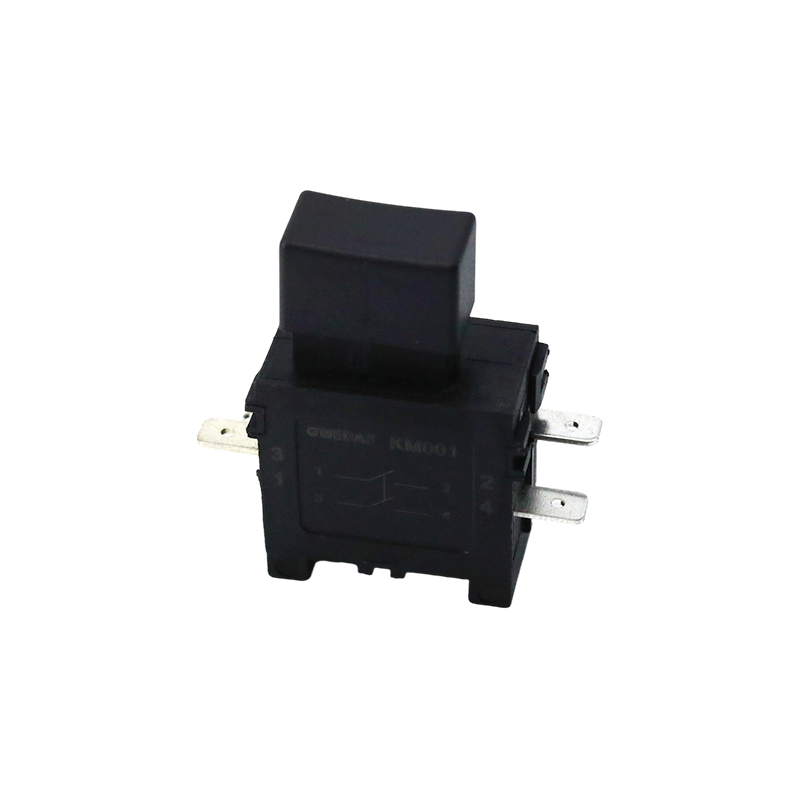
Trigger switches are the component that lets you start, stop, and often control the speed of a power tool with a simple squeeze of your finger. When you pull the trigger, internal contacts close and complete an electrical circuit, allowing current to flow to the motor. Release the trigger, and a spring mechanism pulls those contacts apart again, cutting power immediately. It's a simple mechanical action, but it's responsible for both the performance and the safety of nearly every handheld power tool you'll ever use.
What makes trigger switches different from a basic on/off button is the pivoting design borrowed from a firearm-style trigger. This shape allows for more nuanced control, since how far you pull the trigger can directly affect how much power gets delivered. That's why trigger switches show up constantly in drills, saws, grinders, and sanders — tools where precise control genuinely changes the outcome of the work.
The Main Types of Trigger Switches and Where They're Used
Not all trigger switches work the same way. Depending on the tool and the level of control required, manufacturers choose from a few distinct designs, each suited to different tasks.
Single-Speed (On/Off) Trigger Switches
These are the simplest design available. Press the trigger and the tool runs at full power; release it and the tool stops completely, with no middle ground in between. You'll typically find single-speed trigger switches in basic tools like jigsaws, rotary tools, and older or entry-level drills. They're inexpensive, reliable, and easy to replace, which makes them a common choice for tools where variable control isn't necessary.
Variable Speed Trigger Switches
Variable speed trigger switches adjust motor output based on how firmly the trigger is squeezed. A light press delivers low speed for delicate or precise work, while a full squeeze delivers maximum power. This design is standard in most modern drills, since it lets the user slow down for starting a hole or driving a screw, then speed up once the bit is engaged. Internally, these switches typically rely on a variable resistor or similar component to translate trigger pressure into a proportional electrical output.
Sequential and Safety-Locking Trigger Switches
For higher-risk tools, some trigger switches require a specific sequence of actions before they'll activate — for example, disengaging a safety catch before the main trigger can be pulled. This design shows up most often in high-power equipment like chainsaws and other machinery where accidental activation could cause serious injury, adding an extra layer of protection beyond a standard trigger.
Key Specifications to Check Before Buying a Replacement
If a trigger switch fails, replacing it with the wrong type or rating can create a serious safety hazard. Before ordering a replacement, it's worth confirming the following:
| Specification | Why It Matters |
| Amperage Rating | Must equal or exceed the tool's motor draw to avoid overheating or failure |
| Voltage and Current Type | Switch must match the tool's AC or DC requirements and voltage range |
| Switch Function | Single-speed, variable speed, or sequential — must match the original design |
| Physical Mounting Fit | Housing shape and wiring terminals need to match the tool's existing cavity |
| Safety Features | Lock-on buttons or safety catches should match the original tool's design intent |
Skipping this check is one of the most common reasons DIY trigger switch replacements fail shortly after installation, or worse, create a shock or fire risk.
Signs Your Trigger Switch Needs Replacing
Trigger switches endure constant mechanical and electrical wear, so it's normal for them to degrade over time, especially in tools used daily on job sites. Watch for these warning signs:
- The tool doesn't start with a light trigger press, only a full squeeze
- Speed control feels inconsistent or jumps unexpectedly during use
- The trigger feels loose, sticky, or doesn't spring back fully after release
- You notice sparking, unusual heat, or a burning smell near the trigger housing
- The tool cuts out intermittently even under steady trigger pressure
Any of these symptoms is reason enough to stop using the tool and inspect the switch, since a failing trigger switch can also point to deeper motor or wiring issues if left unaddressed.
How to Replace a Trigger Switch Safely
Replacing a trigger switch is a manageable repair for most DIYers, as long as a few basic precautions are followed:
- Always unplug the tool or remove the battery before opening the housing
- Take a photo of the wiring layout before disconnecting anything, so reassembly matches the original configuration
- Match the replacement switch's part number to the manufacturer's specification whenever possible, rather than relying on a generic equivalent
- Test the tool briefly without a load attached before returning it to regular use, to confirm the trigger responds correctly
- If the tool involves high voltage or complex wiring, consider having a qualified repair technician handle the replacement instead
Choosing the Right Trigger Switch for Your Application
Whether you're repairing a tool or designing a new device, the right trigger switch comes down to matching function to need. Simple on/off switches work fine for basic tools where variable control isn't important, while variable speed switches are worth the extra cost for tools used on delicate or precision work. For high-power equipment where accidental activation carries real risk, a sequential or lock-release design adds a meaningful layer of protection.
Getting this choice right isn't just about convenience — it directly affects how safely and effectively a tool performs over its working life, which is why trigger switch selection deserves more attention than it usually gets.


A Appliance Switches Manufacturer that has been focusing on the development, production and sales of Switches for 21 years;
Products Links
Contact Information
Tel: +86-021-33752188
Phone: +86-13524812989
E-Mail: [email protected]
[email protected]
[email protected]Address: No. 580 Shenzhou Road, Fengxian District, Shanghai, China

