


 English
 русский
 Español
 Deutsch
 عربى
-
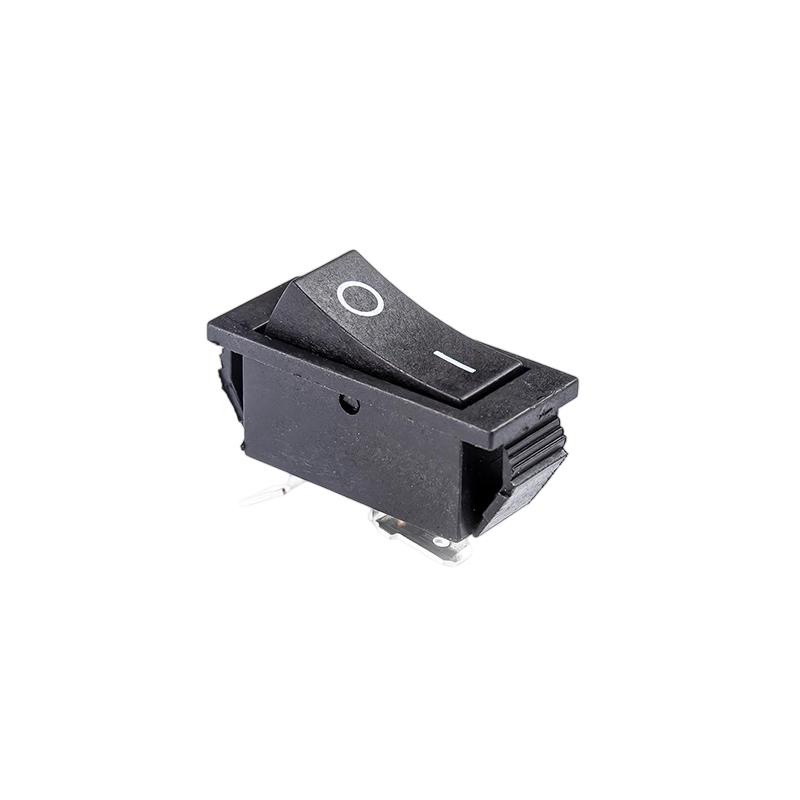
A Rocker Switch is a compact and easy-to-operate manual control component. Its unique rocker-style actuation, combined with a toggle or momentary reset function, allows users to quickly switch circuit...View More >>
-
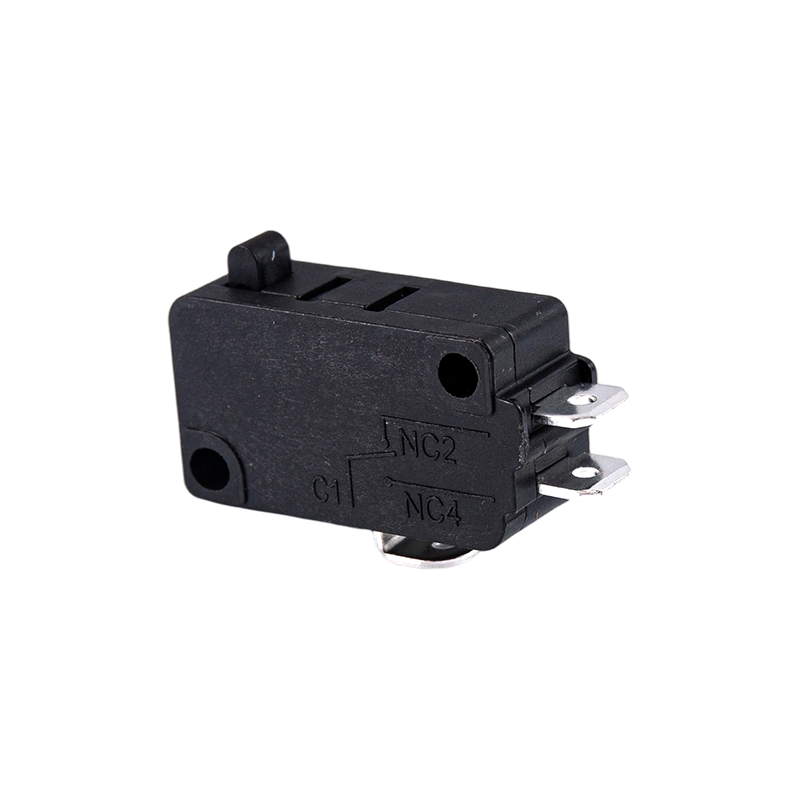
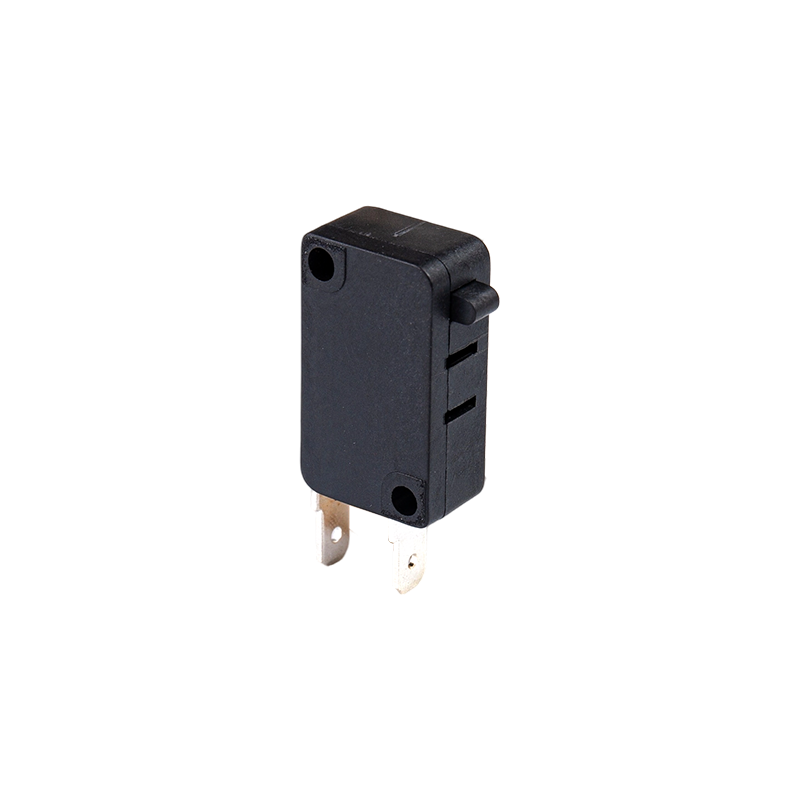
A micro switch is a small mechanical switch with a fast action mechanism, which is widely used in household appliances, industrial automation, automotive electronics, medical equipment, and other fiel...View More >>
-
The baby stroller gear switch is an innovative product independently developed by our company. We have applied for invention patents both domestically and internationally, which fully demonstrates the...View More >>
-
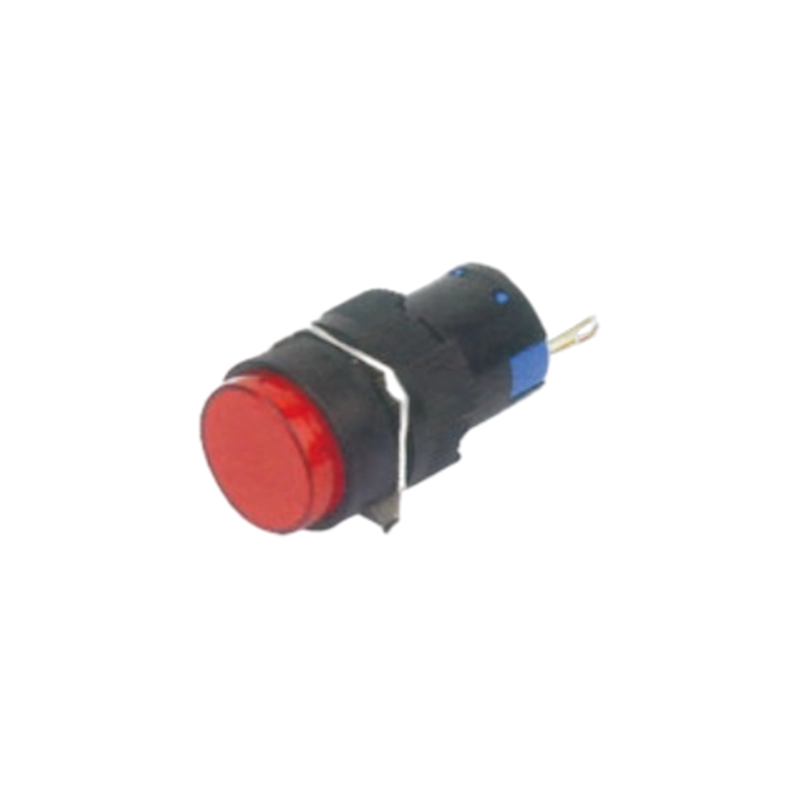
Push button switches are widely used in various control systems with their diverse structural designs, high-strength material selection, and excellent performance. The products are available in a vari...View More >>
-
The internal structure of the piano key switch mostly adopts a mechanical or light-touch design. Some high-end models use capacitive sensing technology to achieve contactless operation, thereby improv...View More >>
-
The knob switch adopts a high-sensitivity rotary contact structure, which has smooth operation and clear positioning, ensuring that every adjustment is accurate. The product has excellent durability a...View More >>
-
The KM trigger switch is a universal high-current switch designed for high-power power tools, with excellent current carrying capacity and stable performance. The internal fast-action structure ensure...View More >>
-
A door control switch, also known as a door magnetic switch or door status sensor, is a key electrical component widely used in industrial control, security systems, intelligent building automation, a...View More >>
-
The wiring harness is an overall wiring assembly that integrates multiple wires, cables, terminals, and connectors according to specific electrical design and mechanical structure requirements. It is ...View More >>
-
PCB control board is one of the indispensable core components in modern electronic devices. As the brain of the control system, it is widely used in many fields such as industrial automation, consumer...View More >>
NEWS
 Home / News / Industry News / Trigger Switch Guide: How It Works, Types, Key Specs and Selection Tips
Trigger Switch Guide: How It Works, Types, Key Specs and Selection Tips
 2026.11.05
 Industry News
Anyone who has picked up a cordless drill knows the moment: the finger takes up the slack, the motor spins up with a short whine, and the bit starts to bite. That small squeeze is doing a lot of work. The trigger switch underneath it turns a few millimetres of finger travel into the current that drives a motor, and in most modern tools it also decides how much current that motor receives. It is one of the few components a user touches on every single job, which makes it one of the most important parts to get right when you are specifying a tool.
What follows is a practical walkthrough of trigger switches, written from the bench rather than the brochure: what sits inside the housing, how the mechanism behaves, which ratings actually matter, and how to choose a part that still feels crisp after a year of daily use.
Content
- 1 What a Trigger Switch Actually Is
- 2 How a Trigger Switch Works, Step by Step
- 3 The Main Types of Trigger Switch
- 4 Specifications That Actually Matter
- 5 Trigger Switch, Micro Switch or Push Button?
- 6 Choosing a Trigger Switch for Your Tool
- 7 Common Failure Modes and What They Tell You
- 8 Where Our Trigger Switches Fit
What a Trigger Switch Actually Is
A trigger switch is an electric switch actuated by a finger-operated plunger, usually mounted inside the handle of a handheld power tool. Pressing the trigger pushes the plunger into the housing against a return spring, and that movement closes the contacts that connect the motor to the supply. Release the trigger and the spring pushes everything back, opening the circuit.
That basic description covers the simple on/off versions, but most triggers sold today do considerably more. They combine power switching with speed control, often with a lock-on button for continuous running and a direction selector that reverses the motor for backing out a screw or freeing a jammed bit. The design brief is unusual, because the part has to be operated thousands of times by a hand that is already gripping the tool, in dust, in heat, and sometimes in the rain.
Inside the housing
- A moulded housing, typically glass-filled nylon or a thermoset, that also acts as the mounting interface with the tool handle.
- A plunger and return spring, sized so the trigger feels responsive without being tiring.
- A moving contact bridge and fixed contacts, usually with a snap-action geometry so the contacts make and break quickly.
- Terminals for screw fixing or plug-in connection to the motor and supply.
- For variable-speed versions, a control element: a resistive track with a wiper, a magnet and Hall sensor, or a small module with a triac or MOSFET stage.
- Optional mechanical features such as a lock-on button, a lock-off lever, or an integrated forward/reverse selector.
From finger pressure to motor speed
On a corded tool, the variable-speed module usually chops the AC waveform, and the deeper you squeeze, the longer each conduction interval becomes. On a cordless tool the trigger generally produces a low-power control signal instead: the plunger moves a wiper along a carbon track, or a magnet past a sensor, and the control board converts that signal into a pulse-width-modulated drive for the power stage. In both cases the mechanical switch is still there, because the electronics need a clean, hard connection before any current flows. If you would like a longer explanation of the timing involved, our article on how rapid trigger switches work goes into more detail.
How a Trigger Switch Works, Step by Step
- At rest, the return spring holds the plunger out and the contacts open, so the tool is isolated from the supply.
- In the first millimetres of travel, the contact bridge snaps closed. Good designs complete this make before the speed signal rises, so the electronics see a stable supply.
- At partial travel, the control element asks for a low duty cycle or a reduced voltage, which is why a well-built drill can turn slowly and evenly for driving a screw.
- At full squeeze, the tool reaches maximum speed, and on many models the lock-on button can now be pressed to hold the trigger in place for long jobs such as sanding or cutting.
- On release, the spring returns the plunger, the contacts break quickly, and in better tools an electronic brake shorts the motor windings so the bit stops instead of coasting.
The sequencing is where a lot of cheap parts fall down. If the contacts open while the electronics are still demanding current, you get arcing, pitting and eventually a trigger that only works when you press it in a particular way.
The Main Types of Trigger Switch
On/off triggers
The simplest family. No speed control, no electronics, just a robust mechanical switch with generous contacts. These are common on small grinders, vacuum cleaners, blowers and pumps where the motor is either running flat out or not at all.
Variable-speed triggers
The dominant type in drills, drivers and impact tools. Speed is metered by travel, and the quality of the control element decides whether low speeds feel smooth or jumpy. Resistive-track versions are economical; contactless versions resist wear and dust better.
Corded AC and cordless DC versions
They look similar on the outside and are not interchangeable. AC versions are built around mains voltage, larger creepage distances and an arc-suppressing module. DC versions work at low voltage but at very high current, so the contact material, terminal cross-section and heat path are different.
Triggers with extra functions
Lock-on buttons for continuous running, lock-off levers to prevent accidental starts, integrated forward/reverse selectors, and even small indicator LEDs. Each addition changes the internal geometry, so it is worth deciding early which ones you need.
Dustproof and sealed designs
Once a tool is used on masonry, plaster or metal, fine particles find every gap. Sealed plunger bores and covered contact chambers are the difference between a trigger that lasts and one that starts to feel gritty within weeks.
Specifications That Actually Matter
Data sheets list a lot of numbers. These are the ones that tend to decide whether a design succeeds in the field.
| Specification | What it tells you | Where it trips people up |
|---|---|---|
| Rated voltage and current | The load the contacts are designed to carry and break continuously | Running current is not the same as starting current |
| Motor inrush current | Peak current in the first moments after switching on | Generous running ratings can still weld on start-up |
| Contact resistance | Loss across closed contacts, and voltage available to the motor | Creeps upward as contacts erode over life |
| Electrical and mechanical life | Cycle counts at rated load and at no load | Figures assume a clean, cool, well-mounted part |
| Operating force and travel | How the trigger feels and how finely speed can be metered | Too light invites accidental starts, too heavy causes fatigue |
| Speed-control linearity | How evenly finger travel maps to motor speed | Poor linearity shows up as a jumpy low-speed band |
| Sealing and ingress protection | Resistance to dust, swarf and moisture | Usually the first thing to fail in real service |
| Temperature range and insulation | Dielectric strength and tracking resistance over life | Matters most in hot housings and after thermal cycling |
Trigger Switch, Micro Switch or Push Button?
These three get confused because they all make and break a circuit, but they solve different problems. A trigger is built for continuous, progressive control under a working grip. A push button is a panel component, chosen for appearance, actuation feel and panel sealing. A micro switch is a small snap-action device used for sensing: detecting that a guard is closed, that a lever has been pressed, or that a battery pack is seated.
Power tools often use all three in one product. The trigger controls the motor, a micro switch sits under a safety lever or in the battery interlock, and small panel buttons handle mode selection. If your design pairs a trigger with an interlock, the sensing switch deserves as much attention as the trigger itself, because a sticking interlock is a safety issue rather than an inconvenience.
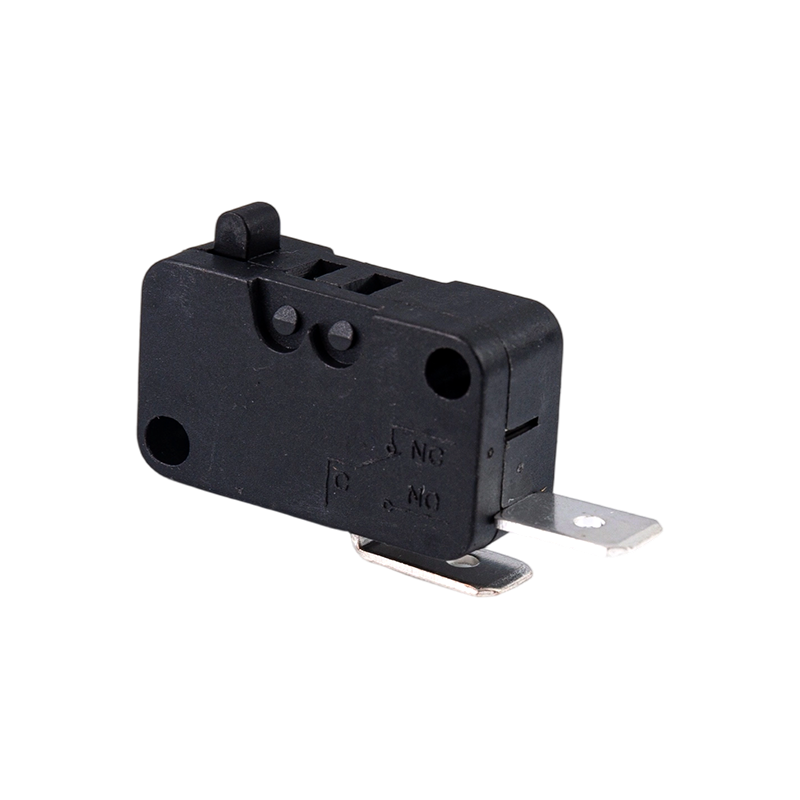 MS15-2A1 High-Current Power Tool Micro SwitchFor safety interlocks in power tools, this UL/TUV/KC/CQC-certified micro switch supports high-current DC loads and reliable contact performance.View Product →
Parts in this class are usually judged on consistent trip points and long mechanical life rather than current capacity, which is a different set of trade-offs from the main trigger.
Choosing a Trigger Switch for Your Tool
- Measure the real load, not the nominal one. Include stall conditions, start-up inrush and the hottest ambient temperature the tool will see.
- Match the control method to the supply. A mains tool needs an AC-rated switch and module; a battery tool needs a low-voltage, high-current part with a clean signal output.
- Decide honestly whether you need variable speed. Plenty of tools are better served by a simple, rugged on/off trigger with no electronics to fail.
- Check the mechanical envelope early: plunger travel, mounting boss height, terminal clearance and the space needed for wires to bend without rubbing.
- Be realistic about the environment. If the tool will meet brick dust or metal swarf, specify a sealed plunger bore rather than hoping the handle keeps it out.
- Plan the wiring at the same time as the switch. Terminal type, harness length and connector style affect assembly time far more than the switch itself.
- Think about service. A trigger that can be replaced in the field without disturbing the whole handle assembly is worth a small premium.
- Confirm the compliance route with your safety engineer before tooling is cut, so insulation, spacing and marking requirements do not force a redesign later.
Common Failure Modes and What They Tell You
Most trigger failures are predictable, and each symptom points at a specific cause. Speed that drifts or cuts out at low squeeze usually means the resistive track or wiper has worn or picked up contamination. A trigger that clicks but does nothing often has welded contacts, usually the result of switching a motor whose inrush was underestimated. A spongy or slow-returning trigger is normally a plunger bore full of dust or a spring that has lost tension after heat cycling. A trigger body that runs hot points to undersized contacts, loose terminals or a poor crimp upstream. A tool that starts on its own is the most serious case of all, and it usually traces back to a damaged lock-on mechanism or a contaminated control module.
The practical lesson is that sealing and contact sizing do more for reliability than almost any other decision on the drawing. It is also why we test trigger designs against dusty and thermal-cycling conditions rather than only on a clean bench.
Where Our Trigger Switches Fit
Our KM01 trigger switch was developed for high-power handheld tools. It uses a fast-action internal contact structure so the contacts make and break quickly, which keeps arcing down when a large motor starts. The body is sealed against dust, and the contact system is sized for high current, so it suits drills, cutters, saws and garden equipment that spend their working life in grit and heat.
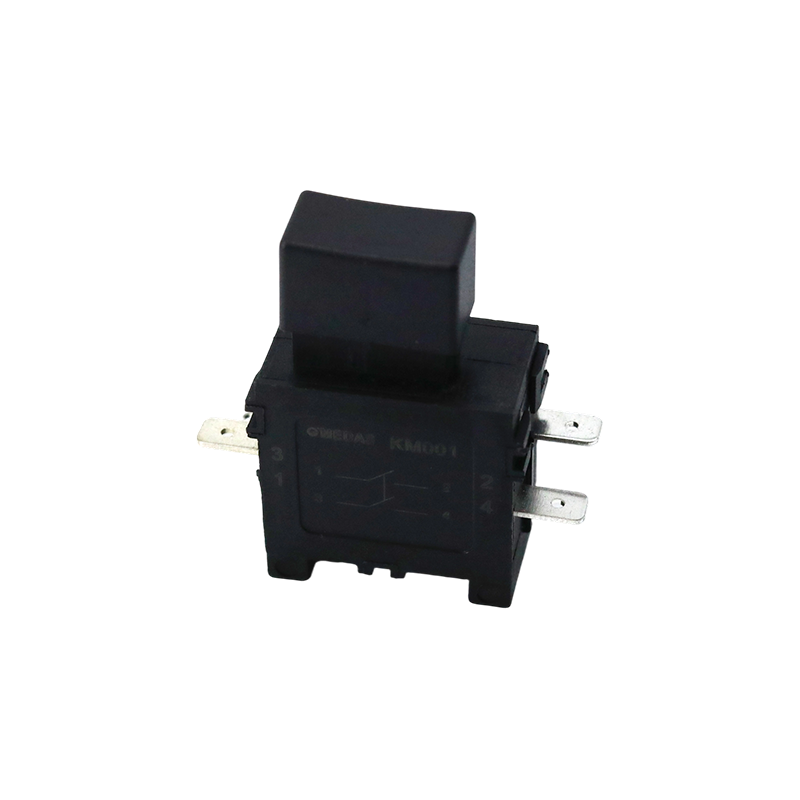 KM01 Dust-Proof High-Current Trigger SwitchSealed against dust and built for high-current handheld tools, this trigger suits grinders, saws, hammers, and other demanding power-tool applications.View Product →
Because we also build wiring harnesses and PCB control boards, we can supply a trigger together with the lead and control electronics as one tested sub-assembly, which simplifies incoming inspection and shortens your assembly line. Our engineers are happy to look at a sample tool and talk through the trade-offs before you commit to a specification.
Trigger switches are small, unglamorous parts, but they are where a user's hand meets the motor, and that is why they deserve more thought than a line on a bill of materials. If you are working on a new tool or replacing a part that keeps coming back from the field, we would be glad to help you narrow the options. You can see the wider switch and control component range we build, and if you would like to visit the factory or review our certificates before deciding, just ask.

A Appliance Switches Manufacturer that has been focusing on the development, production and sales of Switches for 21 years;
Products Links
Contact Information
Tel: +86-021-33752188
Phone: +86-13524812989
E-Mail: [email protected]
[email protected]
[email protected]Address: No. 580 Shenzhou Road, Fengxian District, Shanghai, China

