


 English
 русский
 Español
 Deutsch
 عربى
-
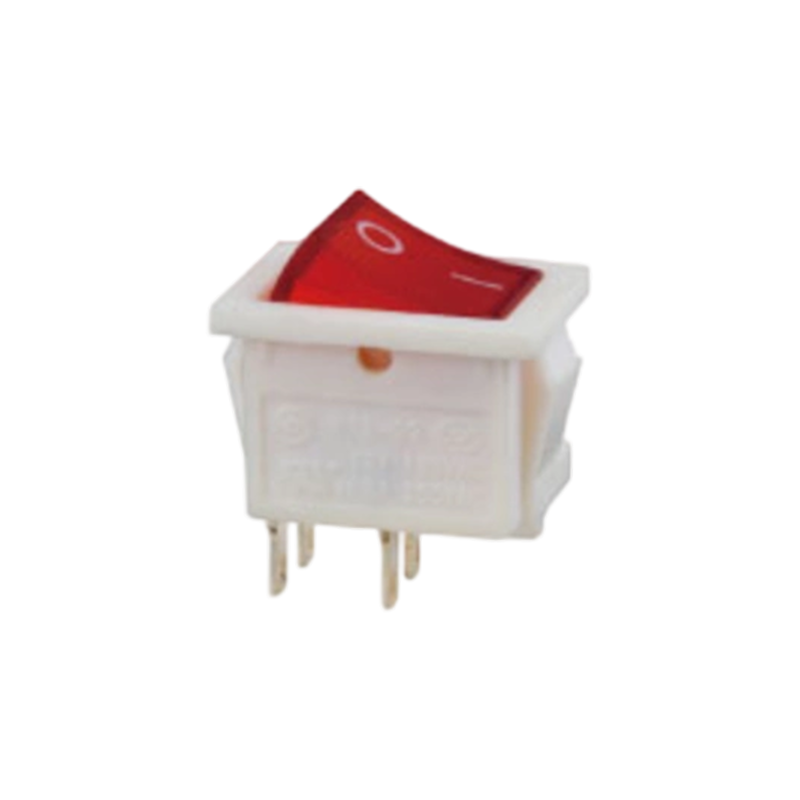
A Rocker Switch is a compact and easy-to-operate manual control component. Its unique rocker-style actuation, combined with a toggle or momentary reset function, allows users to quickly switch circuit...View More >>
-
A micro switch is a small mechanical switch with a fast action mechanism, which is widely used in household appliances, industrial automation, automotive electronics, medical equipment, and other fiel...View More >>
-
The baby stroller gear switch is an innovative product independently developed by our company. We have applied for invention patents both domestically and internationally, which fully demonstrates the...View More >>
-
Push button switches are widely used in various control systems with their diverse structural designs, high-strength material selection, and excellent performance. The products are available in a vari...View More >>
-
The internal structure of the piano key switch mostly adopts a mechanical or light-touch design. Some high-end models use capacitive sensing technology to achieve contactless operation, thereby improv...View More >>
-
The knob switch adopts a high-sensitivity rotary contact structure, which has smooth operation and clear positioning, ensuring that every adjustment is accurate. The product has excellent durability a...View More >>
-
The KM trigger switch is a universal high-current switch designed for high-power power tools, with excellent current carrying capacity and stable performance. The internal fast-action structure ensure...View More >>
-
A door control switch, also known as a door magnetic switch or door status sensor, is a key electrical component widely used in industrial control, security systems, intelligent building automation, a...View More >>
-
The wiring harness is an overall wiring assembly that integrates multiple wires, cables, terminals, and connectors according to specific electrical design and mechanical structure requirements. It is ...View More >>
-
PCB control board is one of the indispensable core components in modern electronic devices. As the brain of the control system, it is widely used in many fields such as industrial automation, consumer...View More >>
NEWS
 Home / News / Industry News / Piano Key Switch Guide: How Multi-Position Switches Work and How to Choose
Piano Key Switch Guide: How Multi-Position Switches Work and How to Choose
 2026.10.26
 Industry News
A piano key switch can sound like a part from a musical instrument, but in electrical control panels the term usually describes a row of pushbuttons that look and feel a little like piano keys. Each key changes a contact state, and on many designs only one position stays active at a time. These switches appear in fans, range hoods, small appliances, and other equipment where a compact multi-speed or multi-function selector saves panel space. At Shanghai Qijia Electronics, our switch range includes piano key switches alongside button, rocker, micro, and other control components, so we see both the practical appeal and the confusion around the name.
Content
- 1 What Is a Piano Key Switch?
- 2 How a Piano Key Switch Works
- 3 Common Types and Configurations
- 4 Where Piano Key Switches Are Used
- 5 Key Specifications to Evaluate
- 6 How to Choose the Right Piano Key Switch
- 7 Installation, Safety, and Maintenance
- 8 Working With a Piano Key Switch Supplier
- 9 Frequently Asked Questions
What Is a Piano Key Switch?
A piano key switch is a mechanical multi-position switch built around a set of side-by-side keys. Pressing a key moves a plunger or rocker inside the housing and changes the state of an electrical contact. The keys may work independently, or they may be interlocked so that pressing one releases the previous selection. The piano reference comes from the layout, not from music: rectangular keys, a row arrangement, and spacing that suits finger operation.
In appliance and industrial catalogues, the same component family may be called a piano switch, piano-key selector, multi-position pushbutton switch, or keyboard switch for appliances. It is not the same as the key mechanism inside a MIDI keyboard or a mechanical computer keyboard, even though search results for those products often overlap. For a closer look at the category, our guide to [piano key switches and how they work](/news/industry-news/piano-key-switches-explained-what-they-are-how-they-work.html) covers the basics.
How a Piano Key Switch Works
In its simplest form, a piano key switch contains a key cap, a plunger or actuator, a spring, one or more contact sets, and terminals inside a plastic housing. When the user presses a key, the plunger moves and closes or opens the selected circuit. A latch or interlock mechanism holds the position until the user presses another key or releases the actuator, depending on the design.
- The key cap receives finger force and guides the plunger.
- The spring provides return force and helps the contacts snap between states.
- The movable contact meets the fixed contact, completing the selected circuit.
- The latch or interlock keeps the selection stable and prevents two conflicting positions from being active together.
- The terminals connect the switch to a wire harness or PCB control board.
Momentary versions return when released. Maintained or latching versions stay where they are set. Multi-pole versions can switch several circuits at once, which is useful when one position must control both power and an indicator.
Common Types and Configurations
Piano key switches are not one product. The main variations are:
- Interlocking selectors: pressing one key releases the previous key, so only one position is active. This is common for fan speeds and mode selection.
- Independent pushbutton rows: each key works as a separate on/off control, useful when several functions can be active at the same time.
- Momentary keys: the contact returns when the key is released, which suits signal or jog functions.
- Maintained or latching keys: the selected state stays in place until the user changes or resets it.
- Illuminated or marked keys: legends and indicator lights help the user see the active function.
- Protected versions: dustproof, waterproof, oil-resistant, and shock-resistant designs address the environment around the panel.
Miniature piano DIP switches also exist for PCB settings, but they are a different construction from the panel-mounted appliance switches discussed here. For control panels, the interlocking and independent pushbutton types are usually the most relevant.
Where Piano Key Switches Are Used
Because one cutout can hold several functions, piano key switches are common in appliance and equipment panels where space is limited and the user needs a clear, tactile selection. Typical uses include fan speed and range-hood control, blenders and small kitchen appliances, cleaning equipment, audio and office equipment, and general industrial control panels.
On a fan, one key may select off, low, medium, and high. On a range hood, the same layout may control fan speed and lighting. In these applications, the switch is not just a cosmetic part; it must match the load, the panel opening, and the way the user expects the control to behave.
Key Specifications to Evaluate
A datasheet should be the final authority, but a practical shortlist starts with position count, circuit configuration, contact rating, operating force, travel, panel cutout, terminal type, and environmental protection. The table below shows how several R118Q variants are positioned by their design focus.
| Model | Design focus | Selection note |
|---|---|---|
| R118Q | Dustproof and waterproof | For panels exposed to moisture or dust |
| R118Q1 | Long-lasting durability | For frequent switching cycles |
| R118QN | Insulated multifunction | For multi-function layouts that need insulation |
| R118QN1 | Shockproof and oil-resistant | For equipment near vibration or oil |
| R118QN2 | Durable and dustproof | For dusty enclosures with regular use |
Our piano key switch range is organised around these practical differences rather than appearance alone. The R118Q family, for example, gives a starting point when the panel environment or switching frequency matters as much as the key layout.
 R11-8Q Dustproof and Waterproof Piano Key SwitchProtected piano-key switch for tools and cleaning equipment, with published UL, TUV, S, KC, CE and CQC ratings to compare against panel and load requirements.View Product →
 R11-8Q1 Long-Lasting Durable Piano Key SwitchSealed piano-key switch for frequent actuation in power tools, garden machinery and cleaning devices, with multiple published ratings and certifications for practical selection.View Product →
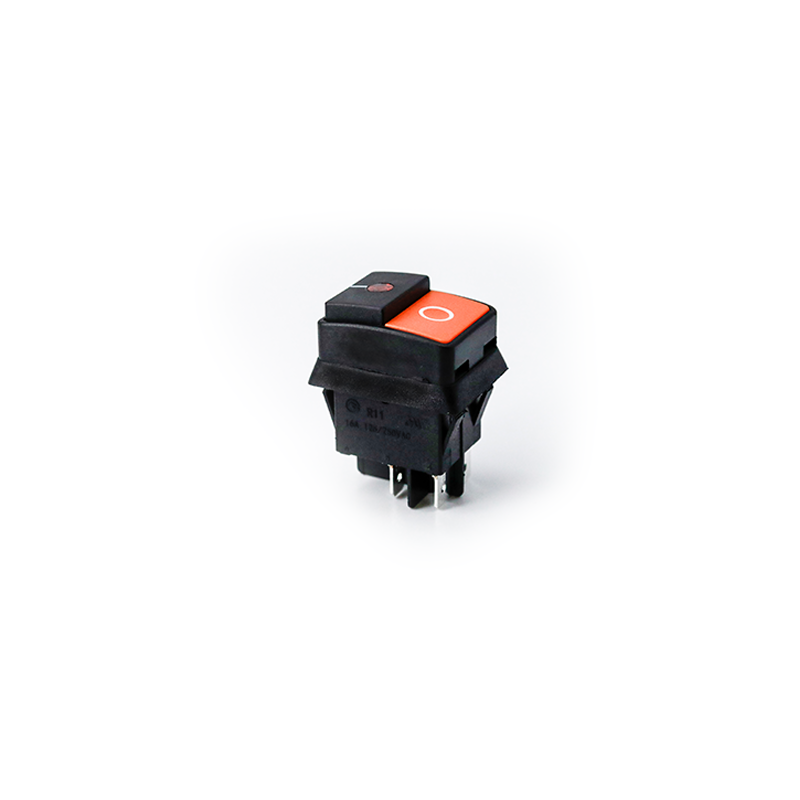 R11-8QN1 Shockproof and Oil-Resistant Piano Key SwitchProtected piano-key switch with shock and oil resistance for demanding tool and cleaning applications, offering published certification and rating data for load and panel checks.View Product →
How to Choose the Right Piano Key Switch
Start with the panel and the load, not the key feel. A switch that feels pleasant in the hand can still be wrong if its rating is too low for a motor load or if its terminals do not fit the available wiring space.
- Count the required positions and circuits. Decide whether the switch must control one circuit or several poles at once.
- Choose the behaviour: interlocking, independent, momentary, or maintained.
- Check the electrical rating, including voltage, current, load type, and any inrush current from motors or lamps.
- Match the panel cutout, key spacing, travel, terminal orientation, and legend requirements.
- Confirm the environment: dust, water, oil, cleaning agents, vibration, and temperature.
- Review the applicable approval and test requirements for the final product.
- Test a sample in the real enclosure before committing to production.
Installation, Safety, and Maintenance
Treat the switch as a rated component, not a generic button. Isolate power before installation, follow the datasheet and local electrical requirements, and use qualified personnel for wiring. Keep terminal force within the manufacturer’s guidance, avoid pulling on wires instead of terminals, and make sure debris does not enter the key mechanism during panel assembly.
During service, inspect for loose terminals, cracked housings, discoloration, or keys that no longer latch cleanly. Clean only with methods compatible with the housing and seal. If a switch shows signs of overheating or contact wear, replace it rather than adjusting it beyond its intended design.
Working With a Piano Key Switch Supplier
At Shanghai Qijia Electronics, piano key switches sit alongside button switches, rocker switches, micro switches, wiring harnesses, and PCB control boards. That wider view helps when a panel needs more than one component and the switch, harness, and board must fit together without surprises. If you are comparing options, share the panel drawing, load details, target cycle life, and environmental exposure so the switch discussion starts from the application rather than from a picture.
Frequently Asked Questions
Is a piano key switch the same as a keyboard switch?
No. In electrical purchasing, a piano key switch usually means a panel-mounted multi-position pushbutton switch. A keyboard switch is more likely to refer to a computer or musical keyboard mechanism.
Can one piano key switch control several circuits?
Yes. Multi-pole versions can switch several circuits from one key position. Confirm the contact arrangement and rating before choosing.
Should I choose latching or momentary?
Choose latching when the selected function must stay on after the user releases the key. Choose momentary when the contact should act only while the key is held.
Piano key switches are simple parts, but they sit where user expectation meets electrical reality. A clear key layout, the right contact behaviour, and a realistic rating matter more than a long feature list. By matching the switch to the panel, load, and environment, you get a control that feels natural and behaves reliably.

A Appliance Switches Manufacturer that has been focusing on the development, production and sales of Switches for 21 years;
Products Links
Contact Information
Tel: +86-021-33752188
Phone: +86-13524812989
E-Mail: [email protected]
[email protected]
[email protected]Address: No. 580 Shenzhou Road, Fengxian District, Shanghai, China

