


 English
  русский
  Español
  Deutsch
  عربى
عربى -
A Rocker Switch is a compact and easy-to-operate manual control component. Its unique rocker-style actuation, combined with a toggle or momentary reset function, allows users to quickly switch circuit...View More >>
-
A micro switch is a small mechanical switch with a fast action mechanism, which is widely used in household appliances, industrial automation, automotive electronics, medical equipment, and other fiel...View More >>
-
The baby stroller gear switch is an innovative product independently developed by our company. We have applied for invention patents both domestically and internationally, which fully demonstrates the...View More >>
-
Push button switches are widely used in various control systems with their diverse structural designs, high-strength material selection, and excellent performance. The products are available in a vari...View More >>
-
The internal structure of the piano key switch mostly adopts a mechanical or light-touch design. Some high-end models use capacitive sensing technology to achieve contactless operation, thereby improv...View More >>
-
The knob switch adopts a high-sensitivity rotary contact structure, which has smooth operation and clear positioning, ensuring that every adjustment is accurate. The product has excellent durability a...View More >>
-
The KM trigger switch is a universal high-current switch designed for high-power power tools, with excellent current carrying capacity and stable performance. The internal fast-action structure ensure...View More >>
-
A door control switch, also known as a door magnetic switch or door status sensor, is a key electrical component widely used in industrial control, security systems, intelligent building automation, a...View More >>
-
The wiring harness is an overall wiring assembly that integrates multiple wires, cables, terminals, and connectors according to specific electrical design and mechanical structure requirements. It is ...View More >>
-
PCB control board is one of the indispensable core components in modern electronic devices. As the brain of the control system, it is widely used in many fields such as industrial automation, consumer...View More >>
NEWS
 Home / News / Industry News / Piano Key Switches: What They Are, How They Work, and How to Choose the Best One
Piano Key Switches: What They Are, How They Work, and How to Choose the Best One
 2026.03.16
 Industry News
Content
- 1 What Are Piano Key Switches and How Do They Work?
- 2 Types of Piano Key Switches: Operating Modes and Contact Configurations
- 3 Illuminated Piano Key Switches: Indicator and Status Functions
- 4 Electrical Ratings: Voltage, Current, and Protection
- 5 Environmental Protection Ratings for Piano Key Switches
- 6 Panel Mounting and Physical Dimensions
- 7 Key Applications of Piano Key Switches
- 8 How to Choose the Right Piano Key Switch: A Practical Checklist
- 9 Piano Key Switches vs. Other Panel Switch Types
- 10 Installation, Wiring, and Maintenance Tips
What Are Piano Key Switches and How Do They Work?
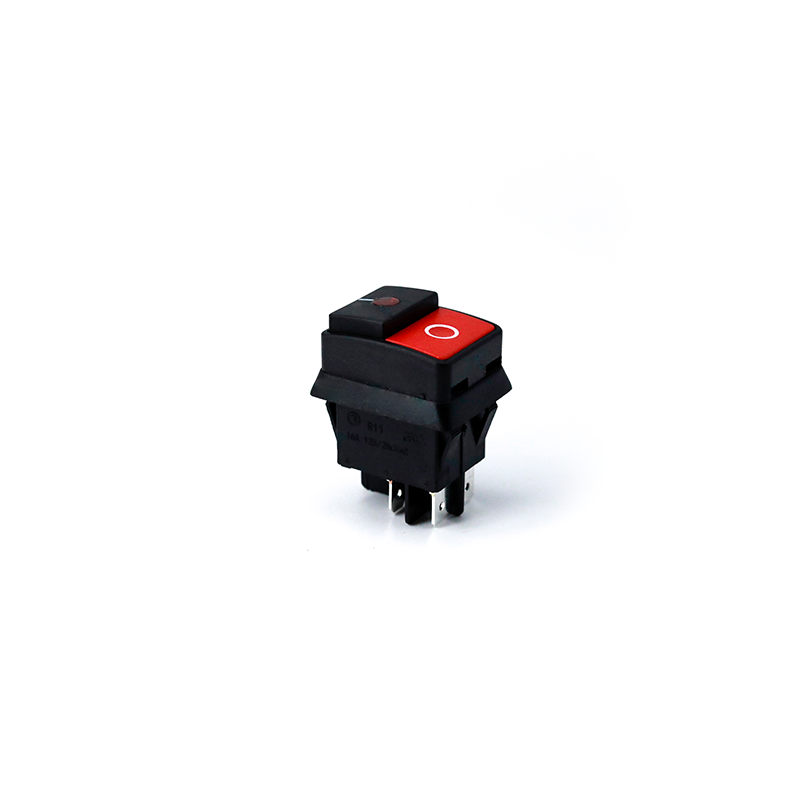
Piano key switches are a category of electrical switches characterized by a long, rectangular, flat-topped actuator that pivots at one end — much like a key on a piano keyboard — to make or break an electrical circuit when depressed. Also known as piano-style switches, piano key rocker switches, or piano key pushbutton switches, they combine a distinctive low-profile appearance with reliable switching action, making them popular in industrial control panels, medical equipment, telecommunications hardware, power distribution boards, and consumer electronics enclosures where a clean, professional appearance and tactile switching action are both valued.
The operating mechanism of a piano key switch is a pivot-lever action: pressing the front (exposed) end of the key actuator downward causes the rear end to rise, which in turn engages or disengages the internal electrical contacts through a spring-loaded mechanism. Releasing the actuator returns it to its original position via the internal return spring — in momentary versions — or leaves it latched in the depressed position in alternate-action (maintained) versions. The long lever arm of the piano-style actuator gives these switches a smooth, progressive feel with a clearly defined actuation point and audible or tactile click feedback, contributing to the confident, professional feel that makes them popular in both industrial and consumer-facing applications.
Types of Piano Key Switches: Operating Modes and Contact Configurations
Piano key switches are manufactured in a range of operating modes and contact configurations that determine how the switch behaves electrically and mechanically when actuated. Selecting the correct operating mode for the application is as important as selecting the correct electrical rating, and misspecification here leads to control system faults that can be difficult to diagnose after installation.
Momentary (Non-Latching) Piano Key Switches
Momentary piano key switches close (or open) the circuit only while the actuator is held depressed and return to their original state the instant pressure is released. This operating mode is used for functions that should only be active while the operator is actively commanding them — such as a jog control on a machine tool, a test function on industrial equipment, a signal bell, or a reset input on a safety system. Momentary piano key switches are sometimes referred to as "spring-return" switches because the internal return spring immediately restores the actuator position on release. In panel designs where the function must be clearly communicated, momentary piano switches are often supplied with illuminated actuators that light up only while pressed, providing clear visual feedback that the function is active.
Alternate-Action (Latching / Maintained) Piano Key Switches
Alternate-action piano key switches change state with each successive press and remain in the new state until pressed again. The first press latches the switch into the actuated position; the second press releases it and returns it to the original position. This ON/OFF toggle behavior is used for functions that must remain active independently of continued operator attention — such as enabling a machine mode, switching between power sources, activating a cooling fan, or enabling a communication channel. Alternate-action piano key switches are the most common type in industrial panel applications and are recognizable by the visible height difference between the two states: the switch sits at a different height in the ON position than the OFF position, providing a clear visual indication of the current state without requiring a separate indicator lamp.
Contact Configurations: SPST, SPDT, DPST, DPDT
Piano key switches are available in multiple contact configurations that determine how many independent circuits the switch can control simultaneously and whether it can switch between two alternative circuit paths. Single-pole single-throw (SPST) switches control one circuit path — simply open or closed. Single-pole double-throw (SPDT) switches have one common terminal that switches between two alternative terminals, enabling both a normally-open (NO) and a normally-closed (NC) contact in the same switch body. Double-pole single-throw (DPST) switches control two independent circuit paths simultaneously with a single actuator, while double-pole double-throw (DPDT) switches provide two SPDT circuits controlled by one actuator — useful for switching two-phase circuits, reversing motor direction, or controlling two interlocked functions. For industrial control panel applications, DPDT piano key switches are frequently used where both a switched output signal and a confirmation feedback signal need to be provided from the same operator input.
Illuminated Piano Key Switches: Indicator and Status Functions
A large proportion of piano key switches in industrial and professional equipment are supplied with integral illumination — a lamp or LED embedded in the actuator body that provides visual status information to the operator. Illuminated piano key switches serve dual functions: they operate as a switch and simultaneously as an indicator lamp, reducing panel component count and wiring complexity compared to separate switch-plus-indicator assemblies.
LED vs. Incandescent Illumination
Modern illuminated piano key switches almost universally use LED illumination rather than incandescent lamps. LEDs offer service lives of 50,000 hours or more versus 1,000–3,000 hours for incandescent bulbs, operate at a fraction of the power consumption, generate far less heat within the switch body, and maintain consistent brightness throughout their service life without the gradual dimming that characterizes aging incandescent lamps. LEDs are also available in a wide range of colors — red, green, amber, blue, white, and bicolor — allowing color-coded status information to be conveyed at a glance. The practical consequence for panel designers is that illuminated LED piano key switches in modern panels require essentially no maintenance attention for lamp replacement over the operational life of the equipment, unlike incandescent-illuminated switches that demanded periodic bulb replacement as a scheduled maintenance task.
Illumination Modes: Switch-Controlled and Independent
Illuminated piano key switches are available in two illumination wiring configurations. In switch-controlled illumination, the LED illuminates whenever the switch contacts are in the closed (ON) position, directly reflecting the switch state — the light is on when the circuit is on. This configuration requires no separate wiring for the illumination circuit and is appropriate for simple ON/OFF status indication. In independently wired illumination, the LED has separate connection terminals from the switch contacts, allowing the illumination to be controlled by the system logic independently of the switch state. This configuration enables more sophisticated status signaling — for example, a steady light when the function is active, a flashing light when a fault condition exists, or a light that is off when the function is not available — all using the same switch body with only the wiring arrangement changed.
Electrical Ratings: Voltage, Current, and Protection
Piano key switches are manufactured to a wide range of electrical ratings covering both low-voltage signal switching and mains voltage power switching applications. Selecting a switch with appropriate electrical ratings for the application is a basic safety and reliability requirement — an undersized switch will experience premature contact wear, increased contact resistance, and eventual contact failure under the electrical and thermal stress of operating beyond its rated capacity.
| Parameter | Signal / Low Voltage | Standard Mains | Industrial High Power |
| Rated voltage | 5–48V DC/AC | 125–250V AC | Up to 480V AC |
| Rated current | 0.1–1A | 3–10A | 16–25A |
| Typical load type | PLC inputs, logic signals | Resistive, small motor loads | Motor starters, power circuits |
| Contact material | Gold-plated (low resistance) | Silver alloy | Silver-cadmium oxide or AgSnO₂ |
| Typical certifications | RoHS, CE | UL, CE, VDE | UL508, IEC 60947 |
For inductive loads — motors, transformers, solenoids, and relay coils — the switch's rated current for inductive switching must be used rather than the resistive load rating. Inductive loads generate voltage spikes on contact opening (back-EMF) that cause significantly greater contact arcing than resistive loads, which accelerates contact erosion and reduces switch service life. Inductive load ratings are typically 50–70% of the resistive load rating for the same switch, and switching inductive loads above the rated inductive capacity requires either an appropriately derated switch or the addition of arc suppression components (RC snubbers for AC, flyback diodes for DC) across the load.
Environmental Protection Ratings for Piano Key Switches
Piano key switches are installed in a wide range of environments — from clean, climate-controlled electronic equipment rooms to industrial production floors with dust, coolant mist, cleaning agents, and mechanical vibration. The IEC IP (Ingress Protection) rating system, and equivalent NEMA ratings used in North America, define the degree of protection the switch enclosure and sealing provide against dust and liquid ingress. Selecting the correct IP rating for the installation environment is essential for long-term switch reliability.
- IP40 / IP42: Basic protection against solid objects larger than 1mm (IP4X) and against vertically dripping water or water splashed at a limited angle (IPX2). Suitable for indoor panel installations in clean, dry environments without risk of liquid contact — standard in electronic equipment, telecom racks, and laboratory instruments.
- IP54 / IP55: Dust-protected (IP5X, not fully dust-tight but prevents harmful dust accumulation) and protected against water jets from all directions (IPX4/IPX5). Suitable for industrial control panels exposed to airborne dust, machine coolant mist, and occasional water splashing from cleaning or process operations. IP54 and IP55 piano key switches typically incorporate a rubber gasket seal between the actuator body and the panel cutout.
- IP65 / IP66: Fully dust-tight (IP6X) and protected against direct water jets (IP65) or powerful water jets (IP66). Required for outdoor installations, food processing environments subject to regular washdown, and any industrial installation where the panel face may be directly sprayed with water or cleaning solutions. IP65/66 piano key switches incorporate molded front-face sealing and sealed rear electrical connections.
- IP67 / IP68: Dust-tight and protected against temporary or continuous water immersion. Used for submersible equipment controls, marine applications, and outdoor installations subject to flooding or immersion. IP67/68 piano key switches are specialized products with fully sealed bodies and waterproof cable entry; standard panel-mount piano key switches do not achieve these ratings.
Panel Mounting and Physical Dimensions
Piano key switches are panel-mount devices that install through a rectangular cutout in a control panel door, enclosure face, or equipment front panel. The standardization of piano key switch body dimensions and panel cutout sizes across the major switch manufacturers — while not fully universal — allows relatively straightforward interchangeability and panel design planning.
Standard Cutout and Body Sizes
The most widely used piano key switch body size in industrial applications accommodates a panel cutout of approximately 28mm × 22mm (width × height), with the switch body depth behind the panel typically ranging from 30 to 50mm depending on the contact configuration and illumination components fitted. Smaller format versions — commonly with 13mm × 19mm or similar compact cutouts — are used in densely populated panels, instrumentation front panels, and consumer electronics enclosures where space is at a premium. Some manufacturers offer modular piano key switch systems in which a standard base body accepts interchangeable actuator tops in different colors and legend configurations, reducing the number of distinct part numbers required to populate a complex panel.
Panel Thickness Compatibility
Piano key switches are designed to mount in panels of a specific thickness range, typically 1–4mm or 1–6mm for standard industrial versions. The mounting clips or nut-and-thread fixing on the switch body must engage correctly behind the panel face for secure retention. Installing a switch designed for thin sheet metal panels (1–2mm) in a thick cast aluminum front panel (6–10mm) or a thick GRP (fiberglass) enclosure door will result in inadequate thread engagement or clip contact, causing the switch to be loose or insecure. Verify the panel thickness against the switch's specified mounting panel thickness range before ordering, and specify extended-thread or deep-mount versions where necessary for thick panel installations.
Legend and Labeling Options
Clear function labeling is essential for safe and intuitive panel operation. Piano key switches are available with pre-printed legend plates — showing standard functions such as ON/OFF, START/STOP, RUN/RESET, I/O symbols, or blank for custom labeling — that snap or slide into a recessed legend window on the actuator face. Illuminated versions can use translucent legend plates that allow the LED illumination to backlight the legend text, improving visibility in low-light environments. For custom industrial applications, blank actuator faces with adhesive label inserts or laser-engravable actuator tops provide the flexibility to apply application-specific labeling without requiring custom-tooled actuators.
Key Applications of Piano Key Switches
Piano key switches are found across an exceptionally wide range of industries and equipment types. Their combination of reliable switching action, compact panel-mount form factor, clear visual state indication, and professional appearance makes them a preferred choice wherever operator interface quality matters alongside functional reliability.
Industrial Control Panels and Machine Interfaces
Industrial machine control panels are the largest single application for piano key switches. Mode selection (automatic/manual/setup), function enable/disable, circuit isolation, and auxiliary control functions are routinely implemented with illuminated alternate-action piano key switches mounted in organized rows on panel doors. The clear visual distinction between ON and OFF states — provided by the different actuator heights of latched and unlatched positions, supplemented by LED illumination — allows operators to assess panel status at a glance without reading individual labels. For machine safety applications, piano key switches must comply with relevant machinery safety standards (such as IEC 60947-5-1 for low-voltage switchgear) and be selected with adequate contact ratings and mechanical durability for the expected switching frequency and duty cycle.
Medical and Laboratory Equipment
Medical imaging equipment, diagnostic instruments, infusion pumps, laboratory analyzers, and clinical monitoring systems use piano key switches for function selection, mode switching, and operator interface controls. In medical applications, piano key switches must comply with IEC 60601-1 (electrical equipment for medical use) requirements for creepage and clearance distances, applied parts classification, and leakage current limits. Gold-plated contacts are typically specified for the low-level signal switching common in medical electronics, providing low and stable contact resistance at the milliamp currents used for logic and microcontroller interfaces. The smooth, cleanable surfaces of modern piano key switch actuators also simplify disinfection procedures in clinical environments.
Telecommunications and Network Equipment
Telecommunications switching equipment, network test instruments, broadcast audio and video routing panels, and data center power distribution units (PDUs) use piano key switches for circuit selection, port switching, and power control functions. In telecom equipment, the long service life and high mechanical endurance of quality piano key switches — typically rated for 50,000–500,000 operating cycles — is critical, as these systems are expected to operate reliably for 10–20 years with minimal maintenance intervention. The compact panel density achievable with small-format piano key switches allows high function counts to be accommodated in standard 19-inch rack panels and 1U/2U chassis form factors.
Power Distribution and UPS Systems
Uninterruptible power supply (UPS) units, automatic transfer switches (ATS), power distribution boards, and inverter systems use piano key switches for bypass switching, output circuit selection, and manual override functions. In these applications, the switch's voltage and current ratings are paramount — mains-rated piano key switches with appropriate contact material and arc interruption capability for the load type must be selected. Illuminated piano key switches in UPS panels provide visual confirmation of the selected power path and current system state, reducing operator error during power system reconfiguration under emergency conditions when cognitive load is high and rapid, accurate status assessment is critical.
How to Choose the Right Piano Key Switch: A Practical Checklist
With so many piano key switch variants available across different manufacturers, working through a structured selection checklist prevents the most common specification errors and ensures the chosen switch meets all electrical, mechanical, and environmental requirements for the application.
- Define the operating mode: Determine whether the function requires a momentary (spring-return) switch that is active only while held, or an alternate-action (latching) switch that maintains its state independently. Misselecting the operating mode is the most fundamental specification error and cannot be corrected without replacing the switch.
- Specify the contact configuration: Determine how many independent circuits the switch must control and whether normally-open, normally-closed, or changeover contacts are required. Choose SPST, SPDT, DPST, or DPDT accordingly, and confirm the contact configuration matches the wiring requirements before ordering.
- Confirm electrical ratings against actual load: Identify the supply voltage, maximum load current, and load type (resistive or inductive). For inductive loads, apply the appropriate derating factor to the switch's resistive current rating. Confirm the switch's rated voltage meets or exceeds the circuit voltage with appropriate safety margin — do not use a 250V-rated switch on a 400V circuit.
- Select illumination requirements: Decide whether illumination is needed for function identification or status feedback, and if so, specify the LED color and illumination control mode (switch-controlled or independently wired). Confirm the LED supply voltage matches the available control voltage in the panel (typically 24V DC in modern industrial panels).
- Match IP rating to installation environment: Evaluate the dust, moisture, and chemical exposure at the installation location and select an IP rating appropriate to the worst-case environmental conditions. Remember that the IP rating applies to the front face of the switch in the panel cutout — the rear of the switch (terminal area) may need additional protection in harsh environments.
- Verify panel cutout dimensions and panel thickness: Measure the panel cutout size required for the selected switch body and confirm it is achievable with the panel material and existing panel layout. Verify that the panel thickness is within the switch's specified mounting thickness range to ensure secure retention.
- Check regulatory and certification requirements: Identify any mandatory product certifications required for the end market or application — UL listing for North American markets, CE marking for European markets, VDE certification for German-origin equipment, or IEC 60601-1 compliance for medical applications. Confirm the selected switch carries the required certifications before finalizing the component selection.
- Confirm mechanical endurance for the duty cycle: For high-frequency switching applications — where the switch may be actuated dozens of times per day — verify the switch's mechanical and electrical endurance rating (expressed as minimum number of operating cycles) exceeds the expected lifetime cycle count with appropriate margin. A switch rated for 50,000 cycles used 20 times daily will reach its rated endurance in approximately seven years; a 200,000-cycle rating extends this to nearly 30 years.
Piano Key Switches vs. Other Panel Switch Types
Piano key switches compete in the panel switch market with several other switch types — toggle switches, rocker switches, pushbutton switches, and rotary selector switches — and each has a distinct combination of advantages that makes it more suitable for certain applications. Understanding where piano key switches outperform alternatives helps justify their specification over lower-cost or more familiar switch types.
| Switch Type | Visual State Indication | Panel Density | Illumination Options | Typical Use Case |
| Piano Key Switch | Excellent (height + LED) | High | Integral LED, multiple colors | Industrial panels, medical, telecom |
| Toggle Switch | Good (lever position) | Moderate | Limited | Simple ON/OFF, rugged applications |
| Rocker Switch | Good (rocked position) | High | Some models | Consumer equipment, appliances |
| Round Pushbutton | Moderate (LED only) | Moderate | Full color range, full-face illumination | Start/stop, emergency stop |
| Rotary Selector | Excellent (knob position) | Low (large footprint) | Limited | Multi-position mode selection |
Piano key switches are particularly advantageous when a panel must accommodate many switching functions in a limited front-panel area with clear visual status indication for each function. Their ability to pack multiple illuminated switches into a dense grid layout — often mounted in rows using a common mounting rail or modular frame — without the inter-switch clearance required by round pushbuttons or toggle levers makes them highly efficient from a panel real estate perspective. When a panel application involves only one or two switching functions, the cost premium of piano key switches over simpler toggle or rocker switches may not be justified, but for panels with six or more control functions where status visibility and panel organization quality matter, piano key switches are typically the professional-grade choice.
Installation, Wiring, and Maintenance Tips
Correct installation and basic maintenance practices ensure that piano key switches deliver their rated service life and maintain reliable switching performance throughout their operational period. The following practical points cover the most important considerations for installation teams and maintenance technicians working with piano key switch panels.
- Panel cutout quality: Piano key switches require clean, burr-free rectangular cutouts to seat correctly and achieve the rated IP sealing performance. Rough or oversized cutouts allow the switch body to move under actuation force, which stresses the mounting clips and can cause the switch to rock loose over time. Use a proper step drill, punch, or laser-cut template to produce accurate cutouts, and remove any burrs or sharp edges that could damage the switch body or gasket during installation.
- Tighten mounting hardware to specification: Panel mount piano key switches secured with a front-mount nut or threaded bushing must be tightened to the manufacturer's specified torque — typically 0.5–1.5 Nm depending on the switch size and body material. Over-tightening distorts the switch body and can compromise both the actuator mechanism and the IP gasket sealing. Under-tightening allows the switch to move in the panel, progressively enlarging the cutout and eventually causing the switch to fall out or lose IP rating.
- Use appropriate wire cross-sections and termination methods: Match conductor cross-sections to the rated current of the switch and the wiring regulations applicable to the installation. Screw-clamp terminals on piano key switches accept conductors typically from 0.5mm² to 2.5mm², and conductors should be terminated with appropriate ferrules on stranded wire to prevent strand splaying that causes intermittent contact and arcing. Follow the terminal torque specifications from the switch datasheet — under-torqued terminals cause resistive heating and unreliable connections; over-torqued terminals break terminal screws and damage conductor insulation.
- Periodic functional testing: In panels that are not in continuous daily use — such as emergency bypass panels, commissioning controls, or seasonal equipment — include piano key switch functional testing as part of a scheduled inspection program. A switch that has not been actuated for months may exhibit increased contact resistance from surface oxidation, or an alternate-action mechanism may stiffen due to lubricant drying. Periodic exercise of all switches confirms reliable operation before the equipment is needed under operational conditions.
- Cleaning and contamination prevention: Clean panel-face piano key switches with a dry or slightly damp lint-free cloth. Avoid solvent-based cleaning agents on standard PVC actuator bodies, as some solvents cause surface crazing or swelling that permanently damages the actuator appearance and may cause it to bind in the mounting cutout. For panels in environments with significant contamination (cutting fluid mist, oil vapor, food processing residues), specify IP-rated switches with sealed actuators and clean the panel face regularly before contamination buildup can cause actuation stiffness or seep past gasket seals.


A Appliance Switches Manufacturer that has been focusing on the development, production and sales of Switches for 21 years;
Products Links
Contact Information
Tel: +86-021-33752188
Phone: +86-13524812989
E-Mail: [email protected]
[email protected]
[email protected]Address: No. 580 Shenzhou Road, Fengxian District, Shanghai, China

