


 English
  русский
  Español
  Deutsch
  عربى
عربى -
A Rocker Switch is a compact and easy-to-operate manual control component. Its unique rocker-style actuation, combined with a toggle or momentary reset function, allows users to quickly switch circuit...View More >>
-
A micro switch is a small mechanical switch with a fast action mechanism, which is widely used in household appliances, industrial automation, automotive electronics, medical equipment, and other fiel...View More >>
-
The baby stroller gear switch is an innovative product independently developed by our company. We have applied for invention patents both domestically and internationally, which fully demonstrates the...View More >>
-
Push button switches are widely used in various control systems with their diverse structural designs, high-strength material selection, and excellent performance. The products are available in a vari...View More >>
-
The internal structure of the piano key switch mostly adopts a mechanical or light-touch design. Some high-end models use capacitive sensing technology to achieve contactless operation, thereby improv...View More >>
-
The knob switch adopts a high-sensitivity rotary contact structure, which has smooth operation and clear positioning, ensuring that every adjustment is accurate. The product has excellent durability a...View More >>
-
The KM trigger switch is a universal high-current switch designed for high-power power tools, with excellent current carrying capacity and stable performance. The internal fast-action structure ensure...View More >>
-
A door control switch, also known as a door magnetic switch or door status sensor, is a key electrical component widely used in industrial control, security systems, intelligent building automation, a...View More >>
-
The wiring harness is an overall wiring assembly that integrates multiple wires, cables, terminals, and connectors according to specific electrical design and mechanical structure requirements. It is ...View More >>
-
PCB control board is one of the indispensable core components in modern electronic devices. As the brain of the control system, it is widely used in many fields such as industrial automation, consumer...View More >>
NEWS
 Home / News / Industry News / PCB Control Board Basics: How They Work and What to Know Before Sourcing One
PCB Control Board Basics: How They Work and What to Know Before Sourcing One
 2026.07.31
 Industry News
Content
- 1 What a PCB Control Board Is and Why It's Central to Modern Electronics
- 2 Core Components Found on a Typical Control Board
- 3 How PCB Control Boards Are Designed and Manufactured
- 4 Common Applications for PCB Control Boards
- 5 Key Quality Factors to Evaluate When Sourcing a Control Board
- 6 Common Issues That Affect Control Board Reliability
- 7 Final Thoughts on Choosing or Designing a PCB Control Board
What a PCB Control Board Is and Why It's Central to Modern Electronics
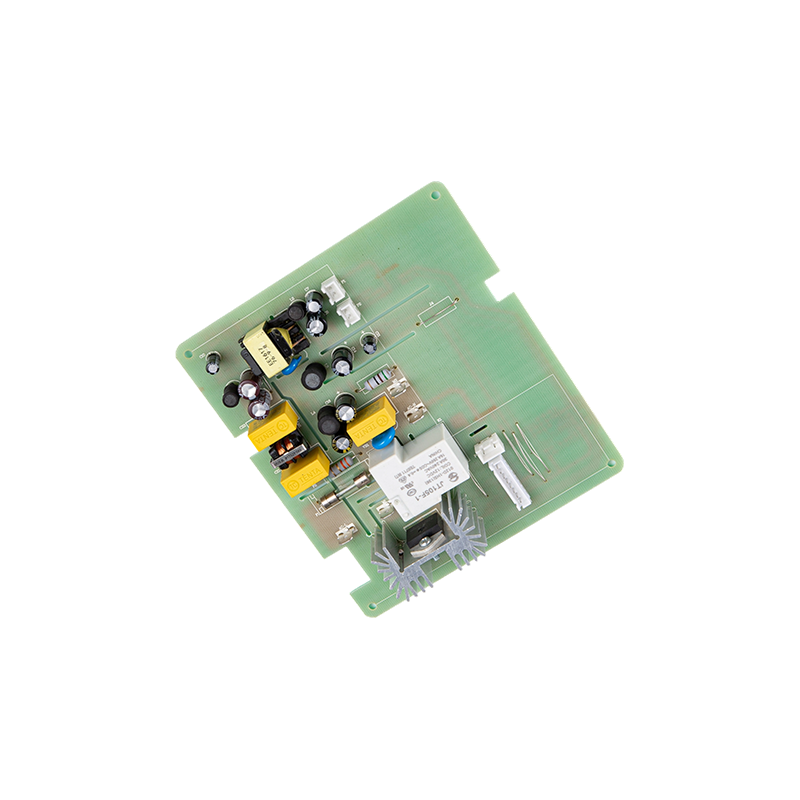
A PCB control board is a printed circuit board specifically designed to manage the operation of an electronic device or system, typically housing a microcontroller, power regulation components, input/output connectors, and supporting circuitry that allows it to receive signals, process logic, and send commands to actuators, motors, sensors, or displays. Unlike a simple circuit board that just routes power or signals, a control board is engineered around a specific control function, whether that's managing the temperature in an appliance, regulating motor speed in industrial equipment, or handling communication between multiple connected devices. These boards form the operational brain of countless products, from household appliances and HVAC systems to industrial automation equipment and consumer electronics.
Because a PCB control board often determines the core functionality and reliability of the finished product, getting the design, component selection, and manufacturing quality right is critical, whether you're developing a new product from scratch or sourcing replacement boards for existing equipment.
Core Components Found on a Typical Control Board
While every PCB control board is designed around its specific application, most share a similar set of functional building blocks that work together to process inputs and generate outputs.
- Microcontroller or microprocessor: Acts as the central processing unit, executing the programmed logic that defines the board's behavior.
- Power supply and regulation circuitry: Converts incoming power to the correct voltage levels needed by different components on the board.
- Input/output connectors: Allow the board to receive signals from sensors, switches, or other devices and send commands to actuators or displays.
- Relays and switching components: Enable the control board to turn higher-power devices like motors or heating elements on and off.
- Communication interfaces: Support protocols like UART, I2C, SPI, CAN bus, or Wi-Fi, allowing the board to exchange data with other systems or remote monitoring platforms.
How PCB Control Boards Are Designed and Manufactured
Developing a reliable control board involves several distinct stages, each of which impacts the final product's performance and manufacturability.
Schematic Design and Component Selection
The design process begins with creating a schematic that defines how each component connects electrically, followed by careful component selection based on factors like operating voltage, current handling, temperature tolerance, and long-term part availability.
PCB Layout and Routing
Once the schematic is finalized, engineers translate it into a physical board layout, carefully routing traces to minimize interference, manage heat dissipation, and maintain signal integrity, especially important for boards handling high-frequency communication or high-current power switching.
Prototyping and Testing
Before full production, prototype boards are built and tested under real operating conditions to identify design flaws, verify firmware compatibility, and confirm the board meets performance and safety requirements.
Volume Manufacturing and Assembly
Once validated, the design moves into volume production, where automated surface mount technology (SMT) assembly lines place and solder components onto the bare PCB, followed by inspection and functional testing before the boards are shipped or integrated into finished products.
Common Applications for PCB Control Boards
Control boards are used across a remarkably wide range of industries, each with its own specific performance and durability requirements.
| Industry | Typical Control Board Function |
| Home Appliances | Managing temperature, timing, and user interface controls |
| Industrial Automation | Controlling motors, sensors, and production line logic |
| HVAC Systems | Regulating airflow, temperature, and system diagnostics |
| Consumer Electronics | Powering user interfaces, connectivity, and device logic |
| Automotive Systems | Managing lighting, sensors, and onboard diagnostics |
Key Quality Factors to Evaluate When Sourcing a Control Board
Whether designing a custom board or sourcing an existing one, several quality indicators help determine whether a PCB control board will perform reliably over its expected service life.
- Board material and thickness: Standard FR-4 material works well for most applications, while high-heat or high-frequency applications may require specialized substrates.
- Component sourcing transparency: Reputable manufacturers should be able to confirm they use genuine, traceable components rather than counterfeit or gray-market parts.
- Conformal coating options: Protective coatings help shield the board from moisture, dust, and corrosion in harsh operating environments.
- IPC quality standards compliance: Boards manufactured to recognized IPC class standards typically indicate a higher level of soldering and assembly quality control.
- Testing and burn-in procedures: Ask suppliers what functional testing and thermal cycling procedures are performed before boards are shipped.
Common Issues That Affect Control Board Reliability
Even well-designed PCB control boards can experience performance issues if certain risk factors aren't properly addressed during design or manufacturing.
- Inadequate heat dissipation, leading to component overheating and premature failure in high-power switching applications.
- Poor solder joint quality, which can cause intermittent connections that are difficult to diagnose after the product reaches the field.
- Electromagnetic interference from poor trace routing, which can cause erratic behavior in sensitive control logic.
- Component obsolescence, where discontinued parts create long-term sourcing challenges for replacement boards or repairs.
Final Thoughts on Choosing or Designing a PCB Control Board
A well-designed and properly manufactured PCB control board serves as the operational core of countless devices and systems, making it one of the most important components to get right during product development or equipment sourcing. By understanding the core components involved, the manufacturing process behind a reliable control board, and the key quality factors that separate dependable boards from problematic ones, businesses can make more informed decisions whether they're designing a custom solution or sourcing boards from an external manufacturer. Taking the time to vet component quality, testing procedures, and design practices upfront helps avoid costly reliability issues down the road.


A Appliance Switches Manufacturer that has been focusing on the development, production and sales of Switches for 21 years;
Products Links
Contact Information
Tel: +86-021-33752188
Phone: +86-13524812989
E-Mail: [email protected]
[email protected]
[email protected]Address: No. 580 Shenzhou Road, Fengxian District, Shanghai, China

