


 English
 русский
 Español
 Deutsch
 عربى
-
A Rocker Switch is a compact and easy-to-operate manual control component. Its unique rocker-style actuation, combined with a toggle or momentary reset function, allows users to quickly switch circuit...View More >>
-
A micro switch is a small mechanical switch with a fast action mechanism, which is widely used in household appliances, industrial automation, automotive electronics, medical equipment, and other fiel...View More >>
-
The baby stroller gear switch is an innovative product independently developed by our company. We have applied for invention patents both domestically and internationally, which fully demonstrates the...View More >>
-
Push button switches are widely used in various control systems with their diverse structural designs, high-strength material selection, and excellent performance. The products are available in a vari...View More >>
-
The internal structure of the piano key switch mostly adopts a mechanical or light-touch design. Some high-end models use capacitive sensing technology to achieve contactless operation, thereby improv...View More >>
-
The knob switch adopts a high-sensitivity rotary contact structure, which has smooth operation and clear positioning, ensuring that every adjustment is accurate. The product has excellent durability a...View More >>
-
The KM trigger switch is a universal high-current switch designed for high-power power tools, with excellent current carrying capacity and stable performance. The internal fast-action structure ensure...View More >>
-
A door control switch, also known as a door magnetic switch or door status sensor, is a key electrical component widely used in industrial control, security systems, intelligent building automation, a...View More >>
-
The wiring harness is an overall wiring assembly that integrates multiple wires, cables, terminals, and connectors according to specific electrical design and mechanical structure requirements. It is ...View More >>
-
PCB control board is one of the indispensable core components in modern electronic devices. As the brain of the control system, it is widely used in many fields such as industrial automation, consumer...View More >>
NEWS
 Home / News / Industry News / Electrical Switches: A Practical Guide to Types, Selection, and Reliability
Electrical Switches: A Practical Guide to Types, Selection, and Reliability
 2026.11.18
 Industry News
Electrical switches sit at the point where a person, a circuit, and a machine meet. They look simple, but they carry real responsibility: they must make and break current safely, survive the environment, and still feel right after thousands of operations. In our work at Shanghai Qijia Electronics, we have seen how often a small switch decision shapes assembly, service, and the user experience. This guide walks through the main switch families, the ratings that matter, and the practical questions worth asking before a design goes to production.
Content
What an Electrical Switch Really Does
At its simplest, an electrical switch is a controlled break in a conductor. Closed, it lets current pass; open, it isolates the circuit. In a real product, however, the component is more than a pair of contacts. It includes an actuator, a spring, a detent, a housing, terminals, and often a seal. Each part affects how the switch behaves under load, how it mounts, and how it feels to the person using it.
We evaluate switches on three levels. Electrically, the switch must carry and break the intended load, including inrush and inductive kickback. Mechanically, it must fit the panel, resist dust and vibration, and return to the same position every time. Humanly, it must give clear feedback and resist accidental operation. A switch that passes a bench test but jams after dust exposure is still a failed design.
The Main Types of Electrical Switches
The names used for electrical switches overlap because they describe different things: actuator style, mounting method, electrical behavior, or intended application. Most switch families differ mainly in how the operator actuates them and what duty they are expected to survive. The table below summarizes the types most often specified for appliances, tools, and control equipment.
| Switch family | How it operates | Typical device examples | Design focus |
|---|---|---|---|
| Rocker | Tilts on a pivot and stays in position | Power strips, small appliances, tools, control panels | Panel cutout, pole count, illumination, dust protection |
| Push button | Plunger travels in and returns or latches | Control panels, appliances, industrial equipment | Travel, force, bezel style, sealing, contact rating |
| Micro | Small actuator triggers a snap-action contact | Appliance doors, power tools, vending machines, automation | Operating force, differential travel, contact rating, life |
| Trigger | Finger lever controls on/off or speed | Drills, saws, garden tools, handheld equipment | Inrush capacity, ergonomics, dust resistance, safety |
| Knob | Rotary shaft selects one of several positions | Audio gear, instruments, control panels | Detents, shaft length, marking, torque, contact life |
| Piano key | A row of keys presses individual contacts | Audio equipment, appliances, office machines | Key spacing, tactile feel, insulation, dust resistance |
| Door control | Mechanical or magnetic sensing of a door position | Security systems, building automation, industrial enclosures | Actuation gap, wiring, tamper resistance, contact reliability |
Beyond the actuator, the details that separate a dependable switch from a fragile one are often invisible: contact material, spring temper, terminal plating, housing tolerance, and sealing method. A rocker switch for a appliance panel and a micro switch inside a tool may both be small, but they face very different loads and abuse. This is why a catalog number alone is not enough information for a design team.
Matching Electrical Switches to the Device
Selection starts with the device, not the catalog. The load, the panel opening, the operator's hand, the cleaning routine, and the expected service life all narrow the choice quickly. A switch that is ideal for a desk lamp may be wrong for a drill or a door sensor.
Home appliances and small equipment
For kettles, mixers, coffee machines, and small appliances, users expect a firm click and a clear on/off state. Rocker switches and push buttons are common here because they offer a familiar interface and straightforward panel mounting. The housing must resist kitchen grease, cleaning sprays, and repeated operation. Our R1111 electrical appliance rocker switch is one example of a compact option developed around these everyday demands, with attention to contact reliability and a clean panel fit.
 R11-11 Compact Rocker Switch for Household AppliancesCompact appliance rocker switch with O/I markings, reliable contacts, an optional protective cover, and certifications for household appliances and office equipment.View Product →
Power tools and outdoor equipment
Power tools bring vibration, dust, high inrush current, and gloved hands. A trigger switch must feel controlled under load, while an internal micro switch may need a strong actuator and a sealed body. In this category, a switch that is merely rated for the running current can still fail from motor inrush or fine dust. Our MS152A1 power tools micro switch was developed for this kind of duty, where contact stability and mechanical toughness matter more than a long feature list. For handheld tools, trigger switches also need careful attention to ergonomics and safety.
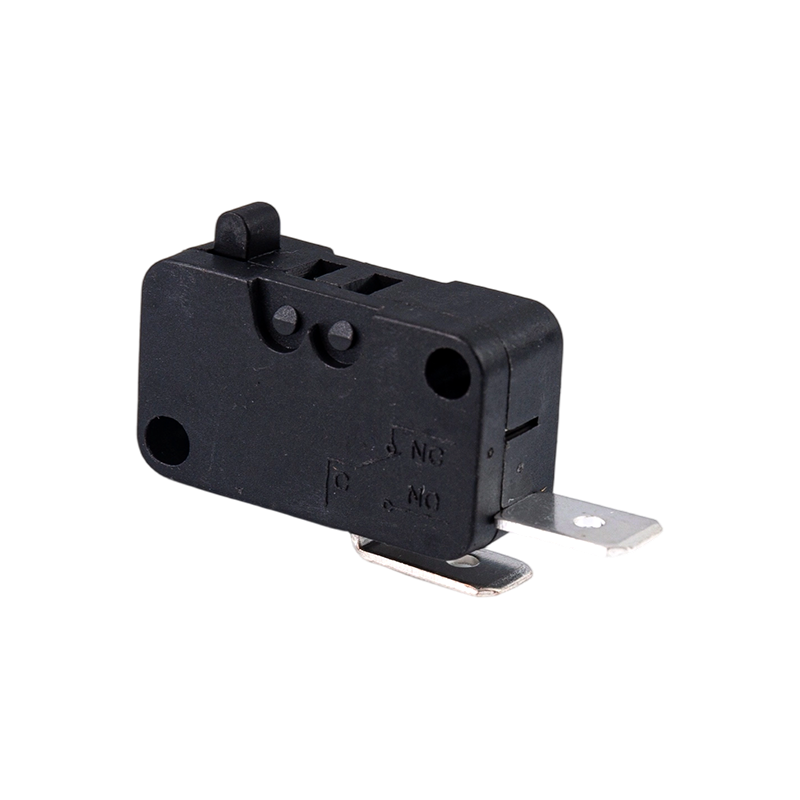 MS15-2A1 High-Current Micro Switch for Power ToolsHigh-current micro switch built for frequent operation in power tools, garden tools, and cleaning devices, with UL, TUV, KC, and CQC certifications.View Product →
Industrial controls and access systems
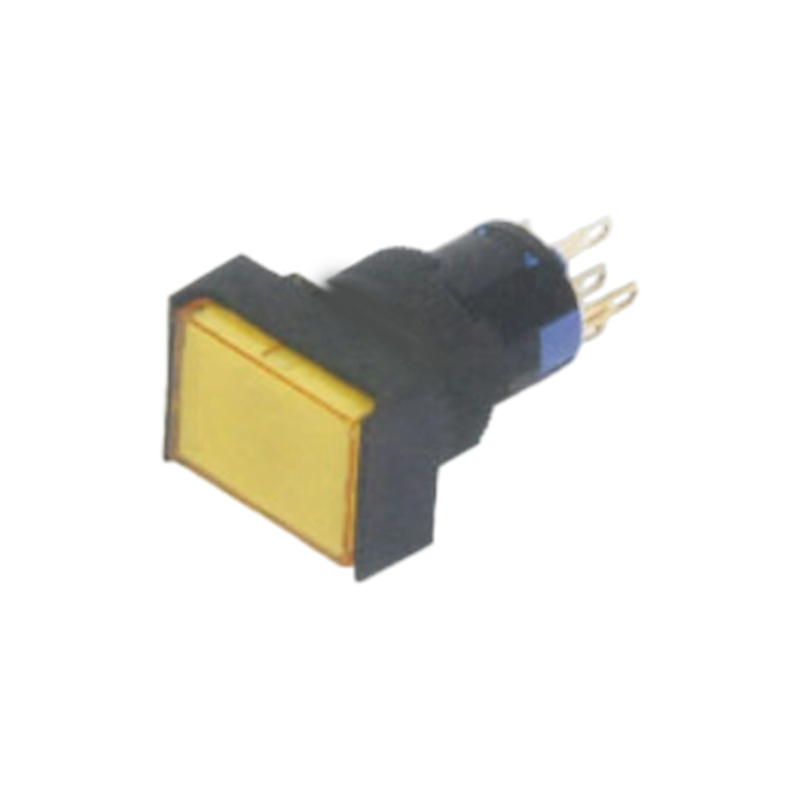
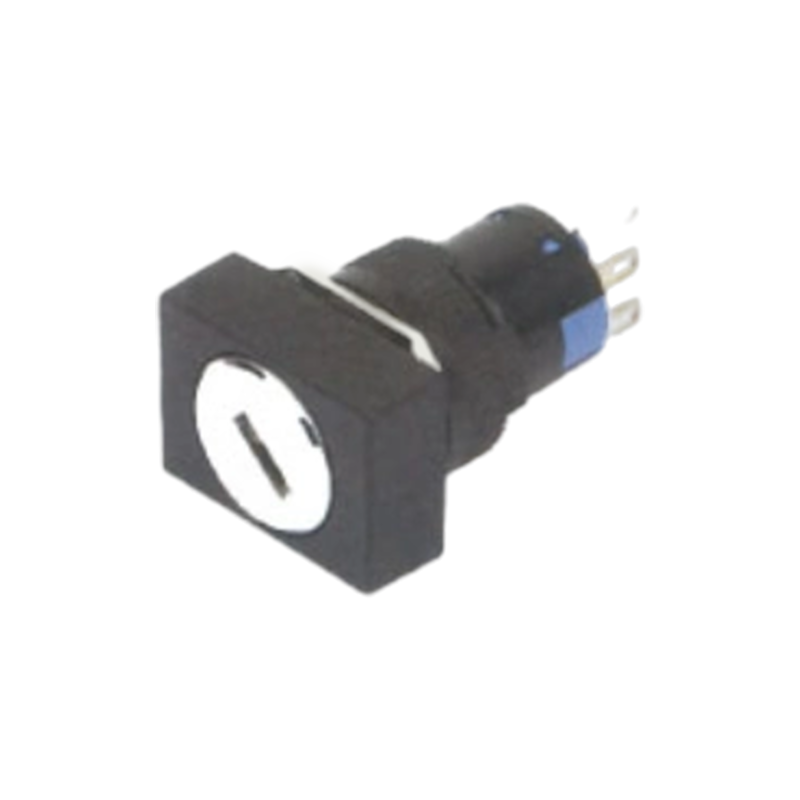
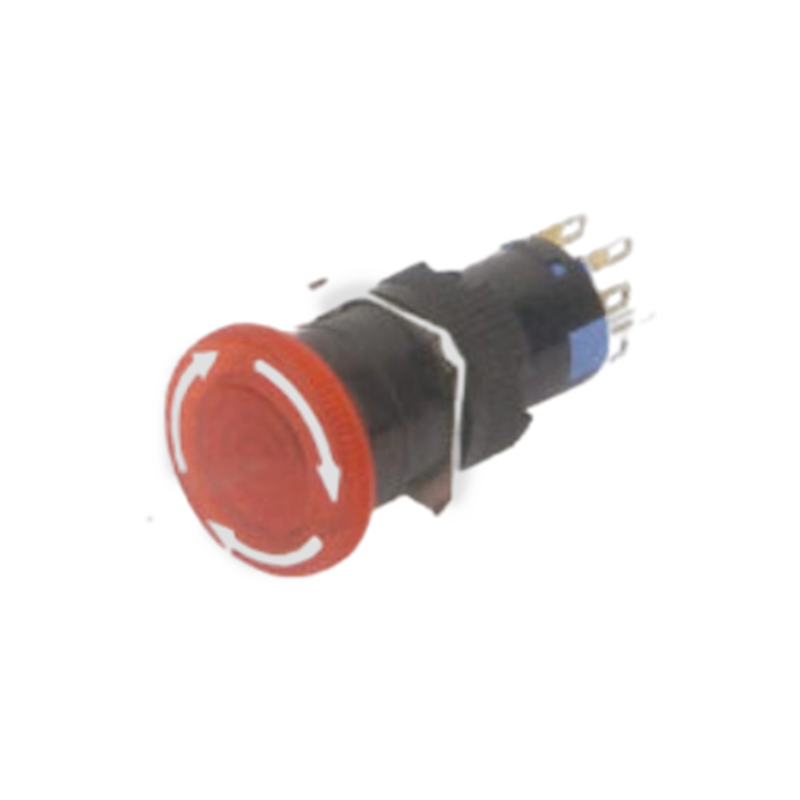
Panel builders value positive detents, clear legends, and terminals that accept the right wire without strain. Door control switches add another challenge: the switch must make reliable contact despite slight alignment changes, paint thickness, and repeated opening and closing. Our A161 industrial general purpose high durability button switch is built for general control-panel use where repeatable operation and a robust front end are important.
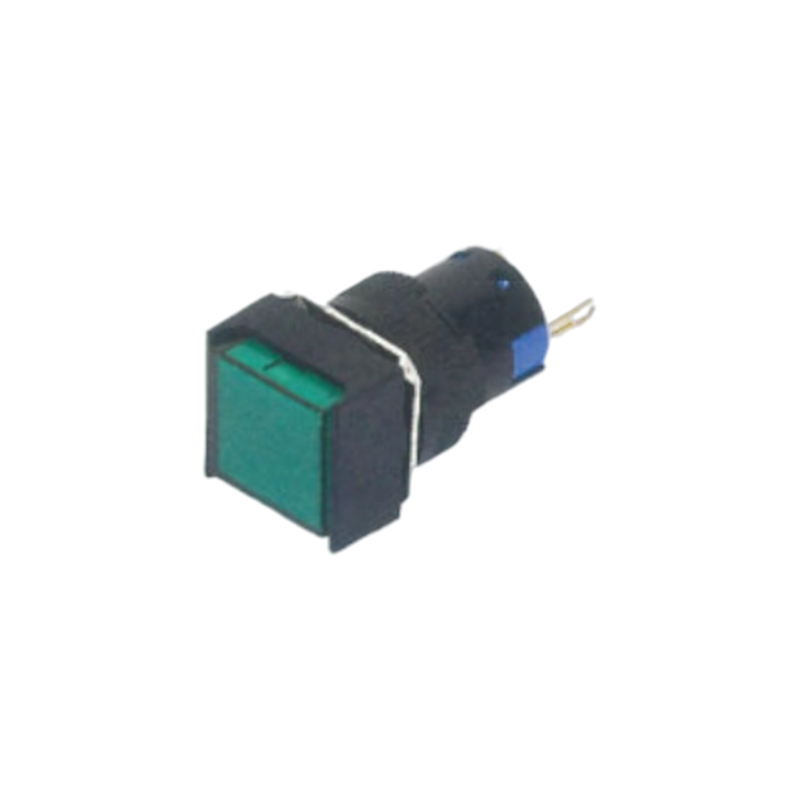 A16-1 Industrial Button Switch with Status IndicatorDurable industrial button switch with integrated indicator light for control panels, factory automation, and equipment interfaces requiring visible system-status feedback.View Product →
Compact and specialty equipment
Not every switch application is a simple on/off panel. Knob switches support menu selection and multi-position control. Piano key switches fit compact control strips. Baby stroller gear switches sense folding joints and locking positions, where safety and feel are closely linked. Wiring harnesses and PCB control boards can also complete the electrical assembly, reducing the number of separate parts a manufacturer has to manage.
Ratings, Environment, and Mechanical Life
Datasheet ratings are a starting point, not a guarantee. A switch rated for a certain current may carry that load well when resistive, yet struggle with a motor's inrush or a capacitive load. Contact material, arc suppression, and terminal temperature rise matter as much as the headline number. For DC loads, check whether the switch is rated for DC and at what current, because DC arcs do not self-extinguish as easily as AC arcs.
Environment is equally important. A sealed switch may be unnecessary indoors but essential on a garden tool or a cleaning machine. The useful checklist includes:
- Voltage and current, including inrush, inductive, and capacitive loads.
- AC or DC service, plus any low-current or dry-circuit requirement.
- Operating force, travel, detent, and tactile or audible feedback.
- Panel cutout, behind-panel depth, terminal orientation, and wire routing.
- Dust, water, oil, cleaning agents, salt spray, UV, and temperature range.
- Expected mechanical and electrical life, plus service or replacement policy.
- Compliance requirements for the target market and end product.
Mechanical life is often quoted separately from electrical life. A switch can still click after many operations while its contacts have already degraded, or it can remain electrically sound while the actuator has worn enough to feel vague. Prototypes should be tested in the real enclosure, not only on a test bench. That is also why wiring harnesses and PCB control boards belong in the same conversation: a reliable switch is only as good as the connection around it.
A Practical Selection Process
- Define the function: on/off, momentary, maintained, multi-position, or position sensing.
- Capture the electrical load, including startup current and worst-case ambient temperature.
- Set the mechanical envelope: panel thickness, cutout, behind-panel space, and terminal access.
- Choose the actuator around the operator, not the other way around.
- Match sealing and materials to the cleaning and operating environment.
- Review terminals, wiring, and assembly method before approving the part.
- Test prototypes in the device, then confirm life, feel, and failure mode.
We use this sequence when reviewing new projects because it keeps a low-cost switch from becoming an expensive redesign. The right questions are usually simple: what will the operator do, what will the circuit do, and what will the environment do to both? When those answers are clear, the switch family, rating, and mounting style usually follow.
Why the Smallest Switch Can Decide the User Experience
Electrical switches are easy to treat as commodity parts, but they are part of the product's personality. A vague detent, a sharp edge, a loose terminal, or a switch that fails after a cleaning cycle can undo good work elsewhere in the design. A good switch is not the one with the longest datasheet. It is the one that carries the load safely, fits the panel without forcing a redesign, survives the environment, and feels right in the hand. Start with the application and work backwards; the rest of the specification becomes much easier to defend.

A Appliance Switches Manufacturer that has been focusing on the development, production and sales of Switches for 21 years;
Products Links
Contact Information
Tel: +86-021-33752188
Phone: +86-13524812989
E-Mail: [email protected]
[email protected]
[email protected]Address: No. 580 Shenzhou Road, Fengxian District, Shanghai, China

