


 English
  русский
  Español
  Deutsch
  عربى
عربى -
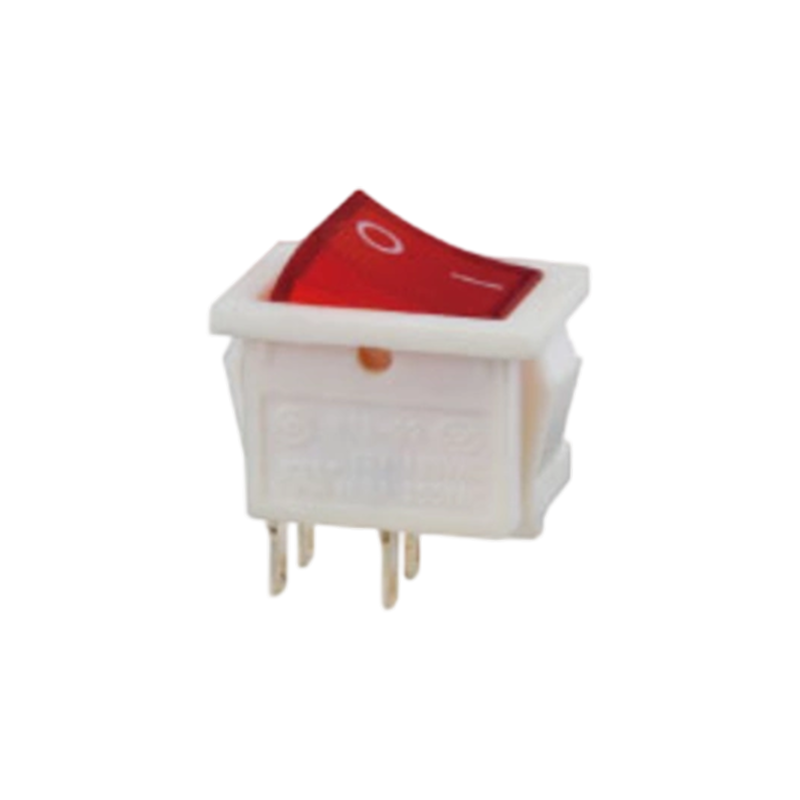
A Rocker Switch is a compact and easy-to-operate manual control component. Its unique rocker-style actuation, combined with a toggle or momentary reset function, allows users to quickly switch circuit...View More >>
-
A micro switch is a small mechanical switch with a fast action mechanism, which is widely used in household appliances, industrial automation, automotive electronics, medical equipment, and other fiel...View More >>
-
The baby stroller gear switch is an innovative product independently developed by our company. We have applied for invention patents both domestically and internationally, which fully demonstrates the...View More >>
-
Push button switches are widely used in various control systems with their diverse structural designs, high-strength material selection, and excellent performance. The products are available in a vari...View More >>
-
The internal structure of the piano key switch mostly adopts a mechanical or light-touch design. Some high-end models use capacitive sensing technology to achieve contactless operation, thereby improv...View More >>
-
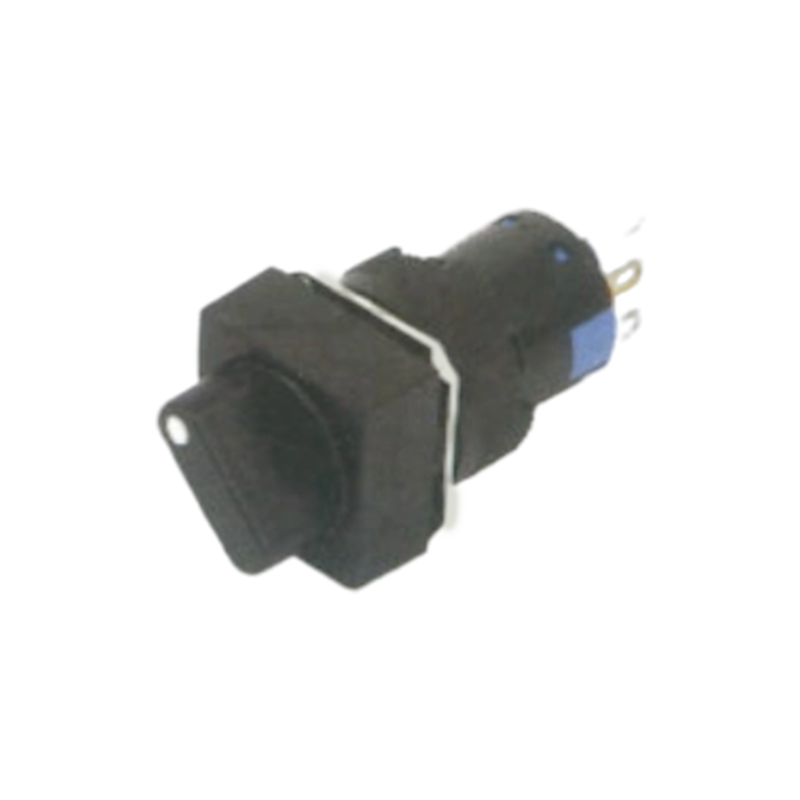
The knob switch adopts a high-sensitivity rotary contact structure, which has smooth operation and clear positioning, ensuring that every adjustment is accurate. The product has excellent durability a...View More >>
-
The KM trigger switch is a universal high-current switch designed for high-power power tools, with excellent current carrying capacity and stable performance. The internal fast-action structure ensure...View More >>
-
A door control switch, also known as a door magnetic switch or door status sensor, is a key electrical component widely used in industrial control, security systems, intelligent building automation, a...View More >>
-
The wiring harness is an overall wiring assembly that integrates multiple wires, cables, terminals, and connectors according to specific electrical design and mechanical structure requirements. It is ...View More >>
-
PCB control board is one of the indispensable core components in modern electronic devices. As the brain of the control system, it is widely used in many fields such as industrial automation, consumer...View More >>
NEWS
 Home / News / Industry News / Door Control Switch Guide: Types, Wiring, and How to Choose the Right One
Door Control Switch Guide: Types, Wiring, and How to Choose the Right One
 2026.09.15
 Industry News
An access control integrator I know recently spent three days chasing a false alarm. Every time a forklift passed near the warehouse door, the building controller reported a tamper event. The culprit was a door control switch that produced an unstable signal once wired into the control loop. Swapping it for a properly rated door magnetic switch solved the problem in minutes. The lesson applies to anyone specifying door control switches for industrial panels, security systems, or smart building automation: the switch is a small component, but its electrical behavior determines whether the whole system earns trust.
Here is the short version before we go deeper. A door control switch converts the physical position of a door into an electrical signal that a controller can read. The right switch does this for years without nuisance alarms or missed detections. The wrong switch creates intermittent faults that are expensive to trace. This guide explains the main types, the specifications that matter, and the practical decisions that separate a dependable installation from a maintenance headache.
Content
What a Door Control Switch Does
A door control switch is not one fixed device type. The name covers several sensing technologies that answer the same question: is this door open or closed? The answer is delivered to a controller as a dry contact, a voltage signal, or a bit in a bus protocol.
For most industrial, security, and building automation jobs, the most economical solution is a magnetic door switch. This is the approach Shanghai Qijia Electronics takes in its MK21 series, which the company describes as a door magnetic switch or door status sensor. A magnet mounts on the moving door, and a reed contact mounts on the frame; the two halves never touch. Replace the magnet with a mechanical plunger and you have a limit-style switch. Replace it with an inductive face and you have a proximity sensor. Each works, but each behaves differently when dust, vibration, or misalignment enters the picture.
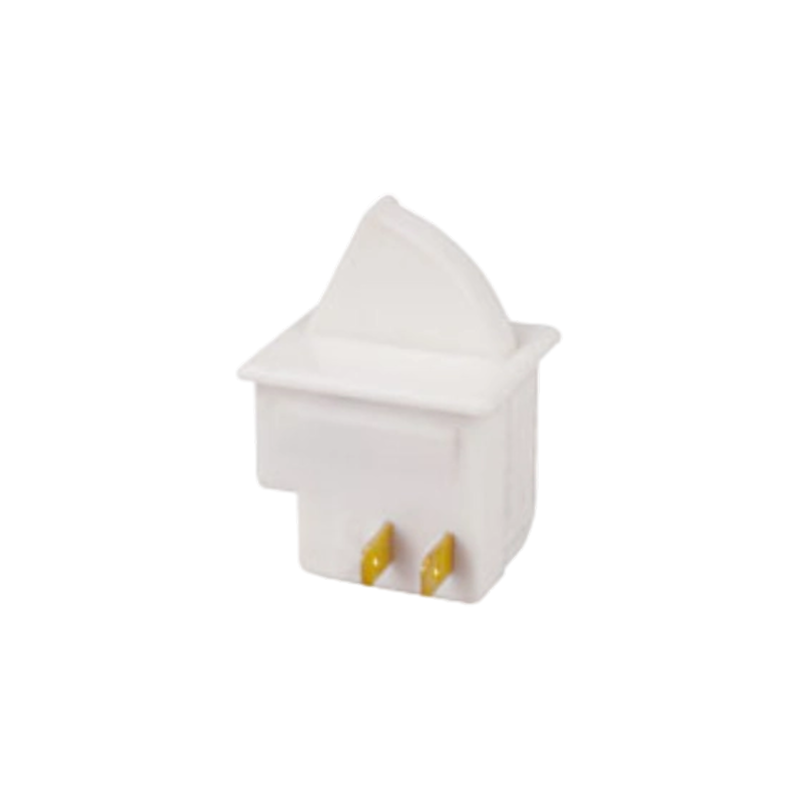 MK-21 Magnetic Door Switch with Reliable Reed ContactThis magnetic door switch from Shanghai Qijia Electronics uses a reed contact and magnet, offering wear-free operation ideal for high-cycle industrial and security doors. Its robust structure suits applications where consistent performance matters.View Product →
The reason magnetic types dominate is simple. No physical contact means no wear on the sensing element, and the output stays consistent over hundreds of thousands of cycles. That makes them attractive for doors that open dozens of times per hour, year after year.
How Door Control Switches Deliver Their Signal
Understanding the internal switching action helps with wiring and troubleshooting. Three actuation methods are common in door control switches.
- Magnetic reed: a magnet attracts two ferromagnetic blades inside a sealed glass tube, making or breaking a dry contact. The switch side needs no power, which simplifies field wiring.
- Plunger or roller: a mechanical actuator physically moves a contact assembly. This type suits door edges and machine guards where a positive mechanical interlock is required.
- Inductive proximity: an oscillator detects metal near the sensing face. This option handles oily or dusty environments better than optical methods.
From a control system standpoint, verify two things: the contact form and the switching capacity. Most panels use normally closed (NC) contacts in security loops so a cut wire produces an alarm, while normally open (NO) contacts are used for status inputs. The MK21's design objective, stated on its product page, is excellent structure and reliable contact. In practice that translates to a stable NO or NC output that a PLC or alarm panel can read without extra signal conditioning.
Key Specifications to Check Before You Buy
A door control switch datasheet is short, but every line affects compatibility. The table below summarizes the parameters that matter most when matching a switch to a controller and a mounting location.
| Parameter | Why it matters | Typical target |
|---|---|---|
| Contact form (NO/NC) | Determines failsafe behavior in alarm or interlock wiring | NC for security loops; NO for status inputs |
| Rated current and voltage | Must match the controller input and the switched load | 0.1-1 A at 12-24 V DC is common |
| Actuation distance | Defines the allowable gap between magnet and reed | 10-30 mm for typical magnetic units |
| Mechanical life | Relates to service intervals on high-traffic doors | 100,000 cycles or more for reed types |
| Operating temperature | Affects outdoor and unheated installations | -25°C to +85°C is a practical range |
| Protection rating | Dust and moisture resistance | IP40 indoor; IP65 or higher for harsh areas |
Looking at the table, two decisions drive everything else. First, choose the contact form based on the fail-safe requirement. Second, confirm that the switching capacity matches the controller input; most PLC inputs draw only milliamps, but a relay coil or indicator lamp needs the full rated current.
Where Door Control Switches Are Used
Shanghai Qijia positions its door control switch series for three main areas: industrial control, security systems, and smart building automation.
- Industrial control: interlocking access panels and machine guards. An NC contact ensures the machine cannot run while a door is open, even if the wiring breaks.
- Security systems: perimeter doors and cabinet tamper detection. A magnetic switch is nearly invisible and hard to defeat without opening the door.
- Smart building automation: door and window states feed into HVAC control so unoccupied zones are not conditioned, and lighting systems can shut down when a room is vacated.
In every case, the switch provides one bit of information, but how that bit is wired determines safety compliance, energy savings, or alarm reliability. A well-chosen door control switch, sized for the actual gap and environment, rarely needs attention after commissioning.
What to Review When Sourcing from a Manufacturer
When purchasing door control switches in volume, the datasheet is only the starting point. Engineering and procurement teams should look at three practical issues.
- Mounting tolerance: measure the actual gap between the door and frame in both normal and warped positions. A magnetic reed switch needs the magnet to stay within actuation distance across the full range of door movement.
- Wiring termination: a switch with weak terminals creates intermittent faults that look like sensor failures. Confirm the terminal type matches the harness or cable specified for the project.
- Consistency across batches: if the same model goes into multiple sites, sample-test actuation distance and contact resistance from different production batches. A manufacturer with an established door control product line will normally have tighter process control.
These checks matter more than a few cents of unit price, because a single field failure can cost more than an entire batch of switches.
Building a Complete Door Control Assembly
A door control switch rarely works alone. It connects to a controller through a wiring harness, and in many machines the switch signal is processed by a small PCB control board before it reaches the main PLC. Specifying these components together saves time and prevents compatibility problems.
Take a magnetic switch as an example. The reed contact is reliable, but the cable still has to survive repeated flexing where it exits the door frame. A wiring harness built for that duty eliminates one of the most common failure points: broken conductors at the bend radius.
 Certified Wiring Harness for Durable Door ConnectionsThis wiring harness is designed to withstand repeated flexing at door frames, addressing a common failure point. It holds UL, TUV, KC, and CQC certifications and carries rated current specs suitable for demanding installations.View Product →
If the control logic needs a short delay, a voltage check, or an interface to a sensor bus, a PCB control board can handle that conditioning at the door instead of sending raw signals to a central controller. This simplifies the main panel and makes troubleshooting easier when something does fail.
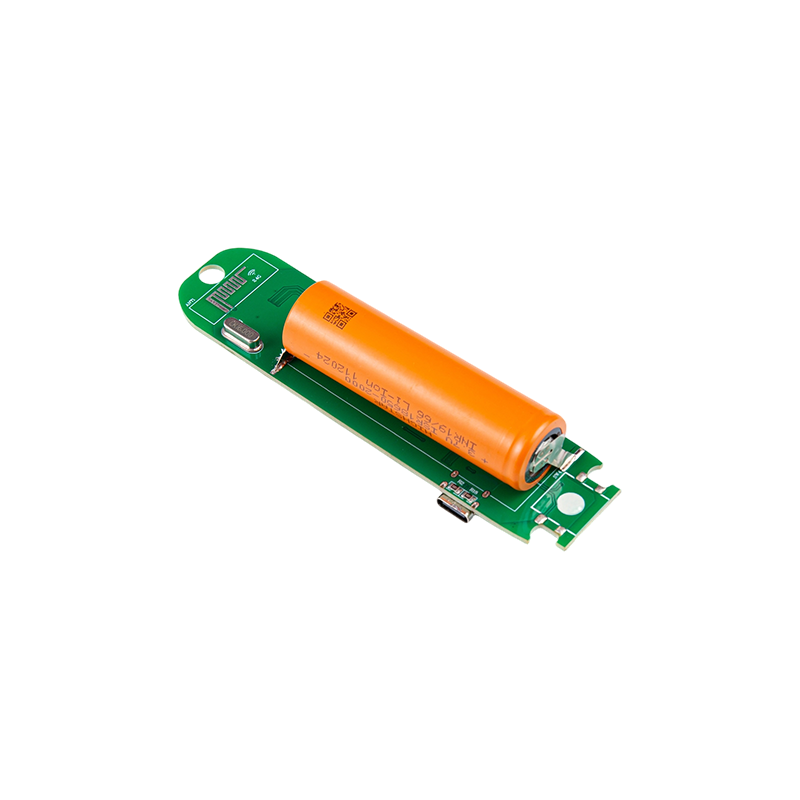 HX-001 Heat-Resistant PCB Control Board with Voltage StabilizationThis control board conditions signals at the door, reducing load on central panels. It features thermal management and regulated power output, making it suitable for power tools and industrial cleaning equipment while simplifying troubleshooting.View Product →
Many buyers treat the switch, harness, and control board as separate purchases with separate suppliers. Working with a single manufacturer for all three reduces sourcing effort and gives you one point of responsibility for the complete sensing chain.
The door control switch is one of the least glamorous components in a control system, yet it is also one of the most visible when it fails. Start with the fail-safe contact form, verify the actuation distance against the real door gap, and confirm the switching capacity matches your controller. Then source from a manufacturer that can back the switch with consistent production and, ideally, matching harness and control board options. Do that, and the door control switch becomes what it should be: a component you install once and forget.

A Appliance Switches Manufacturer that has been focusing on the development, production and sales of Switches for 21 years;
Products Links
Contact Information
Tel: +86-021-33752188
Phone: +86-13524812989
E-Mail: [email protected]
[email protected]
[email protected]Address: No. 580 Shenzhou Road, Fengxian District, Shanghai, China

